
How Transformer Maintenance Test Intervals Are Determined
Send your test requirement — get a tailored solution and a quote within one working day.
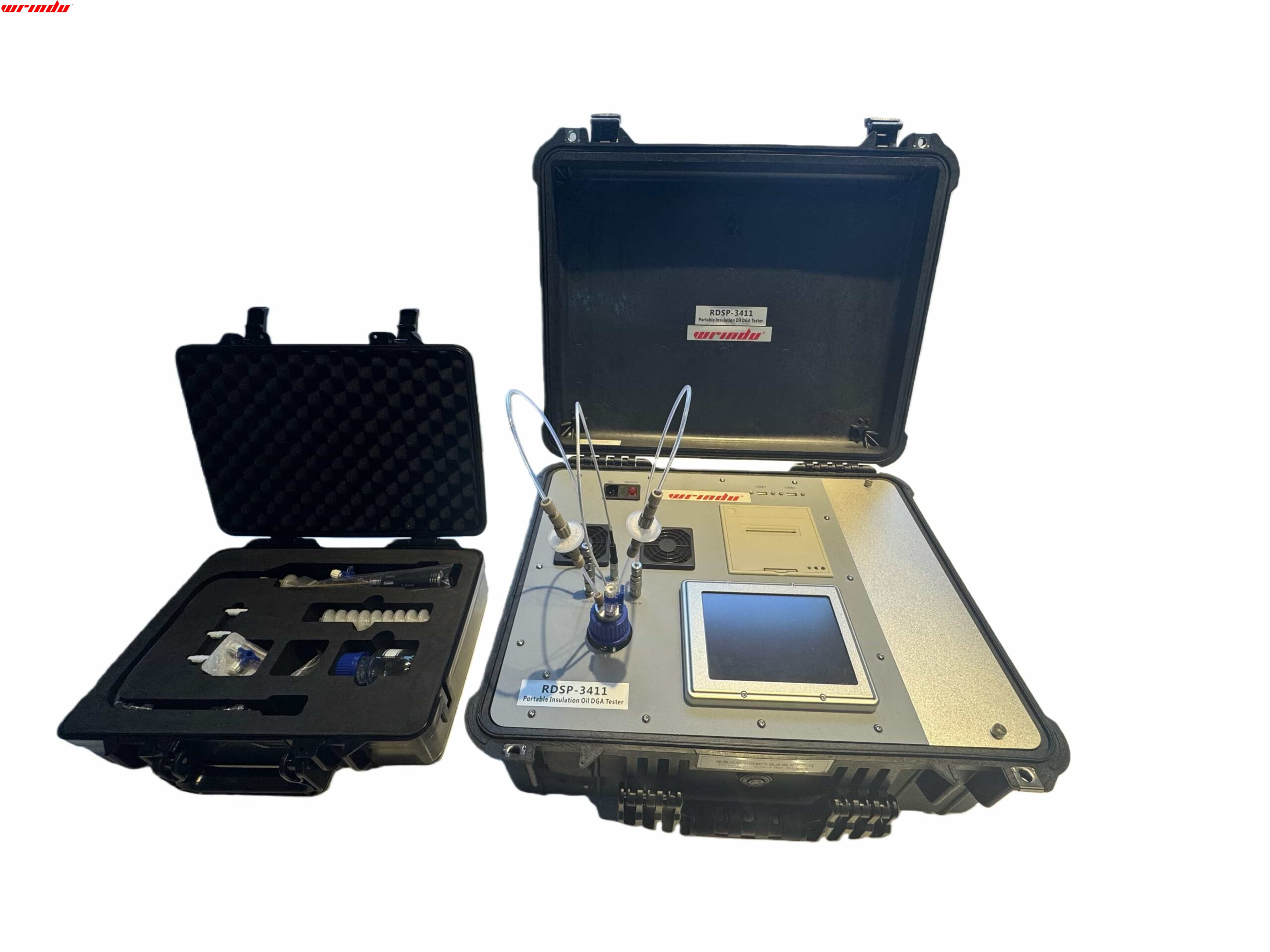
Transformer maintenance test intervals are not universal numbers; they are the output of a decision that balances the manufacturer’s guidance, the governing maintenance standards, the criticality of the unit, its operating history and the evidence from condition-based monitoring. A fixed calendar interval is only the starting point.
The defensible schedule is the one that can state why each test interval was chosen, what evidence would shorten it, and what process reviews it when the unit’s duty or condition changes.
Work through the table for each unit or unit group and record the reasoning. A risk-based plan that documents why each interval was chosen is easier to defend in an audit and easier to adjust when the evidence changes than a calendar copied from a generic source.
Why There Is No Universal Transformer Test Interval
Two transformers of identical design can justify very different test intervals. One may be lightly loaded, rarely stressed and equipped with continuous monitoring; the other may carry heavy cyclic load, operate in a harsh environment and have a history of high moisture or fault current. Applying the same calendar interval to both either wastes resources on the healthy unit or leaves the stressed unit unprotected. This is why standards and manufacturers express intervals as guidance ranges or program logic rather than as a single universal period that fits every installation. The practical consequence is that a reported interval, such as a figure quoted for insulation testing or oil sampling, should always be read with its conditions: the equipment class, the duty, the governing standard edition and the assumptions about environment and monitoring. Repeating a number without its context is how an example becomes a false rule.
The Inputs That Drive a Schedule: Standards, OEM and Criticality
The first input is the manufacturer’s instruction for the transformer and its components. The OEM knows the design margins and the components that need attention, and its guidance is the floor for the programme. The second input is the governing maintenance standard for the region and industry, which provides recommended test sets and interval guidance for equipment classes; the standard edition must be named, because guidance changes between editions. The third input is the owner’s policy, which may be more conservative than the standard for units whose failure is unacceptable. Criticality converts the technical guidance into an owner decision. A transformer feeding a hospital or a process plant where an outage has extreme consequences justifies shorter intervals, redundant monitoring or both, while a unit whose loss is tolerable for weeks may accept the upper end of the guidance range. The schedule should therefore be written by the asset owner with the engineer who knows the network, not copied from a template.Condition-Based Triggers That Accelerate Testing
Condition-based triggers are the events and results that shorten an interval or require immediate testing. Typical triggers include: a through-fault or short circuit on the unit, transport or relocation, a dissolved-gas or moisture result that crosses an alert level, an insulation reading that falls outside its trend, unexpected operation of protection, or major work on the unit or its accessories. When a trigger fires, the response is defined in advance: which tests are performed, what baseline they are compared with and what result stops the unit from returning to service. The power of condition-based testing is that it catches the units that need attention between calendar intervals and leaves the healthy units alone. Its weakness is that it depends on the quality of the monitoring data and the thresholds used. Define the alert levels with the governing guidance and the unit’s own history, and review them whenever the baseline changes.
Building a Risk-Based Maintenance Test Plan
| Step | Question to answer | Output |
|---|---|---|
| Inventory | Which units are in scope and what are their designs? | Unit list with design and duty data. |
| Criticality | What is the consequence of failure for each unit? | Priority class for each unit. |
| Guidance | What do the OEM and the governing standard require? | Baseline test set and interval range. |
| History | What do past results and events say about this unit? | Adjusted interval and trigger list. |
| Monitoring | What condition data is available between tests? | Condition-based triggers and alerts. |
| Review | When and how is the plan revised? | Review date and change process. |
Documenting the Schedule and Its Rationale
The maintenance test plan should be a living document that records the interval, the basis, the responsible owner and the review date. For every interval, state the governing standard edition and the OEM reference, the criticality class of the unit and the condition triggers that would shorten the interval. The document should also record the last test date and result summary for each unit so that the next test can be planned against the unit’s actual condition rather than against a blank calendar. When a test result changes the picture, the plan should change with it: a unit whose insulation trend is deteriorating moves to a shorter interval or an immediate investigation, while a unit whose results are stable across several cycles may justify moving to the upper end of its guidance range. The review process is what keeps the plan honest, and it should be scheduled rather than left to memory.How to Adjust Intervals with Evidence
Interval adjustment is an evidence decision. Lengthening an interval is justified when the unit’s results are stable, its duty has not changed and the monitoring between tests provides adequate warning; shortening is justified when a trigger fires, the duty becomes more severe, or the unit’s condition or criticality changes. Each adjustment should name the evidence and the reviewer, and the change should be visible in the plan history so that a future engineer can see why the interval moved. The interval logic applies to the whole test set and to individual tests. Some tests, such as dissolved-gas analysis where applicable, respond to condition quickly and may be scheduled more frequently than the full electrical test set; the plan should treat each test on its own evidence cycle rather than forcing every test into one annual date. The result is a programme that protects the fleet with the resources available. A short worked example shows the logic in action. A substation owner has two units: a 30 MVA transformer feeding a critical industrial process and a 10 MVA unit feeding a load that can be deferred. The governing maintenance standard gives interval guidance for the test set, and the OEM specifies its own limits for the tap changer. The owner starts both units at the standard interval, then applies the decision inputs: the critical unit receives more frequent testing and continuous monitoring because the consequence of failure is high, while the deferred-load unit stays at the upper end of the guidance range. When the critical unit’s dissolved-gas or insulation trend crosses its alert level, the plan shortens its interval and schedules the confirming electrical tests, and the review record explains why. When the deferred-load unit completes three stable cycles, the owner documents the evidence and moves it to the outer interval. The same standard, the same OEM guidance and two different schedules, each defensible because each records its reasoning. Whatever intervals result, publish them in a form the testing team can execute: a schedule that names the unit, the test set, the due date and the responsible person. The decision framework in this article explains how those dates are chosen; the schedule is where the decision becomes action.Frequently Asked Questions
What guidance do maintenance standards give for transformer testing cycles?
Standards such as NETA MTS provide recommended maintenance test sets and interval guidance for equipment classes, expressed as program guidance rather than a single universal period. The applicable edition and its assumptions about duty, environment and monitoring must be read with the numbers.When should a transformer be tested outside its normal interval?
Test outside the normal interval when a condition trigger fires: a through-fault or short circuit, transport, an alert-level dissolved-gas or moisture result, an insulation trend that falls outside its expected band, or major work on the unit. Define the triggers in the plan in advance so the response is consistent.Can I lengthen an interval for a healthy transformer?
Yes, with evidence. Lengthening is justified when results are stable across several cycles, duty is unchanged and monitoring provides adequate warning between tests. Document the evidence and the reviewer in the plan so the adjustment can be reviewed later. For the instruments used in scheduled maintenance testing, see the transformer maintenance test equipment range, and for the full lifecycle framework read What Tests Are Required for a Power Transformer.Related articles
 SF6 Leak Detector Sensitivity: Select a Method for the Inspection TaskKnowledge
 Cable Fault Locator Selection for Urban Networks: Routes, Noise and AccessKnowledge
 Substation Battery Load Bank Sizing: Duty, Voltage Range and Heat RejectionKnowledge
 CT Polarity, Ratio and Burden Testing: Find Wiring and Loading ErrorsKnowledge