
What to Check When Buying a Transformer Winding Resistance Tester
Send your test requirement — get a tailored solution and a quote within one working day.
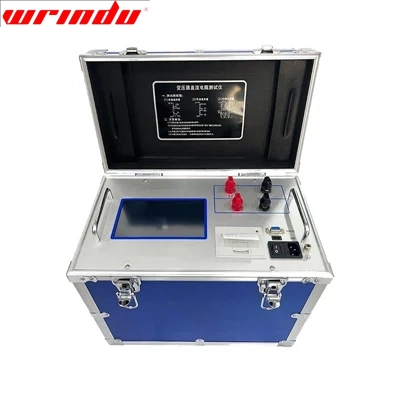
Buying a transformer winding resistance tester starts with the measurement task: the winding types and resistance values you must measure, the test currents available, and the safety, calibration, software and acceptance requirements that turn a raw reading into a defensible record.
Accuracy is the headline specification, but it only matters when it is delivered together with the right current range, safe discharge behaviour, traceable calibration and usable reporting. Define these requirements before comparing vendors.

Work through the checklist against the quotation, not against the marketing description. Where a vendor cannot answer a checklist item, ask for the supporting document. The answers are the difference between a tester that produces numbers and one that produces defensible records.
Include the whole-life cost in the decision, not just the purchase price. A tester with a lower price but a demanding calibration schedule, fragile leads or software that requires an expensive licence can cost more in its first years than a higher-priced instrument with lower running costs. Ask about the supply of spare leads and clamps, the firmware update policy, the warranty terms and the local support available when a fault occurs on site. If the instrument is used in the field, check the physical design as well as the electronics: a unit that is difficult to carry, slow to start or awkward to operate at a substation will be used less carefully than one that fits the workflow. The acceptance checklist should therefore include an operational review by the people who will actually run the tester, because their judgement about usability is part of the specification even when it does not appear on a data sheet.
Finally, keep the buying decision aligned with the rest of your test system. The winding resistance tester does not work alone: it shares the test record with the ratio tester, the insulation tester and the other instruments in the transformer test set. Confirm that the data formats can be combined in one reporting workflow, that the instrument names and serial numbers appear in the export, and that the team can operate it without retraining on every job. A tester that fits the existing system is worth more than an isolated specification win.
Define the Winding Resistance Task and the Current Levels It Needs
Winding resistance is measured by injecting a direct current and measuring the resulting voltage drop. The current must be high enough to produce a stable, measurable signal, but the right level depends on the winding, the transformer size and the time available. Selecting the current range is a technical decision that is covered in detail by How Much Test Current Is Needed for Transformer Winding Resistance Testing; at the buying stage you only need to confirm that the instrument offers the currents your fleet requires, including low currents for small windings and high currents for large power transformers, and that the measurement settles quickly enough for your workflow. List the transformer types you will test: distribution units, power transformers, reactors or instrument transformers. Each group has typical resistance ranges, and the tester you buy should cover those ranges with enough resolution at the low end and enough current at the high end. If you measure at multiple tap positions, the settling time per point matters as much as the current range, because the number of readings multiplies quickly.
Accuracy, Range and Measurement Modes in Context
Vendors quote basic accuracy figures such as ±0.2% or ±0.5%, but those numbers are only meaningful with the conditions attached: the resistance range, the test current, the ambient temperature, the warm-up time and whether the figure includes lead resistance. Ask each vendor to state accuracy at the resistance values you actually measure, not only at a favourable mid-range point. Check the measurement modes as well as the headline accuracy. A tester that supports both high-current measurement for power transformers and low-current measurement for sensitive windings gives you more flexibility than one optimized for a single duty. Some instruments also measure temperature and can help you record the winding temperature at the time of test, which is essential because the resistance of copper and aluminium windings changes significantly with temperature. The instrument itself does not make the temperature-correction decision, but it should capture the data you need for a valid comparison.Discharge Safety and Inductive-Load Handling
A transformer winding is an inductive load. When the test current is interrupted, the stored magnetic energy produces a voltage that can be dangerous if the tester does not discharge the winding correctly. Discharge behaviour is a safety feature, not a convenience: confirm that the instrument has a controlled discharge function, that it indicates when the winding is safe to disconnect, and that the discharge time is practical for the largest winding you test. Do not treat the tester’s discharge function as a substitute for site safety procedure. The broader isolation, verification and discharge discipline for transformer testing is covered in the transformer maintenance test equipment guide, and the generic safety chain is described in the transformer testing safety article in this series. The equipment must support that discipline, not replace it.Calibration, Traceability and Verification Records
Calibration is where many purchases fail after the first year. Ask what calibration the tester requires, at what interval, and what the certificate covers. A basic accuracy claim is only traceable if the instrument has been calibrated against a reference that is itself traceable to a national or accredited standard. Confirm whether the calibration certificate includes the ranges and currents you use, and whether the laboratory that issues it is accredited for the work. In practice, keep a calibration register for each instrument, record the date and the reference standard, and schedule the next calibration before the accuracy of live measurements becomes questionable. If the vendor cannot describe a calibration path, treat that as a material gap in the quotation rather than a detail to resolve later.Software, Data Export and Reporting Requirements
Winding resistance results are compared across phases, tap positions, temperatures and years. The tester should make that comparison possible by storing the right fields: transformer identification, winding, tap position, test current, measured resistance, winding temperature, date and operator. Check whether the instrument can export results in a format your reporting system accepts, and whether the software can apply temperature correction with the constants you specify, such as 234.5 for copper and 225 for aluminium, rather than forcing a fixed reference temperature on every result. Reporting matters because the acceptance decision is made on the record, not on the display. A tester that produces consistent, complete reports reduces transcription errors and makes it easier to compare a site measurement with the factory baseline. Ask for a sample report during evaluation and check that it contains the fields your own test record procedure requires.
A Winding Resistance Tester Acceptance Checklist
| Check | What to verify |
|---|---|
| Task coverage | Current range and settling time match the windings and tap positions in your fleet. |
| Accuracy in context | Accuracy is stated at the resistance values, currents and temperatures you use. |
| Discharge behaviour | Controlled discharge, safe-disconnect indication and practical discharge time. |
| Safety category | Ratings and leads match the site environment and your work rules. |
| Calibration path | Calibration interval, scope and traceability are documented before purchase. |
| Temperature capture | Winding temperature can be recorded at the time of measurement. |
| Software and reports | Export format, report fields and temperature-correction settings match your procedure. |
Frequently Asked Questions
What accuracy should a winding resistance tester have?
There is no single accuracy that fits every transformer. The requirement is set by the comparison you must make: a site measurement against a factory baseline has a smaller tolerable error than a rough continuity check. Compare vendor figures at the resistance values and currents you measure, and confirm that the accuracy statement includes the conditions of use.Why is test current important in the buying decision?
Test current determines signal strength, settling time and how representative the reading is of the winding. Small windings need low current to avoid heating, while large power transformer windings may need tens of amperes to reach a stable reading in reasonable time. Confirm the current range covers your fleet before comparing other features.How do I know the tester will discharge the winding safely?
Check the specification for a controlled discharge function and a clear indication when the winding is safe to disconnect. Discharge time should be confirmed for the largest winding you test. The tester supports site safety but does not replace it: follow your own isolation, verification and discharge procedure. When the checklist is complete, match the requirement to a suitable winding test system on the winding test equipment page. For guidance on how much current your windings need or how to evaluate the readings, see the test current guide and the result evaluation guide.Related articles
 SF6 Leak Detector Sensitivity: Select a Method for the Inspection TaskKnowledge
 Cable Fault Locator Selection for Urban Networks: Routes, Noise and AccessKnowledge
 Substation Battery Load Bank Sizing: Duty, Voltage Range and Heat RejectionKnowledge
 CT Polarity, Ratio and Burden Testing: Find Wiring and Loading ErrorsKnowledge