
SF6 Purity vs Moisture vs Decomposition Testing: What Does Each Result Mean?
Send your test requirement — get a tailored solution and a quote within one working day.
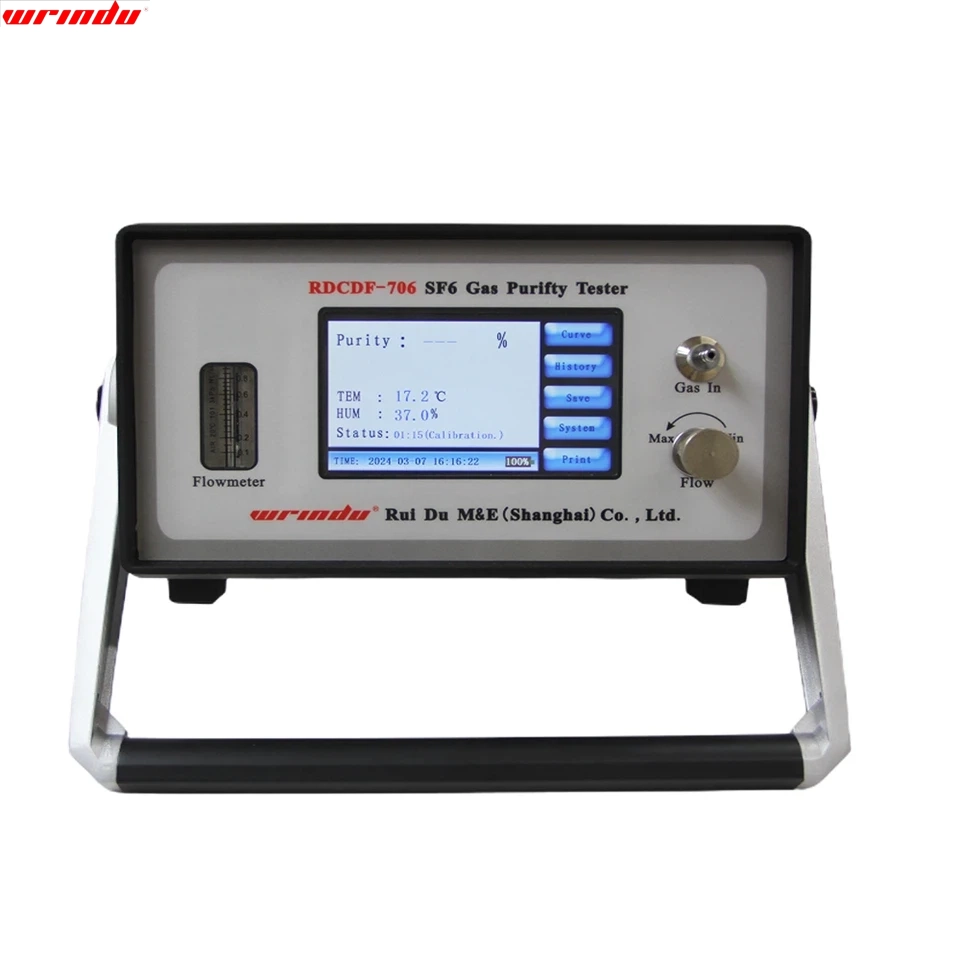
SF6 purity, moisture and decomposition products answer three different questions about the gas: purity shows whether the insulating gas has been diluted, moisture shows the water content that threatens dielectric strength at low temperature, and decomposition products show the by-products of electrical breakdown inside the equipment. Interpret them together with the equipment history and the applicable reference, because each parameter has its own meaning and none is read in isolation.
The Three Measurements Answer Different Questions
The three measurements probe different failure modes. Purity is about gas composition: air, nitrogen or other gases diluting the SF6 reduce its dielectric and arc-quenching performance. Moisture is about water: dissolved water can condense and freeze at low temperature, lowering withstand strength. Decomposition products are about internal arcing or partial discharge: sulphur compounds such as SO2, SOF2 and SF4 form when SF6 breaks down in the presence of moisture and oxygen.
Because the questions differ, the parameters are not interchangeable. A high-purity result does not clear a moisture concern, and a normal moisture reading does not rule out decomposition. A complete gas assessment measures all three, together with pressure and, where required, density, and interprets the set against the equipment’s history.
Pressure and density complete the picture: even with correct composition, an underfilled compartment loses dielectric and interruption margin, and density is the property that alarms and interlocks monitor. The gas analysis and the pressure record belong in the same report so the reviewer can judge the full gas condition, not only the three measured parameters.
What SF6 Purity Indicates
Purity is the volume fraction of SF6 in the gas sample, expressed as a percentage. Fresh gas supplied for filling must meet the specification for new gas, while gas recovered from equipment and prepared for reuse is judged against the re-use criteria. The applicable reference depends on the gas’s origin and the equipment standard, so confirm which specification governs your case before applying any limit.
A purity drop is usually caused by contamination with air, nitrogen or moisture during handling, filling or maintenance, or by a slow leak that allows air ingress. Because diluted gas reduces the insulation and interruption margin, a significant purity change triggers investigation of the handling and sealing condition, not just a topping-up of the gas.
Purity sampling requires the same care as any gas sample: a clean, purged sampling line, a stable pressure and a representative point in the compartment. A sample taken after a recent top-up, before the gas has mixed, or through a contaminated hose can show a purity that does not represent the compartment, so the sampling conditions belong in the record with the result.
The reference documents also distinguish gas origin: IEC 60376 defines the quality of technical-grade SF6 for new gas, while IEC 60480 provides criteria for re-use of SF6 and its mixtures recovered from electrical equipment. A purity result that is acceptable for one origin may not be acceptable for the other, so the record should state which specification governs the gas being tested.
What Moisture and Dew Point Indicate
Moisture in SF6 is reported as a water content in parts per million by volume or by weight, or as a dew point or frost point at the measured pressure. The physical question is whether water can condense inside the equipment at the operating temperature and pressure, because condensed water and ice reduce the dielectric withstand and can support surface tracking.
Moisture enters through handling, component outgassing and seal leaks, and the acceptable level depends on the equipment type, the standard and the operating conditions. Dew point at the operating pressure is often the more meaningful figure than a raw ppm value, because it directly relates to condensation risk; converting between the units requires the correct pressure and temperature assumptions, which is a common source of misreading.
The measurement method also matters: chilled-mirror instruments measure the dew point directly, while capacitance sensors measure a property that is converted to moisture content, and the two approaches have different accuracy and response times. The analyzer type, its units and its calibration must be recorded so the moisture trend is compared on the same basis across maintenance intervals.
What Decomposition Products May Indicate
When SF6 is exposed to an electrical discharge, it breaks down and forms sulphur compounds, the most commonly measured being sulphur dioxide (SO2), with related species such as SOF2 and SF4 depending on moisture and oxygen availability. Rising decomposition products indicate that energy has been released inside the gas compartment: an arcing fault, a defective contact or a persistent partial discharge, rather than simple gas dilution.
Decomposition measurement is therefore a diagnostic channel, not just a quality check. The trend matters more than a single value, and the presence of decomposition products should be correlated with the equipment’s operation history, protection records and inspection findings. The sensor type and the units used by the analyzer must be recorded, because different sensors respond differently to different sulphur compounds.
Electrochemical sensors are commonly used for SO2 measurement, with cross-sensitivities to related compounds that depend on the sensor design. The analyzer’s datasheet should state which compounds produce a response and how the reading is converted, because an analyzer that reports a single “decomposition” figure cannot be interpreted as if it were a dedicated SO2 measurement.
Read the Parameters Together Before Acting
The parameters reinforce each other. A purity drop with no decomposition suggests handling contamination or air ingress. Moisture rising with stable purity points to water ingress or outgassing. Decomposition products with normal purity and moisture point to electrical activity inside the compartment. Each combination leads to a different response: reconditioning the gas, investigating the seals, or scheduling an internal inspection.
| Parameter | Primary question | Typical cause of change | Combined signal |
|---|---|---|---|
| Purity | Is the gas diluted? | Air ingress, handling contamination | Low purity without decomposition suggests contamination |
| Moisture | Can water condense? | Water ingress, component outgassing | Rising moisture with stable purity suggests water source |
| Decomposition products | Has breakdown occurred? | Arcing, partial discharge, defective contacts | Decomposition with normal quality suggests electrical activity |
The table shows the interpretation logic, not a set of limits. The actual response must be based on the equipment’s history, the applicable standard and the analyzer’s documented units and tolerances.
The response also has a priority order for safety and operational decisions: a confirmed decomposition increase is the most urgent signal because it points to internal electrical activity, while a purity or moisture drift is managed with reconditioning and seal investigation. Each combination should have a defined action in the maintenance procedure so the field team knows what evidence justifies which step.
Where the gas is reconditioned or topped up, measure all three parameters after the work and compare with the pre-work values, so the effectiveness of the corrective action is proven and the new baseline is documented for the next interval.
Record Units, Uncertainty and Sampling Conditions
Every result is only interpretable with its conditions: the sampling point, the sampling method, the gas pressure and temperature at sampling, the analyzer configuration and calibration, and the units in which each parameter is reported. Record the full set in the test report, because a change in units or sampling conditions can look exactly like a change in the gas.
State the analyzer’s measurement tolerance with each result, and distinguish a confirmed trend from a change smaller than the combined uncertainty of sampling and measurement. Where the result approaches a reference limit, repeat the measurement with a controlled sample and compare like-for-like before deciding on corrective action. This discipline keeps the gas record defensible across maintenance intervals.
Structure the record as a table per compartment, with the date, parameters, units, sampling conditions, analyzer and calibration data in fixed columns. This format makes the trend visible at a glance and prevents the common error of comparing values that were reported in different units or at different pressures.
Frequently Asked Questions
Is purity the same as gas quality?
No. Purity is one component of gas quality. Moisture and decomposition products are separate parameters that answer different questions about condensation risk and internal electrical activity, so a complete assessment measures all three and interprets them together.
Why is dew point reported instead of ppm?
Dew point at the operating pressure relates directly to condensation risk, which is the physical concern for the equipment. Ppm values require pressure and temperature assumptions to convert, so the report should state the units, pressure and temperature conditions to avoid misreading.
What does a rising SO2 reading mean?
A rising SO2 reading indicates that SF6 has decomposed, which points to electrical activity such as arcing or partial discharge inside the compartment. It is a diagnostic trigger that should be correlated with operation history and inspection findings, not a standalone confirmation.
For the gas-quality framework across commissioning, maintenance and investigation, see the SF6 gas quality testing guide. When you need analyzers that measure these parameters, review SF6 testing solutions and request a technical proposal with your equipment types and procedure.
Related articles
 SF6 Leak Detector Sensitivity: Select a Method for the Inspection TaskKnowledge
 Cable Fault Locator Selection for Urban Networks: Routes, Noise and AccessKnowledge
 Substation Battery Load Bank Sizing: Duty, Voltage Range and Heat RejectionKnowledge
 CT Polarity, Ratio and Burden Testing: Find Wiring and Loading ErrorsKnowledge