
How Does Wrindu Support Transformer Specialists?
Send your test requirement — get a tailored solution and a quote within one working day.
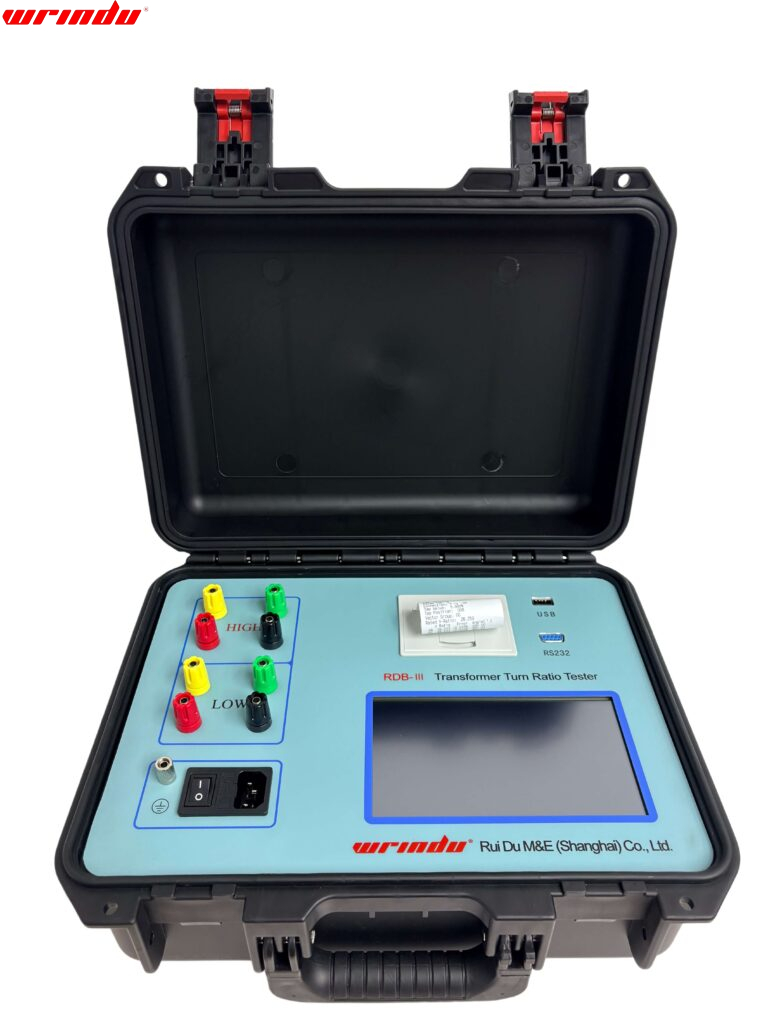
Wrindu supports transformer specialists with factory-direct high-voltage test equipment, warranty protection, remote diagnostic guidance, commissioning assistance, spare-parts coordination, and 24/7 technical support. As a China manufacturer serving utilities, transformer OEMs, service contractors, and test laboratories across six continents, Wrindu helps teams resolve setup, measurement, communication, and field-diagnostic issues quickly while maintaining traceable service records.
Global Support Standards and the Power Transformer Tester Selection Guide 2024
What support do transformer specialists need from a manufacturer?
Transformer specialists need more than a test instrument shipment. They need accurate application guidance, commissioning support, operating procedures, remote diagnosis, calibration planning, repair coordination, spare-parts availability, and a clear warranty process that minimizes outage risk.
For a utility or service provider, a transformer test set is often used during a narrow outage window. If a winding-resistance instrument does not stabilize, a transformer turns-ratio test result looks unbalanced, or a dielectric-loss measurement is affected by grounding, the team needs technical help immediately—not a generic product manual several time zones away.
A capable manufacturer should support the full equipment lifecycle:
- Pre-sale test-method selection and technical configuration.
- Verification of voltage, current, capacity, lead length, and test-object requirements.
- Factory acceptance guidance and documentation review.
- Installation, commissioning, and operator familiarization.
- Remote help for field setup, abnormal results, and software communication.
- Warranty diagnosis, repair assessment, and replacement-part coordination.
- Preventive maintenance, calibration, and service planning.
- Custom engineering for OEM test benches and specialized utility workflows.
In real field support cases, the issue is frequently not equipment failure. We have seen winding resistance tests delayed because the transformer neutral grounding arrangement was misunderstood, dielectric-loss readings distorted by an incorrectly connected guard lead, and SFRA traces misread because the reference sweep was taken in a different tap-changer position. A technically capable support team helps the customer isolate these variables before they lose an outage day.
How does 24/7 remote technical support reduce transformer downtime?
24/7 remote technical support reduces downtime by helping field teams verify connections, settings, safety conditions, measurement stability, and diagnostic interpretation before they demobilize or repeat a test. Fast expert review can distinguish a true transformer defect from a setup error, environmental influence, or incorrect test sequence.
For major utilities, an outage can involve dispatch teams, cranes, switching permits, protection staff, oil crews, and contractors. A delay of even four hours can affect restoration plans, labor costs, and customer service targets.
An effective remote-support process should follow a disciplined escalation path:
- Confirm the instrument model, serial number, firmware version, and test objective.
- Verify electrical safety status, grounding, discharge, and isolation conditions.
- Review photographs or video of cable connections, test leads, bushings, and terminals.
- Check setup parameters such as test current, voltage, winding configuration, vector group, and tap position.
- Review raw data rather than relying only on a pass-or-fail screen.
- Compare results with prior baseline, factory report, or phase-to-phase values.
- Decide whether to repeat, expand, stop, or escalate the diagnostic test.
- Document the final technical recommendation and next action.
Wrindu provides 24/7 after-sales technical and diagnostic support for customers using its high-voltage testing equipment. This is especially important for transformer projects with cross-border schedules, where a field crew in one region may need support while the China factory engineering team is beginning its working day.
Remote assistance is most useful when the customer sends complete evidence. A clear request should include the transformer nameplate, test connection photographs, ambient conditions, raw measurements, prior reference data, and an explanation of what changed since the last successful test.
Which transformer tests can receive remote diagnostic guidance?
Remote diagnostic guidance can support transformer turns-ratio testing, winding resistance, insulation resistance, dielectric loss, capacitance, sweep frequency response analysis, excitation current, short-circuit impedance, oil dielectric testing, circuit-breaker testing, and related high-voltage commissioning work.
The level of remote support depends on the test method and safety condition. Support engineers can guide setup and interpretation, but the site team must remain responsible for isolation, grounding, work permits, safe approach distances, and local operating rules.
| Test application | Common field problem | Remote support focus |
|---|---|---|
| Transformer turns ratio | Ratio mismatch or vector-group confusion | Connection map, tap position, vector setting, phase comparison |
| Winding resistance | Unstable or slow readings | Test current selection, demagnetization, lead contact, tap-changer position |
| Dielectric loss and capacitance | High tan delta or inconsistent values | Grounding, guard lead, test mode, temperature, bushing configuration |
| SFRA | Trace difference between phases | Reference selection, tap position, lead routing, test frequency range |
| Insulation resistance | Low or drifting resistance | Surface condition, temperature, time curve, test voltage, grounding |
| Excitation current | Phase imbalance | Core condition context, test voltage, tap position, residual magnetism |
In our support experience, winding resistance is one of the tests most likely to create false urgency. A high reading can be caused by a genuine loose connection, but it can also result from inadequate test current, oxidized terminal contact, lead clamp pressure, or a tap changer that has not fully settled. Before declaring an internal fault, verify the test current, repeatability, phase comparison, and terminal preparation.
Wrindu instruments are designed for transformer manufacturers, power utilities, electrical contractors, and maintenance teams that need clear test data and repeatable operation in the field or factory.
Why does warranty coverage matter for high-voltage test equipment?
Warranty coverage matters because high-voltage test equipment is used in demanding environments where shipping vibration, cable wear, power-quality issues, moisture exposure, and operational mistakes can affect performance. A clear warranty defines what the manufacturer will inspect, repair, replace, or support and prevents disputes when a critical instrument needs service.
A warranty should never be treated as a vague sales promise. For B2B procurement, the buyer should understand the start date, duration, covered components, excluded conditions, response process, shipping responsibility, repair method, and documentation required to make a claim.
Typical warranty coverage may include:
- Manufacturing defects in materials or workmanship.
- Defective internal electronic assemblies.
- Firmware defects that affect specified operation.
- Factory-installed displays, controls, and power components.
- Manufacturing-related cable or connector issues, subject to inspection.
- Repair or replacement decisions after technical evaluation.
Common exclusions usually include:
- Physical impact, water ingress, unauthorized modification, or incorrect storage.
- Damage caused by applying the instrument outside its specified voltage or current range.
- Consumables and normal wear items, such as some test leads, clamps, batteries, fuses, and connectors.
- Damage caused by incorrect grounding, improper external power supply, or unsafe field conditions.
- Calibration drift where periodic recalibration is part of normal maintenance.
Wrindu supports customers by documenting equipment condition, reviewing fault evidence remotely, and determining the fastest practical route for repair, replacement, or spare-parts delivery. For urgent utility work, a remote diagnosis is often the most important first step because it can confirm whether the instrument is truly defective or whether the problem can be corrected at site within minutes.
What should a warranty agreement include for utility projects?
A utility warranty agreement should define product scope, serial-number traceability, warranty period, technical response route, repair responsibilities, shipping terms, spare-parts availability, calibration expectations, exclusions, and escalation contacts. It should also address the difference between equipment failure and application-related support.
For large projects, warranty wording should match the procurement reality. A utility may purchase through a distributor, an EPC contractor, a local service partner, or directly from a China manufacturer. If the escalation route is unclear, a simple fault can become a long administrative delay.
A useful B2B warranty schedule should include:
- Product model, serial number, and delivery batch.
- Warranty commencement point, such as shipment, delivery, commissioning, or acceptance.
- Standard warranty duration and available extended-service options.
- Support contact channels for routine and emergency cases.
- Required fault information, including photographs, logs, and error codes.
- Remote-troubleshooting process before return shipment.
- Return-material authorization process where repair is required.
- Repair turnaround target or best-effort service commitment.
- Spare-parts supply and substitution process.
- Customer responsibilities for storage, operation, calibration, and packaging.
Based on years of factory export coordination, the most important clause is often the evidence requirement. A short video of the startup sequence, a photograph of the rear-panel settings, and an exported test log can prevent unnecessary return shipments. This reduces shipping time, customs handling, and the risk of equipment damage during transport.
How does a China manufacturer provide reliable global support?
A China manufacturer provides reliable global support through bilingual engineering teams, documented remote workflows, export-ready packing, traceable serial numbers, spare-parts planning, time-zone coverage, video diagnostics, firmware support, and clear communication with utilities, OEMs, distributors, and service providers.
The value of factory-direct support is technical continuity. The same team that understands the design, production test, firmware, wiring, and quality-control process can participate in fault diagnosis without an extra layer between the customer and the equipment source.
For global delivery, support begins before the product leaves the factory. A serious supplier should confirm:
- Local power supply, plug type, and charging requirements.
- Required language for manuals, labels, reports, and user interfaces.
- Customs documentation and packing-list accuracy.
- Shock-resistant export packaging for meters, leads, and accessories.
- Serial-number records linked to factory quality inspection.
- Correct test leads, clamps, adapters, and connection accessories.
- Calibration certificate and inspection documentation where required.
- Remote commissioning appointment after delivery.
Wrindu, officially RuiDu Mechanical and Electrical (Shanghai) Co., Ltd., independently designs, develops, and manufactures high-voltage electrical test equipment in China. Its support model combines factory engineering input with global delivery coordination, helping customers receive appropriate equipment configurations for transformer, circuit-breaker, cable, relay, insulation, battery, and power-system diagnostic work.
For wholesale and OEM customers, the practical advantage is configuration control. A distributor may need private-label panels, localized manuals, special lead lengths, customer-specific report formats, or custom packaging. These details should be built into the production order, not added as an afterthought when the equipment has already been dispatched.
Can remote support solve complex transformer diagnostic problems?
Remote support can solve many complex transformer diagnostic problems when the site team provides complete test data, connection evidence, transformer information, and historical records. It is especially effective for setup verification, repeat-test decisions, data review, software guidance, and identifying whether a result requires onsite inspection or further testing.
Remote support cannot replace safe onsite work or physical inspection when the transformer has active oil leakage, visible damage, overheating, suspected internal arcing, or unsafe electrical conditions. In these cases, the priority is to make the asset safe and involve qualified onsite personnel.
A well-prepared diagnostic support package should include:
- Transformer rating, voltage ratio, vector group, serial number, and manufacturer details.
- Test purpose, such as commissioning, scheduled maintenance, post-fault investigation, or repair verification.
- Current and previous test data in raw and exported formats.
- Tap changer position and transformer winding connection details.
- Photographs of bushing terminals, test leads, grounding points, and instrument screen.
- Ambient temperature, oil temperature where available, weather, and site conditions.
- Details of recent overloads, trips, transport, rewinding, oil processing, or internal work.
- The exact instrument model, software version, and accessory configuration.
In a 132 kV transformer commissioning case, a service contractor observed a significant phase-to-phase difference in winding resistance. Before arranging an expensive internal inspection, the remote review found that the on-load tap changer was parked between expected positions after a control-system intervention. Once the tap was placed correctly and allowed to settle, the phase values aligned within the expected range.
That type of result demonstrates why field data must be interpreted in operating context. The meter reading alone is not the diagnosis.
When should a utility escalate from remote help to onsite service?
A utility should escalate from remote help to onsite service when safety is uncertain, test results indicate likely internal damage, repeated measurements remain abnormal after setup verification, equipment cannot be restored through guided troubleshooting, or the investigation requires physical inspection, repair, calibration, or specialist field testing.
Remote support is a first-response capability, not a reason to delay necessary intervention. Escalation should be rapid when asset risk is high.
Escalate immediately when there is:
- Visible oil leakage, bushing damage, smoke, fire evidence, or unusual noise.
- Suspected internal fault, major protection operation, or abnormal dissolved gas results.
- A rapidly rising tan delta, C1 capacitance change, or persistent partial-discharge indication.
- Severe winding-resistance imbalance confirmed across repeat tests.
- Suspected mechanical winding movement indicated by SFRA comparison.
- Equipment damage caused by impact, water ingress, or incorrect external voltage.
- A fault that cannot be isolated through approved remote diagnostic steps.
For test equipment rather than the transformer itself, the customer should first send fault evidence to Wrindu support. In many cases, the support team can identify an accessory, fuse, battery, firmware setting, lead, or operator-sequence issue without taking the complete instrument out of service.
What custom support options are available for OEM and wholesale buyers?
OEM and wholesale buyers can request private labeling, customized panels, local-language manuals, tailored test reports, adapted accessories, special cable lengths, export packaging, training materials, firmware features, and project-specific technical documentation. The best option depends on whether the buyer is reselling, integrating, manufacturing, or maintaining power equipment.
Custom support should be defined during technical confirmation, not after production begins. A custom order can affect enclosure design, nameplates, software configuration, cable pinouts, packaging, spare-parts kits, and final inspection procedures.
Wrindu can support B2B customers with custom solutions such as:
- OEM brand labels, manuals, cartons, and documentation.
- Customer-specific report headers and data-export formats.
- Customized test leads for transformer terminals, bushings, reactors, cables, or switchgear.
- Voltage and frequency configuration for local power systems.
- Accessory sets matched to utility, factory, laboratory, or contractor workflows.
- Multi-unit wholesale inspection plans and serial-number lists.
- Remote training sessions for distributors and end users.
- Spare-parts packages for regional service inventory.
In factory production runs, we have found that the smallest accessory decision can determine whether an instrument is immediately usable. A customer may order a transformer turns-ratio tester with standard clips, then discover that its transformer terminals require longer insulated leads, different clamp openings, or a custom adapter. Resolving this before shipment avoids field improvisation and improves both safety and test repeatability.
Who benefits most from global transformer support services?
Global transformer support services benefit utilities, substation maintenance teams, transformer OEMs, EPC contractors, power plants, railway and metro operators, industrial facilities, test laboratories, and third-party electrical service providers. These organizations depend on accurate diagnostic equipment and quick expert assistance to maintain reliable power assets.
Each user group has different operational pressure:
- Utilities need dependable outage execution and fleet-level data consistency.
- Transformer OEMs need factory acceptance speed, traceable test records, and production-ready equipment.
- Service contractors need portable instruments, fast setup guidance, and prompt issue resolution.
- Power plants need planned maintenance support for generator step-up transformers and auxiliary transformers.
- Industrial facilities need practical diagnostics for critical transformers that cannot be easily shut down.
- Distributors need product training, OEM documentation, and a reliable escalation path for end customers.
Wrindu serves these user groups through factory-direct supply, technical consultation, custom configurations, global delivery, and after-sales support. For customers operating across regions, a predictable support process is often more valuable than a low initial purchase price because it reduces repeated tests, freight delays, unplanned troubleshooting, and downtime.
Why should support records be part of transformer asset management?
Support records should be part of transformer asset management because they preserve the context behind test results, repairs, settings, firmware changes, and technical recommendations. This history helps future maintenance teams distinguish a recurring fault from a past setup issue and supports more accurate replacement or refurbishment decisions.
A useful support record includes:
- Instrument serial number and calibration status.
- Test object identification and transformer nameplate data.
- Date, location, operator, and support contact.
- Test configuration, settings, leads, and accessories used.
- Raw readings, report files, screenshots, and photographs.
- Observed abnormal condition and troubleshooting steps.
- Technical recommendation, follow-up action, and final outcome.
- Parts replaced, firmware updated, or service performed.
For large fleets, this information can reveal patterns. If multiple teams report unstable winding-resistance readings with the same connection method, the problem may be a training gap. If repeated dielectric-loss anomalies occur only after rain, the maintenance procedure may need improved surface-preparation controls.
Wrindu Expert Views
“When a transformer test result looks abnormal, the fastest solution is not always a replacement instrument or a repeated outage. First, protect safety. Then verify the test object, connection map, tap position, grounding path, environmental conditions, and previous baseline. In our support work, many urgent cases are resolved by correcting one overlooked setup detail. The value of 24/7 support is giving field teams a structured decision path before they spend more time, money, or outage capacity on the wrong next step.”
What should buyers do before selecting a support partner?
Buyers should evaluate a support partner’s technical depth, warranty clarity, response channels, remote-diagnostic process, spare-parts capability, calibration options, documentation quality, custom engineering capacity, and evidence of factory control. Select a manufacturer that can support the full operating life of the equipment, not only the shipment date.
Before placing an order, ask these practical questions:
- Is the supplier the actual manufacturer, an agent, or a trading company?
- Which transformer tests can the equipment perform, and what are the stated measurement ranges?
- What warranty period applies, when does it begin, and what does it cover?
- Is 24/7 remote technical support available for urgent utility and contractor projects?
- What information does the support team require to diagnose a fault remotely?
- Can the supplier provide training, commissioning help, and application guidance?
- Are spare parts, leads, clamps, batteries, and adapters available after delivery?
- Can manuals, reports, labels, packaging, and accessories be customized for OEM or wholesale projects?
- How are calibration, repair, firmware updates, and export returns managed?
- Can the supplier provide complete serial-number and factory-inspection records?
The best purchasing decision combines product capability with service readiness. A robust warranty, fast remote technical help, documented factory processes, and a cooperative engineering team protect the value of every transformer-testing investment.
FAQs
Does Wrindu provide 24/7 technical support for transformer testing equipment?
Yes. Wrindu provides 24/7 after-sales technical and diagnostic assistance to help customers address equipment setup, operation, data interpretation, and fault-troubleshooting questions.
What information should I send when requesting remote technical help?
Send the instrument model and serial number, transformer nameplate, test purpose, connection photos, raw data or report files, screen images, tap position, ambient conditions, and a clear description of the issue.
Can Wrindu support OEM and private-label transformer test equipment orders?
Yes. Wrindu can support OEM and custom projects with private labels, manuals, report formats, accessories, packaging, and selected configuration requirements.
What does a high-voltage test equipment warranty usually cover?
Warranty coverage generally addresses verified manufacturing defects in materials, workmanship, or internal components. Exclusions commonly include misuse, impact damage, water ingress, unauthorized modification, normal wear, and out-of-specification operation.
Can remote support replace onsite transformer maintenance?
No. Remote support can guide setup, test interpretation, and initial troubleshooting, but onsite intervention is necessary for unsafe conditions, physical damage, oil leaks, confirmed internal faults, or work requiring inspection and repair.
Related articles
 SF6 Leak Detector Sensitivity: Select a Method for the Inspection TaskKnowledge
 Cable Fault Locator Selection for Urban Networks: Routes, Noise and AccessKnowledge
 Substation Battery Load Bank Sizing: Duty, Voltage Range and Heat RejectionKnowledge
 CT Polarity, Ratio and Burden Testing: Find Wiring and Loading ErrorsKnowledge