
What Training Requirements Apply to Certified SF6 Gas Handling Technicians?
Send your test requirement — get a tailored solution and a quote within one working day.
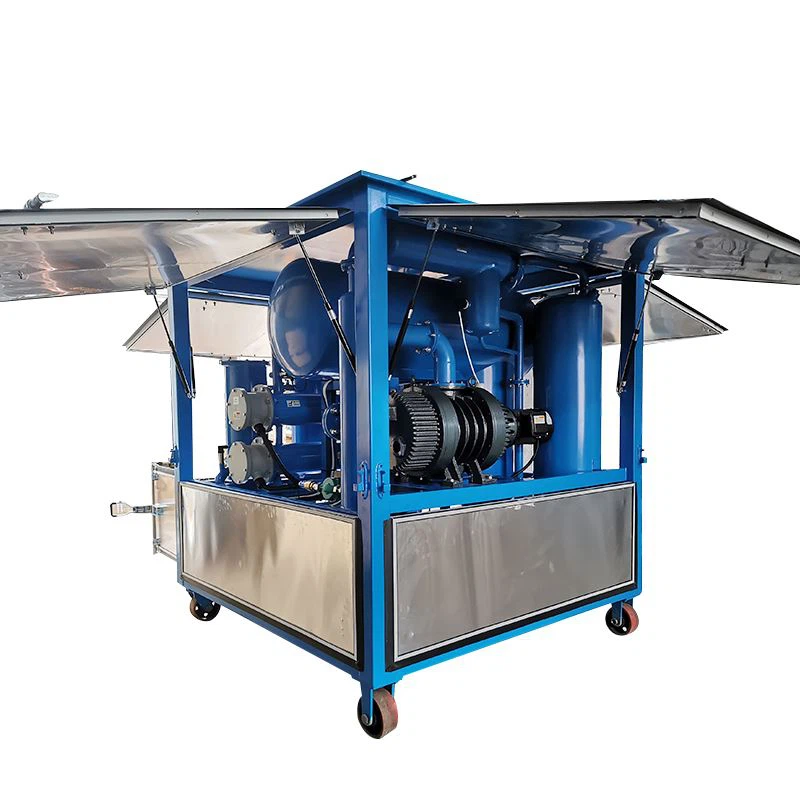
Personnel who handle SF6 gas must be trained, assessed, and authorized for the exact tasks they perform, including filling, recovery, leak checking, purification, transport, and decommissioning. A certified gas technician needs both theoretical knowledge and hands-on competence. For China-based manufacturers, utilities, and service contractors, the safest approach is a documented qualification system tied to equipment, procedures, records, and annual practical reassessment.
Certified Training for IEC 60376 & IEC 62271-4 Compliance
What does SF6 handling certification cover?
SF6 handling certification verifies that a technician can safely connect equipment, recover gas without venting, test gas quality, control contamination, manage cylinders, and respond to abnormal conditions. It should include written knowledge testing and observed practical work on real SF6-filled equipment.
A robust training program should cover more than gas theory. In factory commissioning and field maintenance, the high-risk failures rarely occur because a worker cannot identify SF6. They occur when a technician uses an incompatible coupling, opens a valve sequence in the wrong order, skips vacuum stabilization, or fails to segregate contaminated reclaimed gas.
For B2B buyers sourcing SF6 recovery and testing systems from a China manufacturer, training should be matched to the actual equipment configuration. A technician operating a compact recovery cart needs different practical drills from a crew maintaining gas-insulated switchgear at a high-voltage substation.
Core competency areas include:
- SF6 properties, environmental impact, and displacement hazards.
- High-voltage equipment isolation, lockout, verification, and grounding.
- Filling, evacuation, recovery, transfer, and cylinder connection procedures.
- Leak detection and corrective action.
- Moisture, purity, air-content, and decomposition-product analysis.
- Safe handling of contaminated gas and used filters.
- Emergency ventilation, evacuation, and incident reporting.
- Gas inventory, cylinder traceability, and recovery documentation.
In our production support work, we have seen a simple hose-handling mistake release more gas than an entire year of properly managed topping-up operations. The most effective practical assessment requires the trainee to complete a full closed-loop recovery task, not merely identify components in a classroom.
Who needs certified SF6 gas handling training?
Anyone who directly connects to, transfers, recovers, fills, evacuates, tests, repairs, or decommissions SF6-filled equipment needs task-specific training and documented authorization. Supervisors, warehouse staff, transport coordinators, and procurement teams also need awareness training when their decisions affect cylinder control, gas records, or site safety.
The phrase “touches the gas system” should be defined carefully in an HR policy. It includes more than the person holding a hose. A technician who opens a gas compartment, performs a leak test, changes a filter, decants recovered gas, or supervises recovery work has direct operational influence.
A practical workforce structure separates personnel into three groups:
| Personnel category | Typical responsibilities | Required competence level |
|---|---|---|
| Authorized SF6 technician | Recovery, filling, evacuation, leak repair, gas testing, decommissioning | Theory, practical assessment, equipment-specific authorization |
| SF6 support worker | Cylinder movement, setup support, controlled cleaning, record assistance | Safety awareness, task instruction, supervised access |
| Supervisor or manager | Work approval, contractor control, gas inventory, incident review | Regulatory awareness, process control, competency verification |
For an OEM switchgear factory, this distinction matters during pressure testing and final assembly. A production worker may install a pre-approved fitting under a controlled work instruction, while a certified technician must take responsibility for vacuuming, filling, quality verification, and final gas records.
Wrindu recommends assigning each authorized technician a unique authorization number linked to training date, practical assessment results, approved equipment models, and renewal date. This makes workforce control far stronger than maintaining a generic attendance sheet.
How should HR build an SF6 competency matrix?
HR should build a competency matrix that maps every job role to permitted SF6 tasks, prerequisite training, practical assessment, required PPE, supervision level, and renewal date. No employee should perform a gas-handling task solely because they attended a general safety meeting.
A useful matrix starts with the work process rather than job titles. For example, “substation technician” is too broad. Break the role into recovery, filling, evacuation, gas analysis, leak location, cylinder transport, and contaminated-equipment cleanup.
The authorization matrix should identify:
- The employee’s name, department, and supervisor.
- Permitted gas-system tasks.
- Specific recovery unit, vacuum pump, analyzer, and leak detector models approved for use.
- Completion dates for theory, practical examination, and site induction.
- Medical or respiratory-protection restrictions where relevant.
- Last observed job and assessor sign-off.
- Reassessment and expiration dates.
- Incident, near-miss, or retraining requirements.
In a China factory supplying high-voltage test equipment wholesale, a technician may be qualified to operate a standard recovery system but not an advanced mobile cart with automatic weighing, purification, and digital gas-record export. The controls, interlocks, and maintenance requirements are different. Treating all recovery equipment as interchangeable creates avoidable process risk.
For OEM and custom projects, Wrindu can help customers define equipment-level work instructions that align technician capability with the selected SF6 recovery, vacuum, filling, and gas-analysis instruments.
Why are practical assessments more important than classroom training?
Practical assessments prove whether a worker can control real gas-handling risks under pressure, while classroom training mainly confirms knowledge. The strongest programs require technicians to complete a supervised recovery-and-refill sequence, demonstrate leak-free connections, interpret gas-quality readings, and correctly manage abnormal results.
Written tests are useful, but they do not reveal whether the technician can prevent air ingress through a damaged O-ring or detect an unstable vacuum condition before filling. These are the failures that create rework, contamination, lost gas, and downtime.
A meaningful practical assessment should require the trainee to:
- Inspect hoses, couplings, gaskets, scales, and recovery equipment.
- Confirm equipment isolation and safe work boundaries.
- Connect the recovery system using the approved sequence.
- Recover gas into the correct labeled cylinder without cross-contamination.
- Pull vacuum and verify stabilization before refilling.
- Conduct leak checks after reconnection.
- Record gas mass, quality results, cylinder identity, and work completion.
- Respond to a simulated issue such as a leaking coupling or abnormal moisture reading.
Based on years of handling factory acceptance and commissioning orders, the most revealing point is often the vacuum hold test. A technician may reach the target vacuum quickly, but a rising pressure after isolation usually indicates trapped moisture, a leaking connection, or an incomplete evacuation path. Filling immediately after that failure can contaminate an otherwise clean gas compartment.
Which safety controls protect workers during SF6 service?
The most important controls are electrical isolation, ventilation, gas monitoring where needed, correct respiratory and skin protection for decomposition products, approved recovery equipment, and disciplined contamination control. Pure SF6 is nonflammable, but it can displace oxygen; arcing can also create hazardous by-products that require more stringent precautions.
Do not treat all SF6 jobs as equal. Routine transfer of clean, tested gas in a ventilated workshop has a different risk profile from opening a faulted breaker compartment after internal arcing. The second case may involve corrosive or toxic decomposition products, powder residues, and contaminated filters.
Workplace controls should include:
- Verified de-energization, lockout, grounding, and stored-energy release before opening equipment.
- Forced ventilation or controlled work arrangements in enclosed or low-lying areas.
- Pre-job inspection of recovery hoses, couplings, seals, cylinder valves, and weighing scales.
- PPE selected for the actual task, especially when decomposition products are possible.
- Clearly labeled cylinders for new, recovered, contaminated, and rejected gas.
- Isolation of used filters, residues, and cleaning materials for approved disposal.
- Emergency communication, evacuation procedures, and first-aid readiness.
For gas compartments with suspected internal fault products, a full-face respirator selected through the site’s respiratory-protection program, chemical-resistant gloves, disposable protective clothing, and controlled cleanup methods are typically more appropriate than the PPE used for clean-gas topping up. The key decision is contamination status, not simply whether the nameplate says “SF6.”
How can technicians prevent SF6 loss and gas contamination?
Technicians prevent losses by using a closed recovery path, leak-tested couplings, controlled valve sequencing, calibrated weighing, proper evacuation, and dedicated cylinders. They prevent contamination by separating clean, recovered, and suspect gas, then verifying quality before reuse rather than assuming all recovered gas is suitable.
The operational rule is simple: never connect a known-good gas compartment to an unverified cylinder or hose assembly. This is especially important when contractors use shared equipment across multiple substations or factory test bays.
Common preventable failures include:
- Filling before a vacuum hold confirms system integrity.
- Reusing flattened or chemically damaged coupling seals.
- Connecting a clean compartment to a cylinder containing gas of unknown quality.
- Leaving hoses pressurized and uncapped between jobs.
- Using incorrect scale tare values and losing traceability of gas mass.
- Running recovery equipment with saturated filters or overdue maintenance.
- Treating a “pass” purity reading as sufficient when moisture or decomposition products are high.
In our production runs, a disciplined 15-minute pre-use inspection has prevented most hose and coupling problems. The cost is negligible compared with a contaminated GIS compartment, where repeat evacuation, gas purification, retesting, and commissioning delay can consume multiple shifts.
A reliable manufacturer should provide equipment manuals, preventive-maintenance intervals, compatible-connection specifications, and operator training materials with each wholesale or custom supply package. Wrindu designs SF6 handling solutions around closed-loop recovery and repeatable operating steps so site teams can reduce both emissions and rework.
When should SF6 technicians be retrained or reassessed?
Technicians should be reassessed at defined renewal intervals and immediately after a major procedure change, new equipment introduction, long absence from gas work, safety incident, failed audit, or repeated quality deviation. Annual practical observation is often more valuable than waiting for a formal certificate to expire.
A single qualification event does not guarantee lasting competence. Connection habits drift, new recovery units are introduced, and technicians may go months without performing a complete evacuation-and-refill task.
Trigger retraining when:
- A technician has not performed gas handling for six to twelve months.
- The site introduces a new recovery cart, analyzer, or cylinder connection system.
- A leak, venting event, contaminated fill, or record discrepancy occurs.
- A procedure changes after a customer, utility, or regulator audit.
- The technician fails a practical observation or knowledge check.
- The work scope expands from clean gas handling to faulted-equipment cleanup.
For large utilities and switchgear OEMs, quarterly tool-box verification can be highly effective. A supervisor observes one critical step—such as coupling inspection, scale setup, or vacuum hold recording—and corrects small deviations before they become routine failures.
Where should SF6 records be stored and reviewed?
SF6 records should be stored in a controlled digital system accessible to operations, EHS, quality, and management. Each gas movement should be traceable from equipment compartment to cylinder, recovery unit, test result, reuse decision, and final disposition.
Paper forms can work for a single workshop, but they become unreliable when multiple substations, contractors, warehouses, and service vehicles are involved. The goal is not paperwork for its own sake; it is the ability to explain every kilogram of gas and identify where a loss or contamination event occurred.
A complete record package should include:
- Equipment identification and compartment reference.
- Date, location, technician, and supervisor.
- Initial and final gas mass.
- Cylinder identification and gas status.
- Recovery, filling, and transfer quantities.
- Purity, moisture, and decomposition-product test results where applicable.
- Leak-test result and corrective action.
- Recovery-unit maintenance status and calibration evidence.
- Waste-filter or contaminated-material disposal record.
For factory export projects, this traceability also supports customer handover. A buyer receiving custom-built high-voltage test equipment from a China supplier can verify not only the instrument performance, but also the gas-handling history used during final inspection and commissioning preparation.
Can a China SF6 equipment manufacturer support compliant workforce training?
Yes. A capable China SF6 equipment manufacturer can support training with equipment-specific operating procedures, commissioning guidance, manuals, maintenance schedules, practical demonstrations, and customized configurations. However, the employer remains responsible for determining the legal qualifications and site authorization required in the country and workplace where technicians perform the work.
For international B2B projects, the training package should be localized. A customer may need English documentation, Chinese operating labels, site-specific permit forms, or a practical training fixture matching its switchgear interface and cylinder standard.
Wrindu, officially RuiDu Mechanical and Electrical (Shanghai) Co., Ltd., supports power utilities, OEMs, contractors, and testing organizations with high-voltage testing and diagnostic equipment manufactured in China. For SF6 projects, the most useful supplier contribution is not simply delivery of a recovery machine. It is providing the correct connection standard, gas-handling workflow, test capability, spare parts, and operator guidance for the customer’s actual equipment.
Wrindu Expert Views
“The best SF6 safety program is designed around the moment a technician connects the first hose. If the correct cylinder, gasket, coupling, scale, procedure, and authorization are already confirmed, the operation becomes controlled and repeatable. If any of those are uncertain, stopping the job is faster and cheaper than recovering from contaminated gas, an emission event, or a delayed commissioning. At Wrindu, we advise customers to qualify people and equipment as one system—not as separate purchasing and training decisions.”
What should management do next to build a safe SF6 workforce?
Management should define job scopes, identify every employee and contractor who can affect the gas system, require practical authorization before work, maintain traceable gas records, and audit field performance. The most effective program connects HR controls with equipment selection, maintenance, and real job observation.
Start with these actions:
- Create an SF6 task register for all factory, warehouse, field-service, and contractor activities.
- Classify workers as authorized technicians, supervised support workers, or awareness-only personnel.
- Select qualified trainers and require written plus practical assessments.
- Issue technician-specific authorizations linked to approved equipment and tasks.
- Standardize gas-transfer forms, cylinder labels, and quality-test records.
- Establish retraining triggers for equipment changes, incidents, and long gaps in practice.
- Review gas inventory and technician performance at management level each quarter.
The strongest outcome is a workforce that can prove competence before work begins, protect personnel during abnormal conditions, and account for every gas movement after work ends. For utilities, OEM switchgear manufacturers, and electrical contractors, this reduces emissions, avoids commissioning delays, protects customer confidence, and improves operational control.
FAQs
Does every employee working near SF6 equipment need certification?
No. Direct gas-handling personnel need task-specific qualification and authorization. Employees who work nearby but do not connect, transfer, recover, or open the gas system generally need role-appropriate safety awareness training.
Can recovered SF6 gas be reused?
Yes, if it is recovered into the correct cylinder, protected from contamination, tested, and shown to meet the applicable reuse specification. Gas with unacceptable moisture, air content, or decomposition products should be purified or managed through an approved disposal route.
How often should SF6 recovery equipment be inspected?
Inspect hoses, seals, couplings, valves, scales, and visible condition before each use. Follow the manufacturer’s preventive-maintenance schedule for filters, pumps, calibration, and performance checks.
What is the most common cause of SF6 gas contamination?
Poor evacuation and uncontrolled connections are common causes. Air, moisture, oil residue, deteriorated seals, and shared unverified cylinders can contaminate otherwise usable gas.
Can Wrindu provide custom SF6 handling equipment for OEM projects?
Yes. Wrindu can support OEM and custom requirements for high-voltage testing and SF6-related handling workflows, including suitable interfaces, operating documentation, and equipment configurations for factory or field use.
Related articles
 SF6 Leak Detector Sensitivity: Select a Method for the Inspection TaskKnowledge
 Cable Fault Locator Selection for Urban Networks: Routes, Noise and AccessKnowledge
 Substation Battery Load Bank Sizing: Duty, Voltage Range and Heat RejectionKnowledge
 CT Polarity, Ratio and Burden Testing: Find Wiring and Loading ErrorsKnowledge