
How Will Smart Sensors Transform Grid Maintenance?
Send your test requirement — get a tailored solution and a quote within one working day.
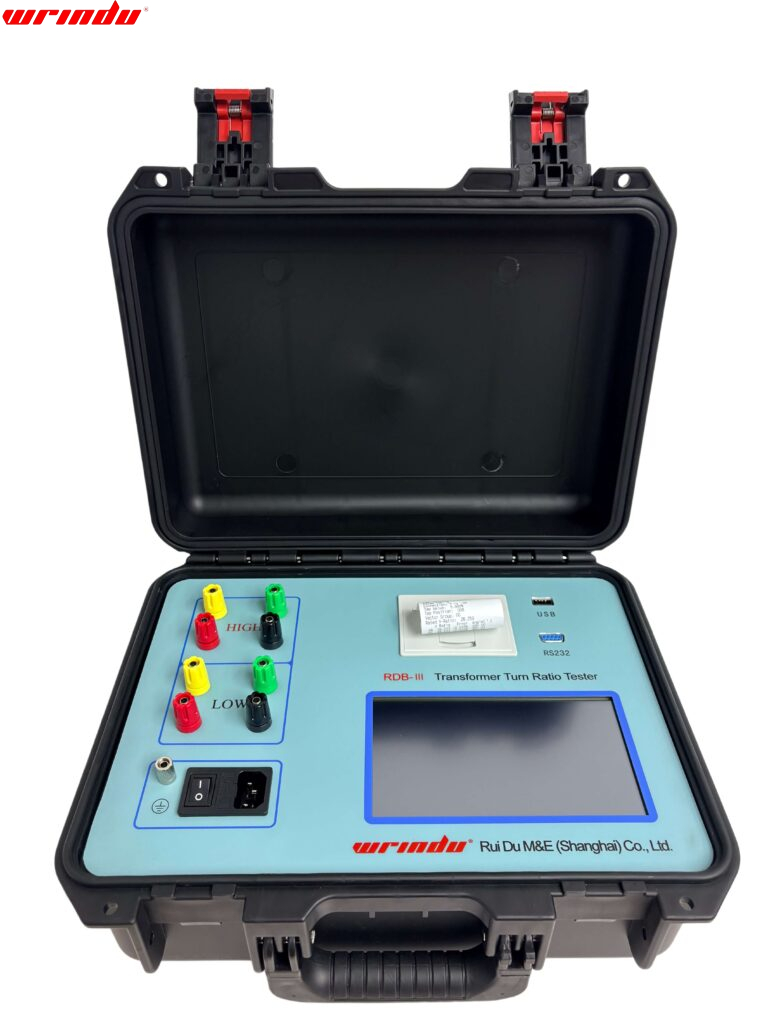
Smart sensors will transform grid maintenance by detecting equipment stress, worker exposure, and operational faults before they become outages or injuries. Connected accessories such as wearable safety devices, wireless temperature sensors, portable diagnostic tools, and intelligent cable-monitoring modules deliver real-time field data that helps utilities move from scheduled inspection to targeted, condition-based action.
Future IoT Trends in The Accessory-Driven Maintenance Strategy
How Do Smart Sensors Improve Maintenance Decisions?
Smart sensors improve maintenance decisions by continuously measuring electrical, thermal, mechanical, and environmental conditions. Instead of servicing every asset on the same calendar cycle, maintenance teams can prioritize equipment showing measurable deterioration, abnormal trends, or safety-related alerts.
Traditional maintenance planning often depends on time intervals: inspect every six months, test annually, overhaul after a fixed operating period. That approach remains necessary for safety-critical equipment, but it does not distinguish between a lightly loaded feeder in a dry environment and a heavily cycled asset exposed to heat, contamination, vibration, and moisture.
Connected sensors add context. A temperature sensor may identify a gradual 12°C rise at one cable termination while adjacent phases remain stable. A portable circuit-breaker analyzer may show increasing opening-time variation across several operations. A wearable device may record repeated worker exposure to high heat near a transformer bay. Each signal alone has limits; together, they create a maintenance priority.
In field projects, the useful outcome is not “more data.” It is a shorter path from symptom to action. A technician should be able to answer three questions:
-
What changed compared with the normal baseline?
-
Is the trend accelerating, stable, or temporary?
-
What specific inspection or test should happen next?
Wrindu develops high-voltage testing and diagnostic equipment that helps maintenance teams validate sensor-based findings. Continuous monitoring can identify a potential issue, while portable test instruments provide the detailed verification needed before repair, replacement, or shutdown decisions.
What Connected Accessories Matter Most in Smart Grids?
The most valuable connected accessories are those that monitor known failure points without making field work more complicated. These include temperature sensors, partial-discharge sensors, cable-joint monitors, environmental detectors, portable test meters, wearable alarms, connected clamps, and wireless communication gateways.
A smart-grid accessory should not be selected simply because it is wireless. The useful question is whether the accessory monitors a failure mechanism that is otherwise difficult, expensive, or unsafe to detect early.
For example, cable joints and terminations are common areas of concern because heat can build gradually from loose connections, aging insulation, overload, or poor installation. A compact temperature-monitoring accessory can reveal phase imbalance or a local hot spot long before visible damage occurs. However, a temperature sensor cannot confirm the full cause. The follow-up may require contact-resistance testing, insulation evaluation, thermal imaging, or visual inspection under approved safety procedures.
From a China manufacturer perspective, the most practical products are modular. A utility should be able to begin with high-risk assets, validate the benefit, then expand the monitoring program. Installing sensors on every component before the team has a response workflow often creates a dashboard full of alerts with no clear owner.
Wrindu supports customers that require custom accessory configurations, portable test kits, OEM labeling, and wholesale supply for regional maintenance markets. For distributors, a combined package of diagnostic instruments, accessories, training materials, and spare leads is often more valuable than a single standalone device.
Why Are Wearable Sensors Changing Field Safety?
Wearable sensors are changing field safety because they provide immediate awareness of falls, fatigue indicators, worker location, heat exposure, gas exposure, and restricted-zone movement. Their strongest role is to supplement trained supervision and safe work procedures with faster information when conditions change.
For electrical maintenance work, the safety benefit is often practical rather than futuristic. A lone worker entering a remote substation can carry or wear a connected device that reports location, movement, and emergency status. If the device detects a fall, prolonged immobility, or an alarm-button activation, supervisors can respond faster than they could through scheduled radio check-ins.
Wearables also help address exposure that workers may underestimate. In hot substations, cable tunnels, solar sites, or industrial electrical rooms, heat stress can accumulate gradually. A worker focused on testing may not notice the early signs of fatigue, dehydration, or elevated body temperature. A wearable alert can prompt a rest break before concentration falls.
The engineering trade-off is comfort versus data quality. A heavy helmet attachment may be rejected by workers. A wrist device may be convenient but less reliable for certain motion measurements. A vest-mounted sensor may provide stable positioning but can interfere with harnesses or protective clothing.
Based on factory discussions with field users, the best wearable devices meet four conditions:
-
They operate through a full shift without frequent charging.
-
They remain functional with gloves, dust, vibration, and sweat.
-
Their alerts are distinct but do not create alarm fatigue.
-
Their data is limited to actionable safety use, not unnecessary worker surveillance.
A wearable sensor must never become an excuse to reduce safety training, lockout procedures, insulation protection, or supervision. Its value is earlier warning and better coordination, not replacement of established electrical safety controls.
Which Sensor Data Should Trigger Maintenance Action?
Sensor data should trigger maintenance action when it shows a repeatable abnormal trend, exceeds an approved threshold, differs significantly between comparable phases, or aligns with another diagnostic indicator. A single isolated reading should normally lead to verification before a costly intervention.
The most useful thresholds are asset-specific. A cable termination operating at 62°C may be normal under heavy load and high ambient temperature, while the same temperature on one phase of a lightly loaded circuit may justify immediate investigation. Absolute values matter, but temperature rise relative to ambient and phase-to-phase deviation often reveal more.
A practical decision model uses four levels:
-
Normal: Stable values within expected operating behavior.
-
Watch: Small but repeatable deviation; increase review frequency.
-
Inspect: Clear deviation or rate-of-change concern; schedule targeted testing.
-
Urgent: Rapid escalation, high safety risk, or multiple corroborating symptoms; escalate according to site procedures.
For partial-discharge monitoring, raw magnitude alone can be misleading. Electrical noise, switching events, radio interference, and sensor placement can influence the reading. The maintenance team should assess pulse pattern, repetition rate, phase relationship, trend direction, and correlation with operating conditions before deciding that insulation has deteriorated.
In our equipment verification work, a common failure mode is comparing readings collected through different sensor positions, firmware versions, or test settings. This creates false trends. A strong program records the sensor location, installation date, sampling interval, operating load, ambient condition, and equipment identification number with every result.
Wrindu portable test equipment can support the next stage when connected monitoring indicates an issue. For example, a thermal alert at a breaker connection may be followed by contact-resistance measurement and operating-mechanism testing. This combination gives maintenance teams evidence rather than assumption.
How Can Portable Test Tools Work With IoT Systems?
Portable test tools work with IoT systems by adding verified, technician-led measurements to continuous sensor data. They can upload test records, synchronize timestamps, compare results against historical baselines, and attach photographs or equipment identifiers to a digital maintenance record.
Fixed sensors are excellent at observing trends, but they cannot perform every diagnostic task. A permanently installed temperature sensor may detect abnormal heating, while a field technician needs a micro-ohmmeter to check connection resistance. A monitoring system may flag breaker-operation irregularity, while a circuit-breaker analyzer is needed to assess opening time, closing time, travel, coil current, and synchronization.
This division of roles is important:
-
Fixed sensors provide continuous awareness.
-
Portable instruments provide detailed diagnosis.
-
Maintenance software stores evidence and assigns actions.
-
Technicians make the final field decision under approved procedures.
A reliable workflow begins with asset identification. Each portable test record should be associated with the correct transformer, breaker, cable, battery bank, arrester, or relay panel. QR codes, RFID labels, or durable serial-number tags can reduce manual-entry mistakes, especially on sites with many similar bays.
Wrindu designs high-voltage diagnostic instruments for transformers, circuit breakers, cables, relays, batteries, insulation systems, and related electrical assets. For OEM and custom projects, Wrindu can discuss data-export formats, report fields, language settings, communication interfaces, and accessory labeling that fit the buyer’s maintenance platform.
The key consideration for a China factory supplier is compatibility before shipment. Buyers should provide the expected workflow, file format, operating environment, and communication requirement early. A basic USB export may be sufficient for one contractor, while a larger utility may require structured records for centralized maintenance analysis.
When Does Edge Processing Outperform Cloud-Only Monitoring?
Edge processing outperforms cloud-only monitoring when field decisions must be made immediately, network coverage is inconsistent, or raw sensor data would be expensive and impractical to transmit continuously. It allows a local device or gateway to filter, classify, and alert before sending selected data to the central platform.
A substation, wind farm, underground cable route, or remote industrial facility may not always have stable high-bandwidth communication. If every vibration waveform, acoustic signal, or partial-discharge pulse is sent directly to the cloud, bandwidth costs and data volume can rise quickly. More importantly, an urgent local event may be delayed by communication failure.
Edge processing can apply simple rules locally. For example, the gateway may calculate a 15-minute temperature average, detect a phase imbalance greater than a defined value, or send an immediate alarm when temperature rise accelerates sharply. The full raw data can be stored temporarily for later review, while only actionable events are transmitted.
However, local processing must be controlled carefully. Excessive filtering can hide early warning signals; overly sensitive settings can flood the team with nuisance alarms. During product configuration, the buyer should define:
-
Sampling rate and data-retention period.
-
Local alarm thresholds and escalation rules.
-
Network-loss behavior and offline storage capacity.
-
Firmware update process.
-
Cybersecurity and user-access controls.
-
Sensor replacement and calibration schedule.
For wholesale and supplier programs, Wrindu can help buyers define a practical configuration package instead of selecting accessories based solely on catalog specifications. The best solution is one that technicians can maintain consistently over years, not one that looks advanced during a demonstration.
Who Should Own Smart Sensor Data and Response?
The asset owner should define data ownership, while maintenance, operations, safety, and information-technology teams should jointly own the response process. Smart sensor data becomes valuable only when each alarm has a named reviewer, a response deadline, and a documented action pathway.
Many sensor projects fail after installation because the organization has not assigned responsibility. Operations may assume maintenance will respond; maintenance may assume the control room will validate the alert; the safety team may only see incident data after the event. The result is delayed action despite real-time monitoring.
A clear responsibility structure can include:
-
Operations team: Monitor live alarms and operating conditions.
-
Maintenance team: Verify equipment condition and plan intervention.
-
Safety team: Manage exposure, emergency, and worker-protection alerts.
-
IT or cybersecurity team: Control device access, communication, and updates.
-
Procurement team: Maintain supplier support, spare parts, and service agreements.
For contractors, the data handover should be defined before commissioning. If a contractor installs connected accessories on behalf of a utility, the final package should include device identification, installation location, configuration settings, communication details, baseline readings, and maintenance instructions.
Wrindu Expert Views
“Connected accessories work best when they are treated as part of a maintenance decision, not as isolated electronics. In field service, we have seen a useful temperature trend ignored because no one owned the follow-up test. We have also seen teams replace healthy components because one unverified alert looked urgent. The right process is simple: identify the abnormal signal, confirm it with the correct portable instrument, document the condition, and assign a specific action. Smart sensors make maintenance faster only when the response chain is equally well designed.”
Where Can Custom Sensor Accessories Create the Most Value?
Custom sensor accessories create the most value where standard products do not fit the installation, climate, communication method, cable size, safety procedure, or reporting requirement. For B2B buyers, customization often improves adoption and serviceability more than adding unnecessary sensor functions.
A standard sensor enclosure may be acceptable in a clean indoor panel but unsuitable for a coastal site with salt mist, condensation, and large temperature variation. A wireless accessory with a compact battery may work for short-term inspection but not for a multi-year installation without planned battery replacement. An antenna location that performs well in an open yard may fail inside a metal-clad switchgear environment.
China-based manufacturers can offer practical customization options when buyers define the use case clearly. These may include:
-
Custom enclosure markings and OEM branding.
-
Cable length, connector, clamp, or mounting changes.
-
Multi-language display and documentation.
-
IP-rated packaging for harsh environments.
-
Customized alarm thresholds and report formats.
-
Local voltage, charging plug, and communication configuration.
-
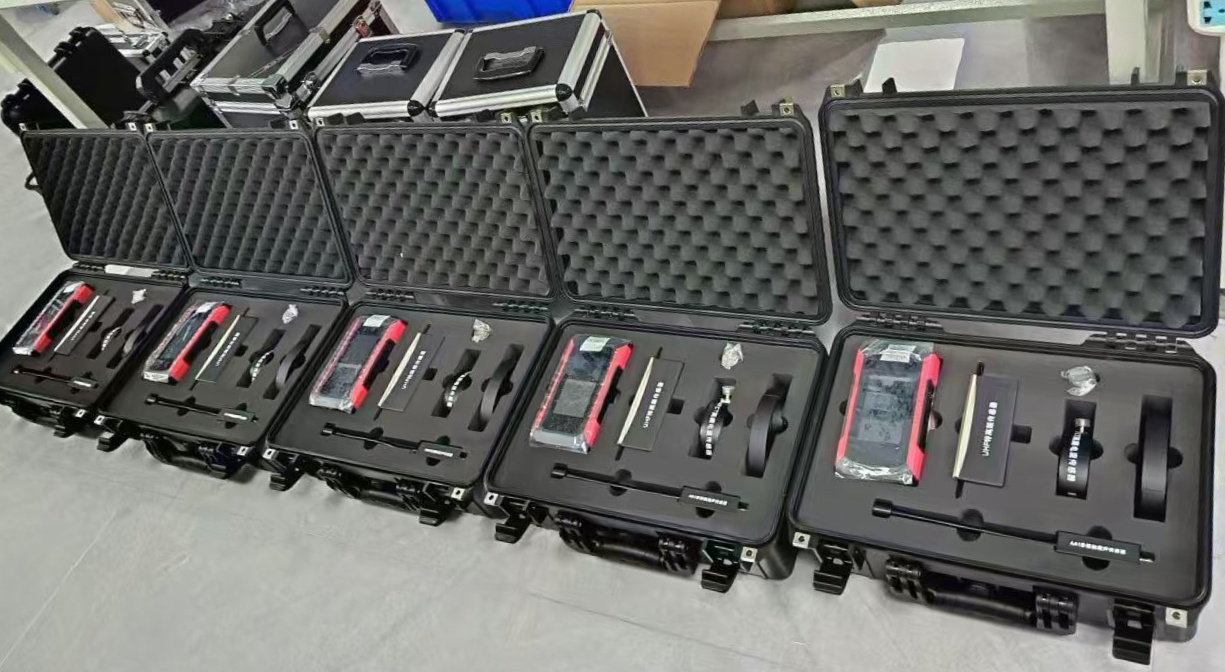
Rugged carrying cases for portable field accessories.
-
Distributor-ready wholesale packaging and labeling.
Wrindu works with utilities, contractors, equipment manufacturers, laboratories, and distributors that need product configurations suited to real electrical maintenance work. For a custom or OEM request, the buyer should provide photos of the installation point, dimensional constraints, operating temperature range, required communication method, and target maintenance procedure.
What Should Utilities Do Before Investing in Connected Accessories?
Utilities should begin with a focused pilot on high-consequence assets, define the response workflow before installation, and measure whether alerts lead to safer or faster maintenance decisions. The goal is to prove a repeatable operational benefit, not to install the largest possible number of sensors.
Choose assets where failure consequences are meaningful and inspection is difficult. Examples may include heavily loaded cable joints, critical breakers, remote substations, battery systems, transformer connections, or confined work areas. Establish baseline readings before relying on automated alerts, because a sensor cannot identify abnormal behavior without a reference condition.
A strong pilot should include the following actions:
-
Select one defined failure mechanism to monitor.
-
Record baseline data under known operating conditions.
-
Set conservative alert levels and refine them with field evidence.
-
Assign named responders for every alarm category.
-
Verify alerts with portable diagnostic equipment.
-
Review false alarms, missed events, battery performance, and communication reliability.
-
Expand only after the maintenance workflow is proven.
The future of grid maintenance is not a choice between skilled technicians and smart devices. It is a combination of experienced judgment, reliable test instruments, connected accessories, and clear field procedures. Wrindu helps global buyers build this combination through China manufacturing capability, custom product development, OEM support, wholesale supply, and technical service for high-voltage testing applications.
FAQs
Can wearable sensors be used in high-voltage maintenance work?
Yes, when they are selected and deployed to support approved safety procedures. They can provide location, fall, motion, exposure, and emergency-alert functions, but they do not replace electrical protective equipment or lockout procedures.
Do smart sensors eliminate scheduled maintenance?
No. Smart sensors improve maintenance prioritization and can reduce unnecessary inspections, but mandatory safety checks, compliance requirements, and manufacturer recommendations still apply.
What is the first connected accessory a utility should install?
Start with the accessory that monitors the highest-risk and most difficult-to-inspect failure point, such as a critical cable termination, breaker connection, battery system, or remote worker location.
Can Wrindu support OEM and custom sensor accessory orders?
Yes. Wrindu can discuss OEM branding, custom accessories, product configuration, packaging, documentation, language options, and wholesale supply requirements for qualified B2B projects.
How should sensor alerts be verified in the field?
Use the correct portable diagnostic instrument, confirm sensor condition and installation, compare results with historical data, and document the finding before deciding on repair or replacement.
Related articles
 SF6 Leak Detector Sensitivity: Select a Method for the Inspection TaskKnowledge
 Cable Fault Locator Selection for Urban Networks: Routes, Noise and AccessKnowledge
 Substation Battery Load Bank Sizing: Duty, Voltage Range and Heat RejectionKnowledge
 CT Polarity, Ratio and Burden Testing: Find Wiring and Loading ErrorsKnowledge