
Why Is a Rugged Handheld Cheaper Over Its Full Working Life?
Send your test requirement — get a tailored solution and a quote within one working day.
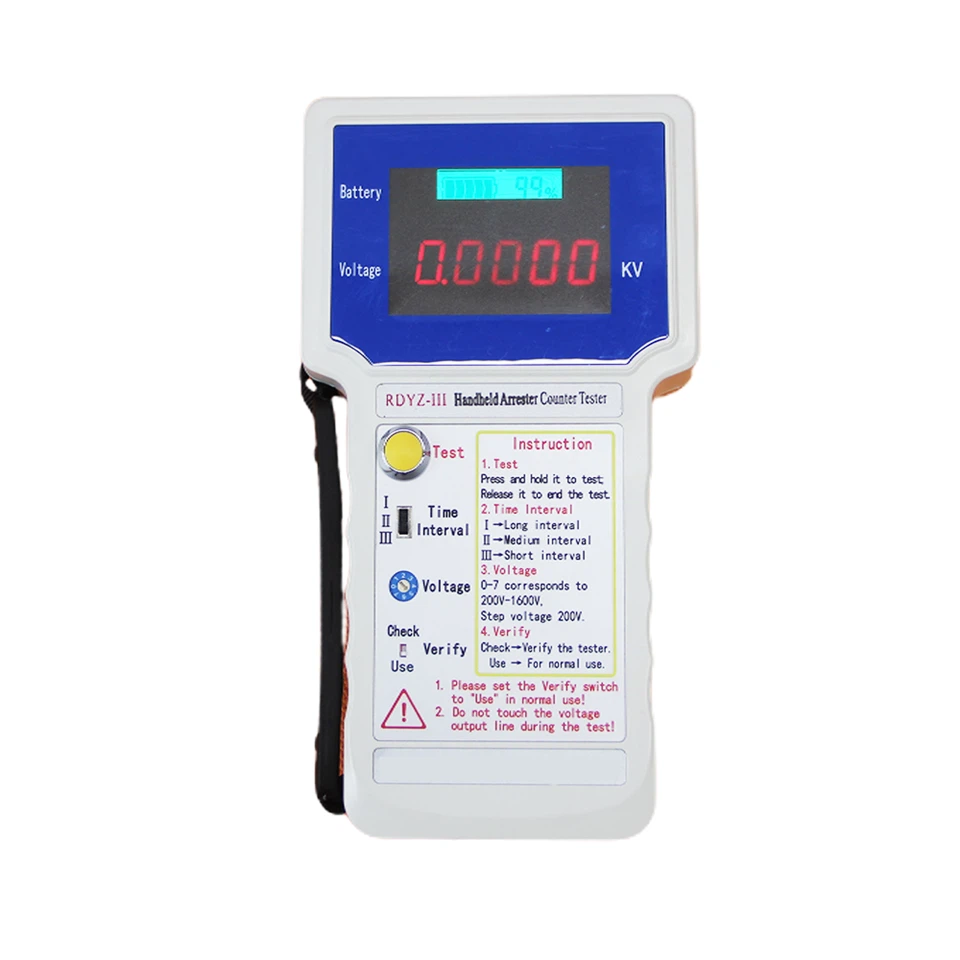
A rugged handheld is often cheaper over its working life because it reduces replacement purchases, battery-related interruptions, repair labor, lost test data, and technician downtime. For utilities, factories, and field-service teams, one industrial Wrindu meter can deliver more usable years than several consumer-grade devices, making the real operating cost lower despite a higher initial price.
Substation Accessory Buying Guide 2024: Long-Term Cost Ownership
What Costs Belong in Handheld TCO?
Handheld total cost of ownership includes purchase price, batteries, repairs, replacement units, calibration, accessories, technician downtime, lost data, shipping, and administrative effort. A low purchase price is only one line in the calculation; it rarely reflects the full financial exposure of using a device in industrial conditions.
For a power-testing team, the correct calculation is:
A consumer meter may cost less at procurement, but its cost profile changes quickly after repeated travel, drops, temperature swings, dust exposure, and daily connection cycles. A damaged screen, loose terminal, depleted battery, or failed charging port can stop a field task even when the rest of the device appears functional.
In our production discussions with utility maintenance teams, the overlooked cost is usually not the repair invoice. It is the technician who arrives at a substation, prepares isolation paperwork, opens a test window, and then discovers that the handheld cannot complete the measurement. Rebooking access, dispatching another engineer, and delaying energization can cost more than the device itself.
A realistic industrial handheld TCO model should include:
-
Initial equipment and accessory cost
-
Spare battery and charging solution cost
-
Annual calibration or verification cost
-
Failure rate in the actual working environment
-
Average repair turnaround time
-
Cost of a standby unit
-
Technician labor during an interruption
-
Cost of redoing incomplete measurements
-
Expected service life in years
-
Availability of spare parts and technical support
For B2B buyers, the key question is not “Which meter is cheaper today?” It is “Which meter completes more valid jobs per dollar over five years?”
How Does Battery Life Affect Field-Service Cost?
Battery life affects TCO by determining whether a technician can complete a full shift without charging delays, repeat visits, or premature battery replacement. The best battery is not simply the largest pack; it must sustain stable measurement performance under realistic load, temperature, and aging conditions.
A handheld used for electrical testing draws power unevenly. Screen brightness, wireless communication, data logging, test excitation, backlight use, and cold weather can create short high-load periods that reduce actual runtime well below a laboratory claim.
For industrial use, we recommend evaluating battery performance using a duty-cycle test rather than standby hours. A practical test cycle can include:
-
15 minutes of active measurement and screen use
-
10 minutes of report review or data transfer
-
Repeated wake-up cycles
-
Bluetooth or Wi-Fi communication where required
-
Operation at high and low ambient temperatures
-
Charging after partial discharge rather than only full cycles
In our factory validation work, battery complaints often trace back to charging behavior rather than cell capacity. A device that remains permanently on a charger may experience more heat stress than one charged in controlled cycles. A poorly designed charging circuit can also create inaccurate battery indicators, leading technicians to believe they have sufficient runtime when the voltage reserve is already too low.
A ruggedized Wrindu handheld should be assessed for usable shift coverage, battery protection logic, connector durability, and replacement availability. For a maintenance contractor with multiple teams, standardized battery packs and chargers are also important: they reduce training, simplify spare stock, and prevent a field worker from carrying incompatible adapters.
Why Does Rugged Construction Reduce Replacement Purchases?
Rugged construction reduces replacement purchases because it protects the components most likely to fail first: displays, connectors, switches, battery doors, terminal interfaces, and internal circuit boards. Industrial durability is engineered into the full assembly, not added later through a soft protective case.
A consumer device can survive occasional careful use in an office. Field testing is different. Technicians may work in switchyards, control rooms, cable tunnels, wind farms, rail depots, battery rooms, and construction sites. The handheld may be placed on concrete, metal grating, transformer housings, or wet ground. It may be carried in a tool bag alongside probes, clamps, cables, and metal fittings.
The common failure sequence is predictable:
-
A small drop chips the screen edge or loosens an internal connector.
-
Dust or moisture enters through a compromised seam.
-
Repeated cable insertion stresses the port or terminal assembly.
-
Measurement stability declines or communication becomes intermittent.
-
The device is “still usable” until it fails during a critical job.
A rugged product must manage energy from impact. This can require reinforced corners, controlled internal clearances, screw-mounted structural supports, gasket compression, vibration-resistant connector retention, and a display stack designed to avoid direct load transfer to the LCD or touchscreen.
A 1.0–1.5 m drop claim alone is not enough. Buyers should ask what surface was used, how many drops were performed, whether each edge and corner was tested, and whether the unit was functionally checked afterward. A single demonstration drop onto plywood does not represent repeated impacts onto concrete.
Wrindu designs equipment for high-voltage testing environments where reliability is part of safety discipline. A handheld that remains operational after normal field handling helps protect schedules, reports, and the credibility of the testing team.
Which Repair Costs Are Usually Hidden?
The most expensive repair costs are frequently hidden because they include diagnosis, shipping, administrative handling, calibration checks, replacement rental, and lost labor—not only the replacement part. A low-cost consumer meter can become uneconomical when every failure triggers a complete replacement workflow.
Consider a cracked display. The visible cost may appear to be a screen repair. The actual cost may include:
-
Packaging and shipment to a repair location
-
Device intake, fault confirmation, and quotation approval
-
Technician time spent transferring records or settings
-
Temporary replacement unit deployment
-
Calibration verification after repair
-
Return shipping and functional acceptance testing
-
Risk of losing historical test files or configurations
For electrical test instruments, repair is not merely cosmetic. If a drop affects a measurement input, internal reference, insulation barrier, or mechanical terminal assembly, the device should be checked before returning to service. Using an instrument with uncertain measurement integrity creates a larger commercial and safety risk than the repair invoice.
China manufacturer capability matters here. A direct factory relationship can shorten the path from fault report to technical diagnosis because the engineering, production, quality, and spare-parts teams can coordinate around the same product platform. For wholesale projects, buyers should request a spare-parts commitment covering batteries, housings, displays, chargers, leads, and commonly damaged connectors.
A reliable supplier should also provide clear repair boundaries: which faults are field-replaceable, which require factory service, and which components must be verified after repair.
How Does Downtime Make Consumer Meters Expensive?
Downtime makes consumer meters expensive when a failed device prevents planned testing, creates repeat travel, delays commissioning, or forces technicians to work around incomplete data. The labor and schedule impact can exceed the device’s purchase price after only one failed site visit.
A typical substation or industrial maintenance visit involves more than a technician holding a meter. It may require outage coordination, vehicle access, permit approval, safety preparation, cable installation, test sequencing, and report submission. If a handheld fails halfway through the work, the team may lose the only approved time window.
For example, assume a two-person field crew costs USD 45 per person per hour fully loaded. If an equipment failure causes a four-hour interruption, direct labor loss is:
Add travel, rescheduling, supervisory coordination, and potential outage extension, and one failure can cost USD 600–1,000 before replacing the meter. This is why a handheld that costs more upfront may still be financially preferable.
The following example illustrates why one rugged device can cost less than three disposable consumer meters over a five-year period.
These figures are planning examples, not fixed quotations. Actual results depend on application severity, technician cost, operating hours, and service coverage. However, the financial logic remains consistent: reducing failure events is often more valuable than reducing the purchase order amount.
What Durability Tests Matter in Industrial Environments?
The most useful durability tests simulate the real mechanical, environmental, and electrical stresses of the intended application rather than relying on one headline rating. Buyers should evaluate drops, vibration, temperature cycling, ingress protection, connector life, battery-door retention, and post-test measurement accuracy.
In factory quality control, we pay special attention to interfaces because they fail before the main circuit board in many handheld products. Test leads and charging cables apply repeated side loads. If a connector is only electrically adequate but mechanically under-supported, it can loosen after hundreds of insertions.
For industrial handhelds, ask the manufacturer to explain:
-
Drop height, drop surface, number of drops, and orientations
-
Dust and water protection level for the finished assembly
-
Operating and storage temperature ranges
-
Vibration test conditions for transport and field use
-
Terminal insertion and removal cycle targets
-
Switch, keypad, and touchscreen cycle testing
-
Battery-door latch cycle testing
-
Accuracy verification after mechanical stress
-
Incoming inspection standards for displays, cells, and connectors
A common procurement mistake is buying an instrument based on an IP rating while ignoring connector design. A device may resist water from outside but still fail after a side-loaded test lead damages the terminal inside. For handheld electrical meters, mechanical durability and measurement reliability must be evaluated together.
Who Should Buy Direct From a China Factory?
Utilities, testing contractors, OEMs, distributors, and large industrial users should consider buying directly from a China factory when they need stable supply, technical customization, traceable quality control, and long-term spare-parts support. Direct sourcing is especially valuable for repeat orders and specialized field applications.
A manufacturer relationship is not only about wholesale price. It enables application-specific discussion before production begins. For example, a battery manufacturer may need a different measurement workflow from a railway maintenance contractor; an OEM customer may require custom labeling, language settings, packaging, test leads, communication protocols, or reporting formats.
Wrindu, officially RuiDu Mechanical and Electrical (Shanghai) Co., Ltd., supports high-voltage testing applications across transformers, circuit breakers, batteries, cables, relays, insulation systems, and related power assets. As a China manufacturer, Wrindu can support customers from initial technical consultation through design alignment, manufacturing, packaging, delivery, and after-sales service.
For OEM and custom projects, define these requirements before issuing a purchase order:
-
Intended application and measurement range
-
Required accuracy and resolution
-
Operating temperature and site conditions
-
Enclosure, label, and packaging requirements
-
Branding, language, and documentation needs
-
Quantity forecast and spare-parts forecast
-
Inspection standard and acceptance criteria
-
Warranty process and response-time expectation
A capable supplier will ask detailed questions before quoting. That is usually a positive signal: it shows the factory is managing risk before it reaches your site.
Wrindu Expert Views
“The lowest-cost handheld is often the one that creates the highest hidden expense. In our experience, field failures usually begin at interfaces: charging ports, terminal blocks, battery latches, display edges, and cable strain points. A serious industrial device must be designed around those weak points, then verified after drop, vibration, and repeated-use testing. For B2B buyers, specify the work environment, expected daily operating cycles, and required service life before comparing prices. That turns a price comparison into an operating-cost decision.”
When Should a Handheld Be Repaired or Replaced?
A handheld should be repaired when the fault is isolated, measurement integrity can be verified, and the total repair cost is meaningfully lower than replacement. It should be replaced when repeated failures, unavailable parts, outdated support, or calibration uncertainty make continued use financially or operationally unsafe.
Use repair when the issue is limited to a replaceable battery, protective housing, approved display module, charging accessory, or external lead. Replace the unit when internal damage affects accuracy, insulation safety, processor stability, or availability of critical parts.
A practical decision rule is to replace rather than repair when the total repair cost exceeds 40–50% of a new instrument’s delivered cost, particularly if the device has already reached the later part of its expected service life. This threshold should be lower for mission-critical applications where a second failure could delay commissioning or compromise test records.
Create a simple failure log for every fleet device. Track date, fault type, root cause, repair cost, downtime days, and whether the device passed verification after service. Within 12 months, this data will reveal whether the problem is user handling, application mismatch, poor accessory quality, or an unsuitable device platform.
Can a Rugged Handheld Deliver Better Long-Term Value?
Yes. A rugged handheld delivers better long-term value when it survives the real environment, completes full shifts, remains supportable, and avoids costly work interruptions. The best purchase decision compares usable years and successful jobs—not only the unit price.
For power utilities, electrical contractors, energy-storage manufacturers, railway operators, and industrial plants, a handheld meter is a productivity asset. It should be selected with the same discipline used for test leads, safety equipment, calibration standards, and commissioning tools.
The actionable approach is straightforward:
-
Calculate five-year TCO before comparing quotations
-
Assign a realistic cost to technician downtime
-
Validate battery runtime using actual duty cycles
-
Review drop, ingress, connector, and post-test accuracy evidence
-
Confirm spare-parts availability and repair turnaround
-
Purchase from a manufacturer or supplier that understands your application
-
Use OEM or custom specifications when the workflow demands it
Wrindu handheld solutions are designed for organizations that need reliable electrical testing performance, controlled long-term cost, and dependable factory support. The goal is not to buy the cheapest meter; it is to prevent the next failed test day.
FAQs
How long should an industrial handheld meter last?
A well-specified rugged handheld should typically support several years of professional use, depending on test frequency, environmental exposure, maintenance practices, and availability of batteries and spare parts.
Does a protective case make a consumer meter industrial-grade?
No. A case may reduce cosmetic damage, but it does not strengthen internal connectors, terminal assemblies, battery latches, sealing, circuit-board retention, or measurement stability after impact.
Can Wrindu provide OEM or custom handheld solutions?
Yes. Wrindu can support B2B, OEM, custom, and wholesale requirements such as branding, documentation, packaging, accessories, functional configuration, and application-based technical alignment.
What should a wholesale buyer request before ordering?
Request product specifications, quality-control procedures, test records, warranty terms, spare-parts list, lead time, packaging details, calibration requirements, and a clear after-sales service process.
Why is battery replacement planning important?
Battery capacity declines with use, heat exposure, and charging cycles. Planning approved replacement batteries prevents avoidable downtime and helps maintain consistent field productivity.
Related articles
 SF6 Leak Detector Sensitivity: Select a Method for the Inspection TaskKnowledge
 Cable Fault Locator Selection for Urban Networks: Routes, Noise and AccessKnowledge
 Substation Battery Load Bank Sizing: Duty, Voltage Range and Heat RejectionKnowledge
 CT Polarity, Ratio and Burden Testing: Find Wiring and Loading ErrorsKnowledge