
When are portable PD spot-checkers enough for reliable routine inspections?
Send your test requirement — get a tailored solution and a quote within one working day.
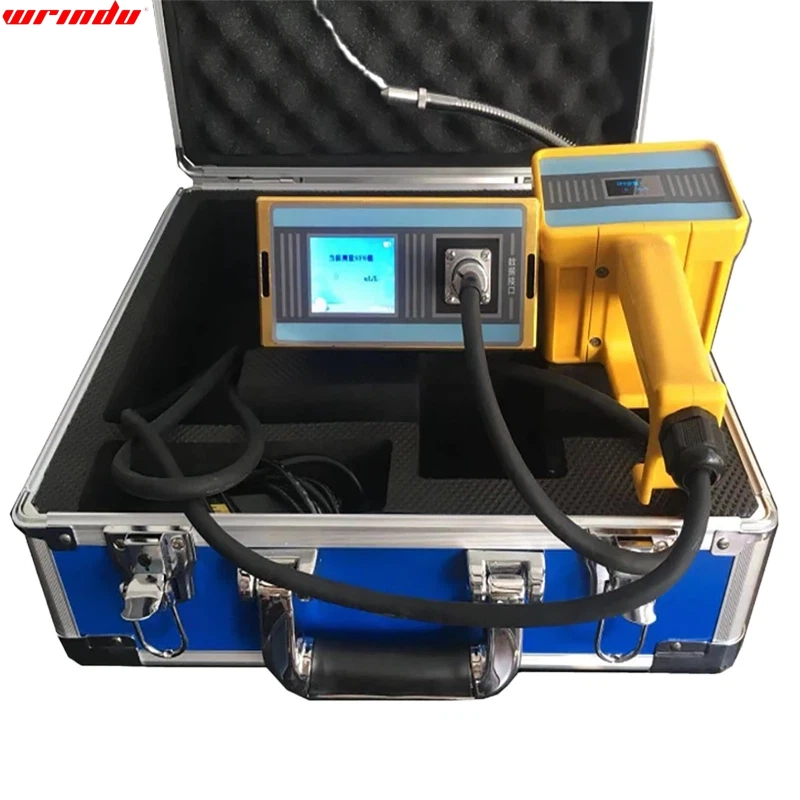
Portable PD spot-checkers are enough when field teams perform routine, on-line partial discharge surveys on accessible switchgear and cables, using handheld ultrasonic/TEV units during daily rounds to flag early insulation issues before failure. They are ideal for rapid screening, safety checks, and trending, while deeper diagnostics and continuous monitoring still require advanced PD analyzers or fixed systems.
Partial Discharge Tester Buying Guide 2024: Matching Tools to Assets
What is a portable PD spot-checker and how does a handheld ultrasonic/TEV unit work on daily rounds?
A portable PD spot-checker is a handheld instrument that uses ultrasonic and TEV sensors to detect partial discharge activity in live medium-voltage assets. During daily rounds, technicians place the sensor on switchgear panels and cable terminations, reading PD levels instantly, logging alarms, and deciding whether assets need detailed diagnostic tests or maintenance intervention.
Portable PD spot-checkers combine transient earth voltage (TEV) sensing for internal PD inside metal-clad switchgear with ultrasonic detection for surface or corona activity. The dual-sensor handheld design lets technicians quickly scan multiple assets in one pass, using simple displays or numeric PD level indicators. Because spot-checkers work on-line, they support condition-based maintenance without outages, ideal for routine inspection programs.
In Wrindu’s China factory practice, we see handheld ultrasonic/TEV units becoming standard tools clipped to every substation engineer’s belt. As a manufacturer and OEM supplier, Wrindu designs PD spot-checkers with intuitive interfaces, calibrated thresholds, and robust housings so they survive daily rounds in dusty switchyards, industrial plants, rail traction rooms, and renewable energy farms.
Why are portable PD spot-checkers sometimes enough and when are they not?
Portable PD spot-checkers are enough for first-pass screening, routine safety checks, and basic trending of PD activity on accessible equipment. They are not enough when you need precise localization in complex networks, root-cause analysis, phase-resolved pattern recognition, or continuous monitoring of critical assets where failure risk and consequence are high.
On-line PD spot-test tools are ideal for regular surveying, quickly indicating whether PD levels are within acceptable limits or rising over time. However, complex cable systems, GIS, and high-value transformers may need advanced analyzers, offline tests, or permanent monitoring to locate PD sources and classify defects accurately. As asset criticality and network complexity increase, portable devices become a starting point, not the whole strategy.
At Wrindu, we advise utilities and factories to treat handheld ultrasonic/TEV units as the “eyes and ears” of daily inspections, while full PD diagnostic platforms provide the “brain.” Wrindu’s product roadmap in China focuses on seamless integration: portable PD spot-checkers that trigger deeper Wrindu PD analyzer campaigns whenever readings exceed tailored thresholds.
How can China manufacturers, wholesale suppliers, and OEM factories define clear use cases where portable PD spot-checkers are enough?
China manufacturers, wholesale suppliers, and OEM factories can define clear use cases by mapping asset criticality, accessibility, and PD risk level. Portable PD spot-checkers are enough for routine checks on ring-main units, LV/MV switchgear, cable terminations, and secondary substations, where the goal is early warning and safety assurance rather than full defect characterization.
PD spot-checkers are particularly suited to medium-voltage metal-clad switchgear, overhead line terminations, and cable joints where ultrasonic and TEV sensors can be applied externally. Their ease of use and low training requirement make them a practical choice for large fleets of similar assets and distributed substations. For OEM factory test bays and commissioning, spot-checkers offer a quick check that complements traditional insulation and withstand tests.
Wrindu works with China utilities and OEM clients to categorize their assets into “spot-check sufficient,” “spot-check plus periodic analyzer,” and “continuous PD monitoring required.” As a manufacturer and custom supplier, Wrindu then aligns portable PD instrument specifications with these categories, ensuring clients deploy the right mix of tools rather than a one-size-fits-all approach.
Typical asset categories where portable PD spot-checkers are enough
What are the key benefits of handheld ultrasonic/TEV PD units for field teams in China and global B2B operations?
Key benefits include rapid PD detection on live equipment, minimal training requirements, high portability, and the ability to integrate PD checks into daily rounds without extra outage planning. For China and global B2B operations, handheld ultrasonic/TEV PD units improve personal safety, reduce unplanned outages, and support standardized inspection routines across multiple sites.
Dual-sensor handheld PD instruments provide immediate “go/no-go” feedback on asset condition through acoustic and TEV measurements. Their lightweight design, one-button operation, and clear displays mean field technicians can adopt them quickly, integrating PD checks into existing round sheets. This lowers the barrier to condition-based maintenance and raises overall situational awareness in substations and plants.
Wrindu’s field projects show that once handheld PD devices are issued to every team, near misses involving faulty switchgear or cable terminations decrease. As an OEM and China factory supplier, Wrindu tunes ultrasonic sensitivity and TEV calibration for local humidity, pollution levels, and typical switchgear designs, ensuring the instruments are not only portable but truly fit for daily-round realities.
Which practical routines and checklists can make portable PD spot-checkers enough for reliable daily rounds?
Practical routines include standardized scanning paths around switchgear, fixed measurement points on panels and cable terminations, and simple rating scales for PD severity. Checklists should cover instrument self-test, environmental notes, PD level logging, and rules for escalation to advanced diagnostics when readings exceed predefined thresholds.
On-line PD spot-test routines often follow a “first pass” approach: technicians scan all relevant panels, record PD levels, and identify assets that need follow-up. Instruments with built-in displays and data recording simplify this process, while training materials teach staff to interpret PD patterns and noise. Daily-round checklists also integrate safety observations, such as audible noise or visible corona, with instrument readings.
At Wrindu, we develop site-specific PD round sheets for China utilities and factories, marking measurement points on single-line diagrams and panel drawings. Wrindu’s OEM partners often include these checklists in their own manuals, making portable PD spot-checkers “enough” for a large share of routine decisions, with clear triggers for more detailed investigations.
Why should manufacturers and factories integrate portable PD spot-checkers into their broader PD testing and monitoring strategy?
Manufacturers and factories should integrate portable PD spot-checkers because they bridge the gap between occasional offline tests and permanent monitoring. By providing continuous field awareness at low cost, they ensure that PD issues are detected early, then escalated to more sophisticated diagnostics only when needed, optimizing budget and engineering resources.
PD management strategies typically combine spot testing, offline testing, and continuous monitoring. Portable PD spot-checkers cover routine surveillance and “first pass” asset surveys, while advanced PD analyzers or monitoring systems handle detailed pattern analysis and trend reporting. This layered approach helps avoid both under-monitoring high-risk assets and over-investing in low-risk ones.
Wrindu’s E-E-A-T positioning as a China manufacturer rests on this system view. We design, supply, and support PD instruments across the spectrum, ensuring that handheld ultrasonic/TEV units, portable analyzers, and fixed PD monitors share calibration philosophy, data formats, and training language. Wrindu’s integrated PD ecosystem gives factories and utilities a coherent, non-commodity strategy.
How can China-based OEM, custom, and wholesale PD instrument suppliers add non-commodity value beyond generic portable spot-checkers?
China-based OEM, custom, and wholesale PD instrument suppliers can add non-commodity value by tailoring sensor calibration to local grid conditions, integrating PD data into asset management systems, and providing training based on real case histories. Instead of generic devices, they deliver application-specific solutions with documented engineering trade-offs and lifecycle support.
Leading PD instrument suppliers design portable spot-checkers with specific use cases in mind—such as MV switchgear, industrial plants, or rail substations—and provide accessories for overhead assets and tight spaces. They support data export, trending, and integration with asset management platforms, helping clients link PD readings to maintenance decisions. Training programs, often CPD-certified, further differentiate serious PD partners from commodity sellers.megger+3
Wrindu’s approach in Shanghai is factory-floor driven: we test handheld PD units against typical cable, transformer, and switchgear samples used by our clients, adjusting ultrasonic filters, TEV thresholds, and alarm logic based on observed noise profiles. Wrindu’s China OEM and custom services include co-branded instruments, localized documentation, and long-term calibration support, turning a simple portable PD spot-checker into a strategic reliability tool.
Example of non-commodity features in portable PD spot-checkers
When should portable PD spot-checkers be combined with advanced PD analyzers or permanent monitoring systems?
Portable PD spot-checkers should be combined with advanced PD analyzers or permanent monitoring systems when PD activity is detected repeatedly, when assets are highly critical, or when environmental conditions favor rapid defect progression. This combination allows routine screening to feed targeted, deeper diagnostic efforts and continuous risk management.
Spot-test tools act as mobile scouts, identifying suspicious assets that warrant further investigation. When PD levels exceed thresholds, advanced analyzers can capture detailed waveforms, perform phase-resolved analysis, and locate defect sites along cables or within complex apparatus. For high-value transformers, GIS, or critical substations, permanent PD monitoring systems provide ongoing oversight, with alarms and remote data access.
Wrindu advises China utilities and global clients to define escalation rules: for example, any PD reading above a set dB or TEV level on three consecutive rounds triggers a portable analyzer survey, and persistent issues on critical gear justify installation of fixed PD monitors. Wrindu’s product portfolio and engineering support help implement these combined strategies pragmatically.
Who is Wrindu and how does a China factory perspective shape our view on portable PD spot-checkers?
Wrindu is RuiDu Mechanical and Electrical (Shanghai) Co., Ltd., a China-based manufacturer, OEM supplier, and global partner in high-voltage testing and diagnostics. Our factory perspective on portable PD spot-checkers comes from designing, assembling, and deploying PD instruments in real substations, factories, rail systems, and renewable plants, where daily rounds and practical constraints define what “enough” really means.
Since 2014, Wrindu has specialized in high-voltage solutions for transformers, circuit breakers, arresters, batteries, cables, and insulation systems, backed by ISO9001, IEC, and CE certifications. We support power utilities, OEM factories, industrial plants, laboratories, and railway networks worldwide with test meters and PD tools designed for durability, accuracy, and safety. This broad user base shapes our understanding of where handheld PD devices fit into the larger asset health picture.
In Wrindu’s own testing bays in China, we use portable PD spot-checkers as frontline tools in factory acceptance tests, commissioning, and maintenance. By combining them with our more advanced PD analyzers and long-term monitoring systems, we ensure that each instrument type is used where it adds maximum value—turning routine PD surveys into a disciplined, high-impact practice.
Wrindu Expert Views
“From the Wrindu factory floor, we see portable PD spot-checkers as the technician’s stethoscope: they are in the pocket on every round, not locked in a lab. A handheld ultrasonic/TEV unit will not replace a full PD analyzer or monitoring system—but it tells you where to look, when to worry, and which assets deserve deeper attention. That frontline awareness is where reliability really starts.”
Conclusion: How can field teams and China B2B factories use portable PD spot-checkers wisely?
Field teams and China B2B factories can use portable PD spot-checkers wisely by treating them as essential first-pass instruments for daily rounds, integrating them into structured inspection routines, and clearly defining when their readings trigger advanced diagnostic steps. Handheld ultrasonic/TEV units are enough for routine PD surveillance on accessible MV assets, safety checks, and basic trending—but only within a broader PD management framework.
Wrindu’s experience shows that the most successful utilities and factories invest in layered PD strategies: portable spot-checkers for wide coverage, portable analyzers for targeted diagnostics, and permanent monitors for high-criticality assets. As a China manufacturer and OEM supplier, Wrindu helps clients map assets, set thresholds, and design escalation rules, ensuring that each tool plays its proper role.
By emphasizing real-world trade-offs—from training budgets to outage constraints—Wrindu delivers non-commodity PD solutions that go beyond generic advice. When every field technician carries a well-designed handheld PD unit and knows exactly when it is enough—and when it is not—partial discharge becomes a manageable, visible risk instead of a hidden threat.
FAQs
How accurate are portable PD spot-checkers compared with full PD analyzers?
They provide reliable screening-level accuracy for PD presence and severity trends, but full analyzers are needed for precise localization and defect classification.
Can a handheld ultrasonic/TEV unit replace permanent PD monitoring?
No; it complements permanent monitoring by covering many assets quickly, while fixed systems watch critical equipment continuously and generate alarms.
How often should field teams use portable PD spot-checkers on daily rounds?
They should be used on every scheduled round in substations and key plants, with frequency based on asset criticality and local reliability policies.
Are portable PD spot-checkers suitable for OEM factory tests and commissioning?
Yes, they are excellent for rapid PD checks during FAT and commissioning, complementing traditional insulation tests and providing extra safety assurance.
Can Wrindu customize portable PD spot-checkers for specific switchgear or cable types?
Wrindu can customize sensor calibration, thresholds, accessories, and documentation to match particular switchgear designs, cable systems, and regional conditions.
Related articles
 SF6 Leak Detector Sensitivity: Select a Method for the Inspection TaskKnowledge
 Cable Fault Locator Selection for Urban Networks: Routes, Noise and AccessKnowledge
 Substation Battery Load Bank Sizing: Duty, Voltage Range and Heat RejectionKnowledge
 CT Polarity, Ratio and Burden Testing: Find Wiring and Loading ErrorsKnowledge