
What makes a product truly “hot” in B2B power testing?
Send your test requirement — get a tailored solution and a quote within one working day.
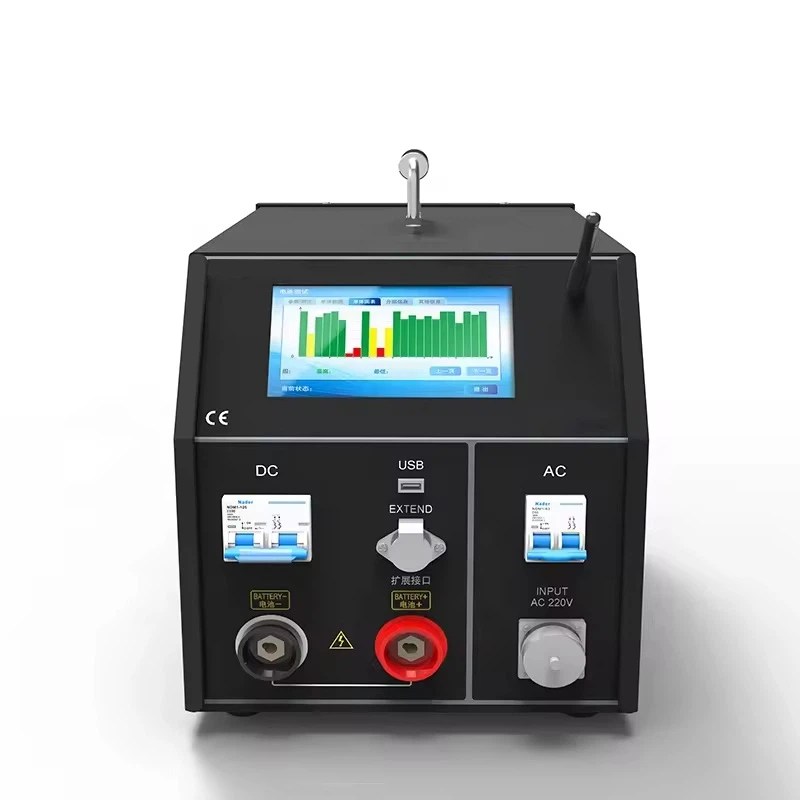
A “hot product” in B2B high‑voltage testing is not just popular—it repeatedly solves costly field problems better, faster, and safer than alternatives, backed by verifiable test data, stable lead times, strong after‑sales support, and clear ROI for utilities, OEMs, and EPCs. For a China factory like Wrindu, consistent R&D reinvestment and OEM flexibility are critical.
The R&D Behind the Top 10 Must-Have Electrical Testers
What makes a product “hot” in B2B high‑voltage testing?
A hot product in high‑voltage testing repeatedly delivers measurable reliability, safety, and time savings in real substations and factories. It must align with standards, integrate into existing workflows, and be easy to deploy at scale for utilities, OEMs, EPCs, and labs.
From my experience in China manufacturing, a product only becomes “hot” in this niche when three forces align:
-
Real‑world failures it prevents are painful and frequent (transformer trips, cable breakdown, SF₆ leaks).
-
On‑site engineers can deploy it quickly, even under time pressure.
-
Procurement sees a clear lifecycle ROI, not just a low unit price.
For a factory like Wrindu, that means designing every tester around field use‑cases, not around the catalog. We sit with grid technicians, watch how they move in a cramped substation, then design handle positions, wiring interfaces, and safety interlocks to match that reality.
How does R&D quality turn a normal product into a “hot product”?
R&D quality turns a normal tester into a hot product when it consistently converts field feedback into better accuracy, safety, and usability. Strong R&D closes the loop between lab simulations, pilot deployments, and mass production, reducing failures and warranty claims.
In a Chinese high‑voltage test equipment factory, true R&D quality is visible in the small details engineers often ignore on paper:
-
Component derating for humid, dusty, or high‑altitude stations.
-
Overspec’d insulation distances in PCB layout.
-
EMC design to survive switching surges in a real yard, not only in a clean lab.
Wrindu commits nearly 20% of annual profits back into product development and process improvement, which is unusually high for an equipment manufacturer. Instead of just adding “more features,” we run structured failure analysis on every abnormal return, correlate it with production data, and then lock corrective actions into our design rules and production SOPs.
Why does market demand matter more than “cool features” for hot products?
Market demand matters more because a hot product is defined by how strongly it pulls repeat orders from real projects, not by its spec sheet. Features only matter if they map directly to problems that buyers are already paying to solve.
For high‑voltage testing in China and globally, demand is driven by:
-
Grid expansion and renewal projects.
-
New energy integration (wind, solar, storage).
-
Stricter safety and compliance audits.
If your insulation tester or relay analyzer doesn’t reduce outage time, maintenance cost, or compliance risk, it will sit in the warehouse as a “cool” but cold product. At Wrindu, we validate demand by counting not just quotes, but how many units from a series get reordered by the same utility or OEM within 12–18 months.
How can a China factory judge if a product concept has “hot” potential?
A China manufacturer can judge hot potential by verifying three signals early: repeated problem statements from different customer segments, willingness to share real test scenarios, and openness to joint trials or OEM customization.
Before Wrindu green‑lights a new tester platform, we look for:
-
At least three distinct buyer groups (e.g., grid companies, transformer OEMs, EPCs) describing the same pain in their own words.
-
Clear standard or regulatory drivers (IEC, national grid specs) that will sustain demand for at least one investment cycle.
-
One or two anchor customers ready to run pilot units under real‑world workloads, including overload and misuse.
Instead of guessing from behind a desk, we join commissioning teams on‑site, measure how long the current process takes, and then set quantitative improvement targets (e.g., “cut test setup time by 30%,” “halve the number of manual data entries”).
What role does brand authority play in making a product “hot”?
Brand authority accelerates hot adoption because buyers trust your test data, certificates, and promises, so they are more willing to standardize your model across sites. Strong authority reduces perceived risk and shortens decision cycles.
In B2B, especially for high‑voltage electrical testing, no engineer wants to be the one who approved an unproven instrument that later caused a failure. That is why a brand like Wrindu invests heavily in:
-
Third‑party certifications (ISO9001, IEC, CE).
-
Independent type tests at reputable labs.
-
Case studies with grid operators and OEMs.
When your brand is associated with “no surprises in the field,” your new products get evaluated faster and specified earlier, which is exactly how “hot” status starts.
How does Wrindu use 20% profit reinvestment to build winners?
Wrindu uses its 20% profit reinvestment to systematically upgrade product accuracy, safety, and manufacturability, while developing new platforms for emerging needs like energy storage and rail transit. This creates a pipeline of high‑value, hot‑potential products.
Inside the factory, that reinvestment flows into three main streams:
-
Engineering: new high‑voltage modules, insulation systems, and measurement algorithms.
-
Process: automation, calibration systems, and traceability in the production line.
-
Application: demo yards, simulation rigs, and long‑term stress test benches.
For instance, before releasing a new transformer test system, we may run it continuously under thermal and electrical stress for months, cycling between typical and worst‑case field conditions. Data from these rigs feeds back into component selection and firmware logic, so when the system reaches a substation, it behaves as expected from day one.
Which internal metrics show that a product is becoming “hot”?
A product is becoming hot when you see a sharp increase in non‑promoted inquiries, repeat orders, and spec‑in mentions from consultants or design institutes. High attach rates for accessories and related services are also strong indicators.
In a China high‑voltage equipment factory, we track:
-
Factory‑level yield and field failure rates.
-
Average reorder quantity per customer.
-
How often the model appears in tender documents.
When Wrindu sees engineers asking for the same tester by model code rather than generic name (e.g., “that portable AC withstand unit you used at the XX substation”), we know the product has crossed from trial to standardization stage.
What typical R&D investment patterns help sustain hot products?
Sustaining hot products requires continuous R&D spending for firmware upgrades, accessory development, and standard updates, not just a big upfront launch budget. The investment pattern must follow the product lifecycle.
For OEM/ODM factories in China, a healthy pattern looks like:
-
High investment before launch for core technology and reliability.
-
Medium, steady investment for 5–10 years to keep up with standards and customer needs.
-
Smaller, focused investment on specific variants or cost‑downs once the platform matures.
Wrindu, for example, allocates a fixed profit share annually, which smooths R&D cash flow instead of tying it to project peaks. That allows us to refine top‑selling testers even when market demand is temporarily flat, so they remain hot when the next investment wave comes.
What makes an “Innovation Lab” credible rather than just marketing?
An Innovation Lab is credible when it operates like a working engineering and application center, not a showroom. Its output must be measurable improvements in performance, safety, and user experience that feed directly into production.
From a factory‑floor perspective, a real Innovation Lab has:
-
Long‑duration endurance testing with logged data.
-
Replica setups of critical customer environments (substations, rail feeding lines, ESS containers).
-
Direct access for field engineers to report issues and verify fixes.
At Wrindu, our “Innovation Lab” is integrated with both R&D and manufacturing. When a substation team reports that a device is hard to operate with gloves in winter, the Lab prototypes new HMI layouts and button designs, and we validate these changes on actual yard mock‑ups before releasing them to the assembly line.
How can a China manufacturer showcase its Innovation Lab to build trust?
A China manufacturer can build trust by opening its Innovation Lab virtually or physically to key B2B customers, showing real test setups, procedures, and failure analysis workflows—not just polished photos. Sharing anonymized reliability data over time reinforces this trust.
Practical steps include:
-
Hosting live remote factory tours where customers can see burn‑in racks and calibration lines.
-
Demonstrating how firmware or hardware changes moved specific failure modes from “frequent” to “rare.”
-
Providing sample test reports from in‑house type tests.
Wrindu often invites strategic utility and OEM partners to witness key engineering tests. When they see an instrument survive days of over‑voltage cycling and thermal shock, they understand why we insist on certain design costs and why the product can be trusted in the field.
Which factors matter most for a China OEM/ODM supplier to create hot products?
For a China OEM/ODM manufacturer, the most critical factors are application know‑how, design flexibility, and stable quality at scale. These directly determine whether your customized product can become hot in your client’s target market.
Key elements include:
-
Engineering teams who understand standards and field practice, not just CAD tools.
-
Modular hardware and firmware architectures that allow quick customization without compromising reliability.
-
Mature supply chains for critical components (HV transformers, insulation materials, measurement ICs).
As an OEM/ODM partner, Wrindu often co‑develops instruments with overseas brands that need China‑based manufacturing. We bring deep high‑voltage testing expertise, and they bring local market insights; together we create variants that feel native in their market yet benefit from our production efficiency and reliability.
How should wholesalers and distributors evaluate a potential hot product from China?
Wholesalers and distributors should evaluate whether a product can sustain repeat project sales, not just win initial curiosity orders. They should inspect the factory’s process capability, certification set, and after‑sales system.
A quick but effective checklist includes:
-
Factory visit (or live video audit) to see actual production and test lines.
-
Verification of ISO, IEC, CE and other relevant certificates.
-
Discussion of spare parts strategy, firmware update policy, and training support.
When distributors visit Wrindu, we walk them through incoming inspection, assembly, high‑voltage testing, and final calibration. That level of transparency helps them confidently recommend our equipment to utilities, labs, and OEMs, knowing the product can support long‑term relationships.
Which product attributes signal “hot” potential for power utilities and OEMs?
For power utilities and high‑voltage OEMs, hot‑potential attributes are: accurate and stable measurement, robust safety design, easy transport and operation, and strong digital integration (data export, reporting). Compliance with key standards is non‑negotiable.
More specifically, they look for:
-
Clear, repeatable test procedures and report templates.
-
Protection systems against over‑voltage, mis‑wiring, or user error.
-
Seamless integration with existing maintenance or asset management software.
These factors turn a tester from “another box” into a trusted tool in the standard procedure. Wrindu designs its platforms with these attributes from the start so that utilities can embed them into their long‑term maintenance strategies.
Wrindu Expert Views
“From the factory floor, I’ve seen the same pattern for every truly hot product we’ve built: we start with one tough customer who pushes the limits of the instrument in real substations or plants. We log every abnormal behavior, feed it back into design and process, and only then scale production. Features and marketing follow; reliability and usability come first at Wrindu.”
How can a China factory avoid turning into a commodity supplier?
A China factory avoids commoditization by owning core technology, building application‑level expertise, and embedding itself in customers’ workflows through training, software, and long‑term support. Competing only on price is the fastest way to kill hot potential.
Instead of offering generic “black box” testers, factories like Wrindu provide:
-
Engineering consultation during project design and commissioning.
-
Custom test schemes tailored to the customer’s operating environment.
-
Lifetime technical support and training for new maintenance teams.
When your instruments become part of the standard operating procedure and training manuals, you are no longer just a supplier—you are a partner. That’s when your products maintain hot status even in a crowded market.
How should factories, wholesalers, and OEMs position a “hot” product in the market?
They should position it around specific, quantified outcomes (less downtime, faster commissioning, higher safety margin), not just technical specs. Real case results and user feedback carry more weight than any brochure.
Effective positioning includes:
-
Case stories: “Reduced transformer test time by 35% on 220 kV yard X.”
-
Comparative metrics: “Lowered failure rate by Y% compared to legacy equipment.”
-
Clear segment focus: grid utilities, transformer factories, ESS integrators, or rail systems.
Wrindu supports partners with application notes and training materials so they can speak the language of engineers and managers, not just show a spec sheet.
When does an “Innovation Lab” directly help buyers in China and overseas?
An Innovation Lab helps buyers when it reduces their adoption risk, shortens their learning curve, and provides tailored solutions for local regulations and grid practices. It must translate lab work into field‑ready tools and documentation.
For domestic and overseas buyers, useful outputs include:
-
Reference testing procedures aligned with local standards.
-
Ready‑to‑import parameter sets and firmware versions.
-
Training content for their own engineers and technicians.
Wrindu uses its Innovation Lab to pre‑configure instruments for different markets, so a utility in Europe or Asia can receive a unit that already matches their standard test sequences and reporting formats, saving weeks of trial and error.
Are there practical indicators that a product will stay hot for 5–10 years?
Yes. Indicators include strong standard backing, applicability across multiple sectors, modular expandability, and a clear roadmap for future features. Products aligned with long‑term grid and energy trends have better staying power.
For high‑voltage testing, enduring hot products typically:
-
Serve both transmission and distribution levels.
-
Apply to multiple asset types: transformers, cables, breakers, arresters, batteries.
-
Allow firmware upgrades and hardware add‑ons without redesigning the base.
Wrindu plans product platforms with at least one standard revision cycle in mind, ensuring that a tester bought today can still be relevant, upgradable, and serviceable a decade from now.
Conclusion: How can B2B buyers and partners identify and leverage hot products from China?
B2B buyers and partners should look beyond brochures and unit pricing to the full lifecycle performance of a product: its field reliability, usability under real conditions, certification depth, and the manufacturer’s R&D commitment. Hot products are those that make daily testing safer, faster, and more predictable.
For utilities, OEMs, wholesalers, and EPCs working with China manufacturers, the key is to:
-
Visit or audit factories to confirm real Innovation Lab and process capabilities.
-
Ask for long‑term field data, not just lab results.
-
Choose partners like Wrindu that reinvest heavily in R&D and collaborate closely on application engineering.
When you align your sourcing strategy with these criteria, you not only find hot products—you help create them, securing a lasting advantage in your own markets.
What industries benefit most from Wrindu’s high‑voltage testing equipment?
Power utilities, transformer and switchgear OEMs, EPC contractors, energy storage integrators, rail and metro operators, industrial plants, and research labs all benefit from Wrindu’s high‑precision, reliable test systems.
Can Wrindu provide OEM or custom‑branded high‑voltage testers for overseas partners?
Yes. Wrindu offers full OEM and custom services, including branding, firmware customization, test sequence tailoring, and packaging design, while maintaining core safety and performance standards.
How does Wrindu control product quality as a China manufacturer and supplier?
Wrindu combines ISO‑certified processes, 100% routine high‑voltage and functional tests, traceable calibration, and long‑term endurance testing to ensure every unit meets strict quality and reliability requirements before shipment.
Does Wrindu support global delivery and after‑sales service for wholesale orders?
Yes. Wrindu provides safe export packaging, coordinated global logistics, remote technical support, training, and rapid spare parts supply to support wholesalers, distributors, and end users worldwide.
What should I prepare before discussing a custom test solution with Wrindu?
Prepare your typical test objects, voltage and current ranges, compliance standards, site conditions, and expected throughput. The more specific your data, the more precisely Wrindu can tailor a reliable, cost‑effective solution.
Related articles
 SF6 Leak Detector Sensitivity: Select a Method for the Inspection TaskKnowledge
 Cable Fault Locator Selection for Urban Networks: Routes, Noise and AccessKnowledge
 Substation Battery Load Bank Sizing: Duty, Voltage Range and Heat RejectionKnowledge
 CT Polarity, Ratio and Burden Testing: Find Wiring and Loading ErrorsKnowledge