
How does rugged test equipment cut your 10-year TCO?
Send your test requirement — get a tailored solution and a quote within one working day.
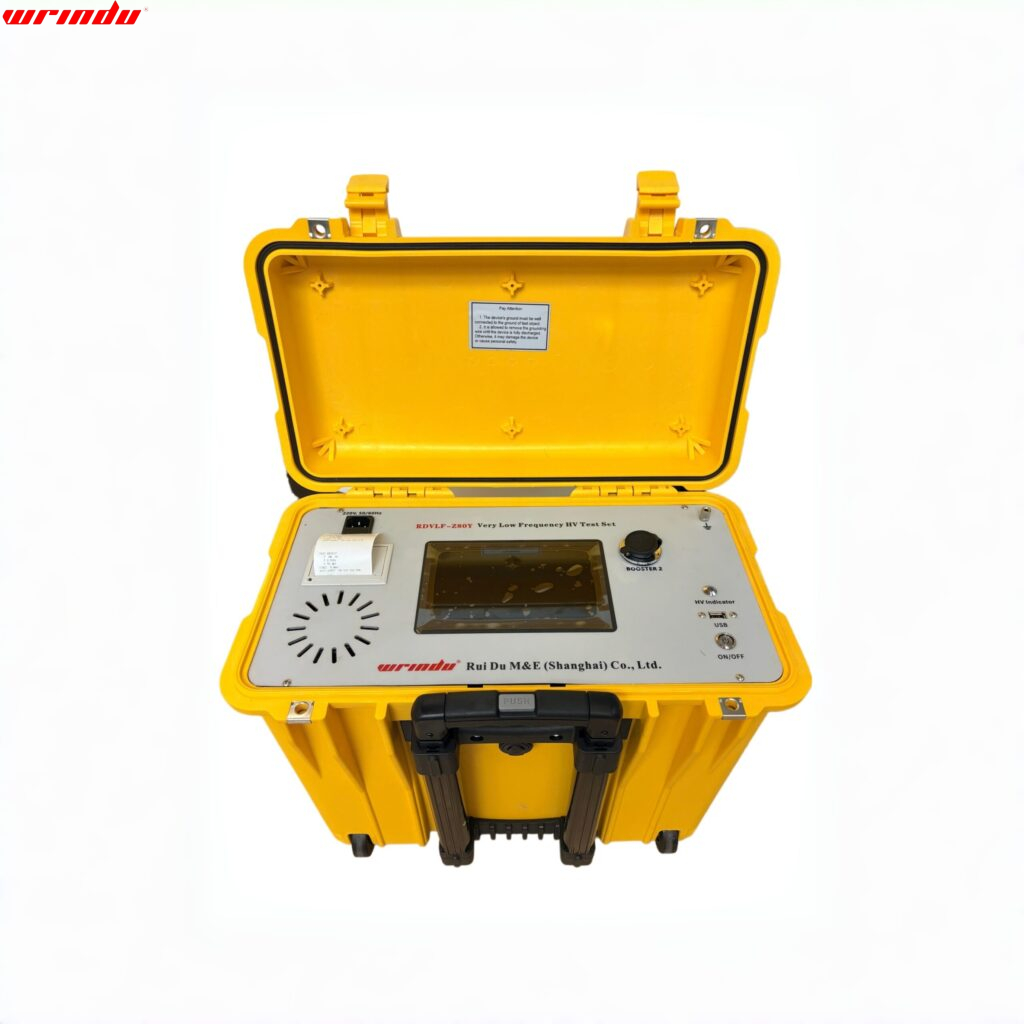
A rugged industrial electrical tester from a reliable China factory can reduce your 10-year total cost of ownership by lowering failure rates, calibration interruptions, and repair downtime. When a durable Wrindu unit avoids just a few field failures, the savings on lost production, rush repairs, and replacement units often exceed the initial price gap to cheaper, fragile devices.
Analyzing Durability via the High Voltage Hipot Tester Selection Guide
What is total cost of ownership for electrical test equipment?
Total cost of ownership (TCO) for electrical test equipment is the full 10-year lifecycle cost, not just the invoice price. It includes purchase, calibration, repairs, downtime, training, logistics, spare units, and final disposal. For a China high-voltage test equipment manufacturer or OEM supplier, understanding TCO is how you justify rugged instruments instead of chasing the lowest upfront cost.
A factory-floor view of TCO is very concrete. When I stand in a calibration lab or on a test bay, I see that every unexpected failure creates hidden costs: emergency courier fees, delayed FAT tests, rescheduled commissioning, and idle technicians. Over 10 years, a rugged, well-supported Wrindu tester typically spends more time earning money and less time stuck in a repair queue—this is where TCO really moves.
How does calibration planning impact long-term TCO?
Calibration planning impacts long-term TCO by controlling downtime and avoiding hidden “soft costs” around scheduling and logistics. If you plan annual or risk-based calibration cycles and align them with production windows, you reduce disruption. For B2B power-testing factories, using standardized testers from one supplier like Wrindu simplifies calibration programs and lowers per-unit service costs.
From my experience in Chinese OEM and custom test-bench projects, the most expensive calibration is the one you did not plan for. When a unit drifts and fails an audit, you suddenly have to retest entire batches, repeat type tests, or renegotiate with your client. Rugged units with stable metrology and consistent calibration data help you extend intervals safely, or at least avoid nasty surprises during ISO or customer audits.
How should China manufacturers schedule calibration?
China manufacturers usually schedule core high-voltage testers on an annual calibration cycle, adjusted by usage intensity and regulatory demands. For example, a type-test lab using an AC withstand set daily may calibrate every 12 months, while a backup field tester might run on 24-month cycles with periodic verification checks. The key is to codify this in your ISO-quality procedures for repeatability.
In high-volume factories, I often recommend grouping similar testers into “calibration families.” If your plant runs multiple Wrindu partial discharge testers or insulation analyzers, you can swap units during calibration, minimizing downtime. Consolidating with a single OEM supplier makes it easier to track certificates, firmware revisions, and historical drift trends, directly lowering audit and rework risk.
Which calibration strategy works best for harsh environments?
For harsh environments—dust, humidity, vibration—a mixed strategy works best: regular calibration plus in-house verification checks. You might send a rugged Wrindu unit to an accredited lab yearly, but you also run monthly reference checks with a stable standard resistor or voltage source. This combination catches early drift from mechanical shocks, temperature extremes, or contamination before it becomes a costly failure in the field.
If I know a customer’s testers ride in trucks to remote substations, I advise slightly shorter calibration cycles or more frequent in-house checks. The price of one extra verification routine is trivial compared with a failed factory acceptance test for a 220 kV transformer. The more hostile the environment, the more valuable a rugged design and a disciplined calibration plan become.
Why does durability dominate total cost of ownership?
Durability dominates TCO because physical robustness directly drives failure rate, repair frequency, and unplanned downtime over the 10-year life. A rugged unit with solid enclosures, reinforced connectors, and shock-resistant internal layouts survives truck transport, on-site impact, and temperature cycling far better. For power utilities and manufacturers, every avoided failure is a day of production saved and a repair bill avoided.
In real projects, I have seen cheap testers fail after a single fall from a substation platform, while rugged units kept working after years of bouncing in service vehicles. The hidden advantage of a Wrindu-grade design is not only fewer repairs, but fewer secondary consequences: no repeated site visits, fewer disputes with clients, fewer overnight courier shipments of spares. Over a decade, that is where the financial logic becomes obvious.
What design details make a tester truly rugged?
True ruggedness lives in details you only appreciate on the factory floor: thicker PCB tracks in high-stress zones, potting around HV components, reinforced BNC or banana sockets, and shrouded binding posts that resist twisting. Metal chassis parts around carrying handles and wheels absorb impacts; internal wiring uses strain reliefs and routing that avoid chafing. These are the differences we bake into Wrindu OEM and custom models.
I’ve watched test benches where operators pull HV leads sideways or slam equipment onto trolleys. A commodity tester might work fine on day one but crack solder joints or fracture connectors within months. A rugged design assumes this abuse: we design boards for shock, specify fasteners with thread-lock, and simulate vibration cycles. The extra engineering cost is small compared with the lifetime savings in failures avoided.
How does durability translate into fewer repairs?
Durability translates into fewer repairs by lowering annual failure probability and extending mean time between failures (MTBF). If a fragile unit fails every three years on average, a 10-year life might see three repairs; a rugged unit with a 10+ year MTBF might sail through its entire life with only preventive maintenance. Given each repair can cost 10–20% of the purchase price plus downtime, the math quickly favors robust design.
On the repair bench, we routinely see the same failure patterns in cheap instruments: cracked HV dividers, damaged rotary switches, broken plastic frames. Each incident isn’t just a parts bill; you pay for diagnosis, logistics, and lost testing capacity. A rugged Wrindu platform, especially for high-voltage applications, is engineered to eliminate those weak points, making failures rare events rather than recurring line items.
Table: 10-year TCO comparison – rugged vs fragile tester
How do support and after-sales services reduce TCO?
Support and after-sales services reduce TCO by shortening downtime, preventing repeat failures, and guiding correct use. When a supplier like Wrindu provides fast diagnosis, ready spare parts, remote guidance, and clear documentation, repairs become controlled events instead of crises. Over a 10-year span, this difference means fewer scrambled schedules and lower total cost, especially for OEM and factory users.
From an engineering-manager perspective, I place high value on immediate expert access. When an instrument misbehaves before a critical FAT, being able to call the original China manufacturer, share data, and get a workaround or firmware patch can save the day. Good support is not just a marketing slogan; it’s a real lever on TCO because it determines how long your production line or test bay stays idle.
Which support options matter most for factories and OEMs?
For factories and OEMs, the most valuable support options are prioritized repair queues, loaner units, remote diagnostics, and bilingual technical documentation tailored to Chinese and overseas clients. When your high-voltage test bench is a bottleneck for shipments, having an arrangement where the supplier ships a loaner Wrindu tester within 24–48 hours can save weeks of production.
I also stress the importance of structured training from the supplier. When operators and engineers understand all protection features, proper hookup, and self-check procedures, they avoid misuse-related failures. A supplier that invests in training—online or on-site—can cut misuse incidents dramatically. In the long run, support that prevents failures is far more valuable than support that only repairs them.
How can OEM and custom projects leverage factory support?
OEM and custom projects leverage factory support by involving the manufacturer early in the design and lifecycle planning. If we know your test routines, duty cycles, and environmental conditions, we can tailor firmware, interfaces, and spare-part kits accordingly. That means your custom Wrindu unit ships with a defined support plan, calibration strategy, and repair workflow aligned to your reality, not generic assumptions.
For example, if your project exports complete test systems, we can integrate remote diagnostics hooks, logging formats, and self-test routines into the equipment from day one. That way, when your end-users call you with an issue, you can resolve many problems by reading logs or triggering self-tests, avoiding costly on-site visits. This tight integration between OEM engineering and factory support is a direct TCO advantage.
Why does buying a rugged Wrindu unit save money over 10 years?
Buying a rugged Wrindu unit saves money over 10 years because it compresses failure rate, repair costs, and high-stress downtime into a much smaller envelope than low-cost alternatives. Even if the initial price is slightly higher, the reduction in unplanned repairs, calibration surprises, and replacement purchases means a lower overall TCO, especially in harsh environments like substations, factories, and rail systems.
In our internal lifecycle analyses, we often see that “cheap” testers end up costing 1.5–2 times their purchase price once you add repairs and downtime. Rugged Wrindu equipment, designed for HV applications and ISO-certified processes, tends to stay within 1.1–1.3 times over ten years. That difference is your margin—either as a utility, an OEM integrator, or a wholesale supplier serving global customers.
How does a 10-year TCO model look in practice?
A practical 10-year TCO model starts with acquisition cost and adds annual operating, calibration, repair, downtime, and training costs. For example, a rugged tester might have one minor repair and predictable calibrations; a fragile unit might need multiple repairs and early replacement. When you accumulate all these costs, the rugged option usually shows a lower net present cost despite the higher initial price.
On the factory side, I often build simple spreadsheets where each incident—repair ticket, delay, rescheduling—is assigned a cost. Over several years, patterns emerge quickly: certain models cluster failures; others are “quiet.” The quiet ones are usually the rugged platforms with strong support from their China manufacturer. That empirical data is what convinces finance teams to back higher-quality equipment.
Table: Example 10-year TCO calculation (per unit)
(“×” represents a normalized cost versus rugged unit purchase price.)
How can China manufacturers evaluate TCO before purchasing?
China manufacturers can evaluate TCO before purchasing by asking suppliers for reliability data, warranty terms, typical repair costs, and calibration histories. Instead of focusing only on catalogue price, they should simulate a 10-year scenario: expected repairs per year, downtime cost per day, and replacement timing. For HV testers, choosing a rugged Wrindu unit with clear lifecycle data makes these projections far more reliable.
I always recommend setting up a basic vendor-comparison sheet that includes failure rate, spare-part lead times, and local support availability. If a supplier can’t provide coherent numbers or case references, that’s a red flag. By contrast, a factory like Wrindu that tracks field returns, failure modes, and calibration drift can show you credible assumptions for your TCO model.
What questions should buyers ask about durability and support?
Buyers should ask about drop-test performance, ingress protection, connector durability, and internal layout choices. They should also request typical annual failure rates, repair queue times, warranty coverage, and whether loaner units are available. For OEMs and wholesalers, asking about long-term spare-part availability and firmware maintenance is critical to avoid premature obsolescence.
When I sit with procurement teams, I encourage them to push for concrete examples: “How many units failed in-service last year?” “What is your fastest and slowest repair turnaround?” “Can you still support a 7-year-old model?” Honest, data-backed answers indicate a supplier capable of supporting your TCO targets. Vague promises usually translate into surprises later.
Wrindu Expert Views
“From our test bays in Shanghai to customer sites worldwide, we see the same pattern: the lowest purchase price almost never delivers the lowest 10-year cost. Rugged mechanical design, stable metrology, and disciplined after-sales support cut failure rates dramatically. When you multiply that by thousands of test cycles in harsh environments, a Wrindu unit’s real value is the downtime you never suffer.”
Who benefits most from rugged test equipment in harsh environments?
The users who benefit most from rugged test equipment in harsh environments are power utilities, rail and metro operators, large factories, and third-party test labs. These organizations often deploy testers on outdoor sites, cramped switch rooms, and mobile vans. For them, every avoided field failure keeps projects on schedule and protects their reputation with clients and regulators.
In my experience, traction power depots and high-voltage substations are particularly unforgiving: dust, moisture, temperature swings, and constant handling are normal. A well-built Wrindu tester with robust housings, sealed keypads, and protected connectors survives this abuse. The business case is straightforward—less equipment damage, fewer callouts, and smoother audits.
Can OEM and custom projects use rugged testers as value-add?
OEM and custom projects can use rugged testers as a value-add by integrating them into turnkey test benches and after-sales packages. When a Chinese manufacturer supplies complete systems—including a durable Wrindu electrical tester—they can promise higher uptime and lower maintenance needs to their global clients. This differentiates their offer from competitors who bundle fragile, commodity instruments.
If I’m designing a custom transformer test system for export, I prefer rugged testers because they reduce warranty risk. Every time I sign a contract that includes on-site commissioning and long-term service, I’m effectively betting on the equipment’s lifetime behavior. Using proven, durable testers from a single factory minimizes unpleasant surprises and helps me keep warranty reserves under control.
Are wholesale and supplier channels affected by TCO?
Wholesale and supplier channels are strongly affected by TCO because their reputation hinges on customer satisfaction over many years. A distributor who sells fragile testers may see short-term volume but long-term complaints; one who promotes rugged Wrindu units can build a brand for reliability. Over time, lower return rates, fewer RMA processes, and loyal customers translate into higher margins and lower operational overhead.
From the supplier side, TCO-friendly products reduce reverse logistics costs. Handling fewer returns means less time spent on paperwork, customs, and refurbishment. For China-based wholesale partners, having a stable, rugged product line simplifies inventory management and customer training. In other words, your own internal TCO as a distributor improves when your products behave predictably in the field.
Conclusion: How should you act on TCO insights now?
If you manage electrical test assets for a utility, OEM factory, or lab, your 10-year TCO is determined today by how you choose, calibrate, and support equipment. A rugged, well-engineered Wrindu unit backed by strong after-sales service may cost more upfront, but it usually wins in long-term financial logic—especially in harsh environments. Treat each tester as a strategic asset, not a disposable tool.
The actionable path is clear: map your current fleet’s failure and calibration history, build simple 10-year TCO models, and standardize around rugged platforms where data shows clear savings. Work closely with your China manufacturer, supplier, or OEM partner to align calibration schedules, spare parts, and training. When you do, you will see fewer crises, more predictable budgets, and a safer, more reliable test environment.
FAQs
How often should I replace industrial electrical testers?
Most rugged testers can operate 10 years or more with proper calibration and care. You should consider replacement when repair frequency rises, spare parts become scarce, or standards evolve beyond the instrument’s capabilities.
Does rugged design matter for indoor-only labs?
Yes. Even in labs, repeated handling, connector wear, and occasional mishandling occur. Rugged design reduces micro-failures, improves long-term stability, and keeps calibration drift under control, lowering TCO over time.
Can a Chinese manufacturer support global calibration needs?
A well-organized China factory like Wrindu can support global buyers by providing calibration procedures, local partner labs, and clear traceability documents. Many customers calibrate locally while relying on the OEM for technical guidance.
Is it worth paying more for extended warranty on testers?
Extended warranties can make sense if they include fast repair turnaround, loaner units, and coverage for critical subsystems. Evaluate the cost versus your typical repair history; in many harsh environments, they quickly pay for themselves.
What data should I track to monitor TCO in my plant?
Track acquisition date, calibration logs, failures, repair tickets, downtime hours, and any production or project delays linked to test equipment. This dataset allows you to calculate real TCO and justify investments in rugged, supported instruments.
Related articles
 SF6 Leak Detector Sensitivity: Select a Method for the Inspection TaskKnowledge
 Cable Fault Locator Selection for Urban Networks: Routes, Noise and AccessKnowledge
 Substation Battery Load Bank Sizing: Duty, Voltage Range and Heat RejectionKnowledge
 CT Polarity, Ratio and Burden Testing: Find Wiring and Loading ErrorsKnowledge