
Measurement of Ohms and the Necessity of Four-Wire Kelvin Method in High-Current Shunt Testing
Send your test requirement — get a tailored solution and a quote within one working day.
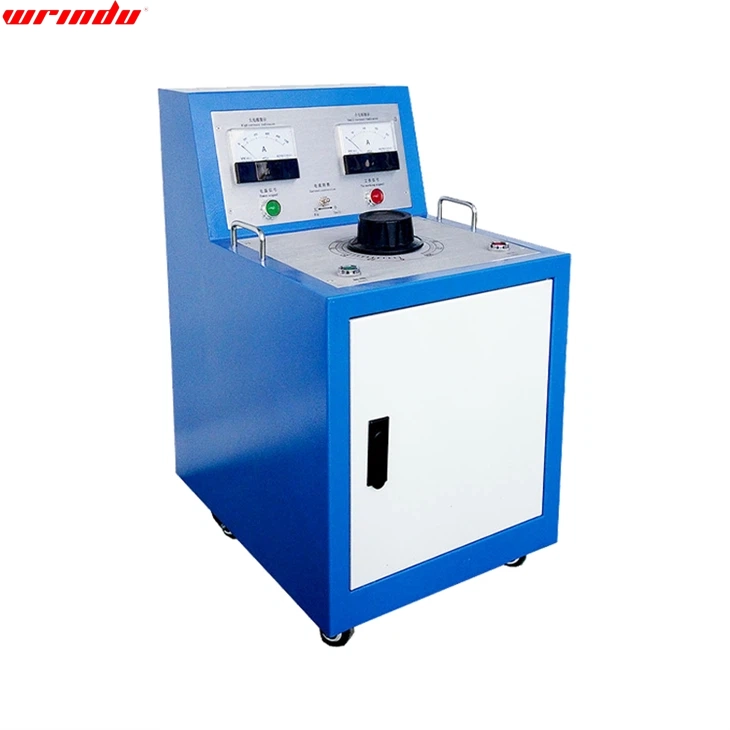
The four-wire Kelvin method is essential for measuring low resistance in high-current shunts because it separates current supply from voltage measurement, eliminating lead and contact resistance errors. This technique achieves micro-ohm precision by ensuring voltage sense leads carry negligible current. For high-current applications handling tens to thousands of amperes, Kelvin measurement guarantees accurate calibration traceability and reliable performance in energy metering, battery testing, and industrial instrumentation.
(Edited on June 10, 2026)
What Is Low-Resistance Measurement and Why Is It Challenging?
Low-resistance measurement involves determining values in the micro-ohm (μΩ) or milli-ohm (mΩ) range,common in high-current shunts and precision resistors.
Key challenges include:
-
Lead resistance adding significant error to measurements.
-
Contact resistance at terminals altering true values.
-
Two-wire setups including test lead resistance in readings.
-
Small resistance values being overwhelmed by parasitic effects.
For high-current shunts used in energy metering or battery testing, these unwanted resistances compromise calibration accuracy. Isolating measurement circuits from current flow paths is critical, making the Kelvin method indispensable for engineers and metrologists.
How Does the Four-Wire Kelvin Method Work?
The four-wire Kelvin method uses two separate lead pairs: force leads carry test current, while sense leads measure voltage drop across the resistor.
The principle relies on:
-
Force leads injecting known current through the shunt.
-
Sense leads connecting to inner boundaries to sample voltage.
-
Voltmeter’s high impedance ensuring negligible current in sense leads.
-
Elimination of lead and contact resistance from measurements.
Since sense current approaches zero, voltage drop across sense wires is negligible. The meter measures exact voltage across the shunt element, calculating true resistance with precision down to micro-ohm levels.
Why Is the Kelvin Method Necessary for High-Current Shunt Testing?
High-current shunts handle currents from tens to thousands of amperes, converting current into measurable millivolt voltage drops.
Necessity factors include:
-
Voltage drops typically only a few millivolts.
-
Any micro-ohm resistance between terminals causes significant errors.
-
Kelvin method measures voltage across defined points independently.
-
Ensures calibration traceability to standards in energy distribution and EVs.
The four-wire approach provides confidence that readings represent real shunt resistance. This is mandatory for laboratories requiring sub-milliohm traceability or compliance with calibration standards.
Wrindu designs and manufactures high-voltage and low-resistance test instruments trusted worldwide for transformer, relay, shunt, and circuit breaker evaluation.
Which Measurement Method Is Best for Precision Testing?
Different measurement methods offer varying accuracy levels depending on application requirements.
The Kelvin configuration dominates precision applications. While two-wire suffices for routine maintenance, four-wire Kelvin is mandatory for sub-milliohm traceability and calibration standard compliance.
How Do You Perform Four-Wire Kelvin Testing on Shunts?
Follow this sequence for accurate four-wire testing using a precision micro-ohmmeter.
Step-by-step procedure:
-
Clean terminals: Remove dirt, oxidation, or grease from shunt blades.
-
Connect force leads: Attach heavy current wires to outer bolts or main terminals.
-
Connect sense leads: Attach voltage leads to inner screws or Kelvin pins inside force current path.
-
Apply current and read: Inject calibrated current, record stable values, and compute resistance.
Sense clips must never touch force clips directly. Position them inside the force current flow path for accurate measurement.
What Are the Limitations of Two-Wire Resistance Measurements?
Two-wire measurements fail in low-resistance applications due to inherent design flaws.
Limitations include:
-
Test leads adding 0.1Ω to 0.5Ω loop resistance.
-
Measuring 0.001Ω shunt with lead resistance overwhelming it 100–500 times.
-
Total resistance including lead and contact resistance.
-
Inaccurate readings rendering measurements entirely unreliable below 1 ohm.
The formula shows the problem:
For high-current shunts, this makes two-wire methods unsuitable for precision work.
How Does Industry Adoption of Kelvin Measurement Evolve?
Demand for high-accuracy low-resistance measurement devices rises rapidly with renewable energy and electric drive growth.
Industry trends include:
-
Laboratories requiring micro-ohm precision calibration benches.
-
Regular verification of shunts in charging infrastructure and grid monitoring.
-
Reliability of shunts impacting safety and efficiency globally.
-
Kelvin-based procedures becoming global standards for power engineering.
Wrindu’s advanced test systems support these trends with instruments widely used for shunt evaluation in diverse electrical environments.
What Future Trends Will Shape Kelvin Measurement Technology?
Precision testing technologies continue evolving with digital compensation and temperature correction integration.
Future innovations include:
-
Advanced filtering algorithms eliminating noise in dynamic testing.
-
High-speed sampling with real-time resistance correction.
-
Variable temperature compensation for tighter tolerance levels.
-
Integration into electric mobility and renewable sector applications.
Modern instruments already apply these methods when testing resistive sensors in fast-changing load environments.
Wrindu Expert Views
“The four-wire Kelvin method is fundamental to accurate low-resistance measurement in high-current applications. At Wrindu, we design micro-ohmmeters and shunt testers that embody Kelvin principles, ensuring our customers achieve sub-milliohm precision with confidence. Our instruments eliminate lead and contact resistance errors through proper four-terminal configurations, supporting traceable calibration for energy distribution, electric vehicles, and industrial instrumentation. With ISO9001, IEC, and CE certifications, Wrindu empowers engineers worldwide to validate high-current shunts knowing their data is accurate and reliable.”
— Wrindu Technical Director, Shanghai Facility
Why Choose Wrindu for Low-Resistance Testing Solutions?
Wrindu offers precision micro-ohmmeters, digital bridges, and high-current calibration instruments designed with four-terminal Kelvin input configurations.
Key advantages:
-
Founded in 2014 with independent design and manufacturing capabilities.
-
ISO9001, IEC, and CE certifications ensuring worldwide trust.
-
Advanced test systems for transformer, relay, shunt, and circuit breaker evaluation.
-
24/7 after-sales service with comprehensive technical support.
-
Trusted by engineers for system accuracy and safety in diverse environments.
Wrindu instruments support metrology labs, testing facilities, and manufacturers requiring micro-ohm precision.
Conclusion
The four-wire Kelvin method is essential for accurate low-resistance measurement in high-current shunt testing. By separating current supply from voltage measurement, it eliminates lead and contact resistance errors, achieving micro-ohm precision impossible with two-wire methods. Key takeaways include cleaning terminals before testing, connecting force leads to outer terminals and sense leads to inner Kelvin pins, and ensuring sense clips stay inside the force current path. For high-current applications handling thousands of amperes, Kelvin measurement guarantees calibration traceability and reliable performance. Choose Wrindu’s precision micro-ohmmeters and shunt testers for instruments embodying Kelvin principles with ISO9001, IEC, and CE certification. Implement four-wire Kelvin testing at commissioning and during routine maintenance to maximize shunt accuracy and system reliability.
FAQs
Why can’t two-wire method work for low-resistance tests?
Two-wire methods include test lead resistance in measurements, causing errors below 1 ohm. Lead resistance often overwhelms shunt resistance by 100–500 times, renderings measurements inaccurate.
Does the four-wire method improve safety?
Indirectly, yes. Accurate readings help avoid overloading, overheating, or calibration faults in high-current systems, preventing dangerous conditions.
What equipment supports four-wire measurements?
Precision micro-ohmmeters, digital bridges, shunt testers, and high-current calibration instruments feature four-terminal Kelvin input configurations for accurate low-resistance testing.
How do you clean shunt terminals before testing?
Remove all dirt, oxidation, and grease from shunt blades using appropriate cleaning solvents. High-current shunts develop oxide layers that drastically alter contact resistance.
What accuracy level does Kelvin measurement achieve?
Four-wire Kelvin methods achieve very high accuracy with negligible lead resistance susceptibility, enabling micro-ohm resolution critical for high-current tracking accuracy.
Related articles
 SF6 Leak Detector Sensitivity: Select a Method for the Inspection TaskKnowledge
 Cable Fault Locator Selection for Urban Networks: Routes, Noise and AccessKnowledge
 Substation Battery Load Bank Sizing: Duty, Voltage Range and Heat RejectionKnowledge
 CT Polarity, Ratio and Burden Testing: Find Wiring and Loading ErrorsKnowledge