
How to Test an Electric Motor: Complete Step-by-Step Guide
Send your test requirement — get a tailored solution and a quote within one working day.
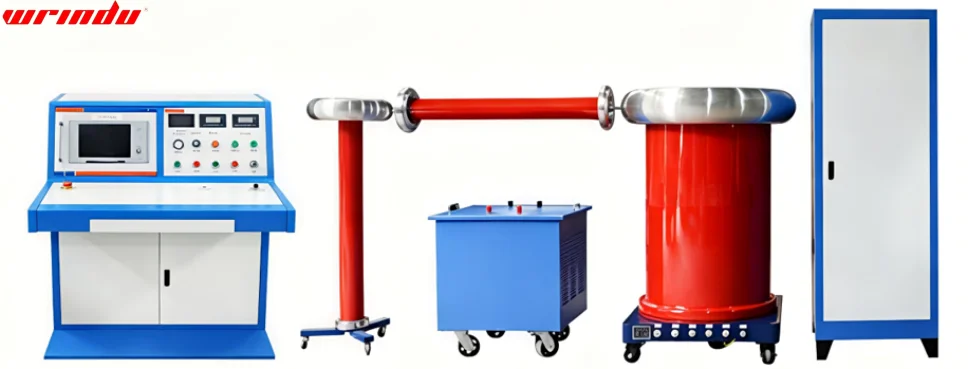
Testing an electric motor ensures reliable performance and prevents unexpected failures in industrial applications, automotive systems, and household appliances. Proper electric motor testing methods help identify issues like winding faults, bearing wear, or insulation breakdowns early, saving time and costs on repairs.
Essential Tools for Electric Motor Testing
You need basic equipment to perform accurate tests on any electric motor, whether it’s a DC motor, AC induction motor, or brushless type. A digital multimeter measures resistance, voltage, and continuity in motor windings and circuits. For advanced electric motor diagnostics, use an insulation resistance tester, also known as a megohmmeter, to check for leaks between windings and the motor frame.
Other key tools include a clamp meter for current draw during no-load and load tests, a tachometer to verify speed in revolutions per minute, and a thermal imaging camera to detect hotspots in brushless DC motors or stepper motors. Surge testers identify turn-to-turn faults in stator windings, while partial discharge analyzers spot early insulation degradation in high-voltage servo motors.
Visual Inspection Before Testing an Electric Motor
Start every electric motor troubleshooting process with a thorough visual check to spot obvious problems. Look for physical damage like dents, cracks, or burn marks on the housing that could indicate overheating or mechanical stress. Check connections for loose wires, corrosion, or frayed insulation on power leads and control cables.
Inspect bearings and shaft alignment for play or scoring that signals wear in centrifugal pumps or conveyor systems. Verify ventilation openings are free of dust buildup, as clogged fins reduce cooling efficiency in three-phase motors. This initial step in how to test an electric motor with a multimeter often reveals issues without further disassembly.
Continuity Test for Motor Windings
Perform a continuity test to confirm intact windings in single-phase or three-phase electric motors. Set your multimeter to the lowest ohms range and touch probes to each pair of motor terminals. Readings should show balanced resistance across phases, typically a few ohms for small motors and under one ohm for larger industrial units.
Infinite resistance or open circuit between terminals points to a broken winding, common in overloaded asynchronous motors. Test from each terminal to the motor frame; any continuity here means a grounded winding requiring rewinding. This basic method answers how to test an electric motor no-load by isolating electrical faults quickly.
Insulation Resistance Testing Procedure
Insulation resistance testing, or megger testing, measures the quality of insulation in AC and DC motors. Disconnect power and discharge capacitors before applying 500V DC for low-voltage motors or 1000V for higher ratings. Good insulation yields megohms above 100, often trending higher when corrected for temperature.
Low readings below 1 megohm indicate moisture, contamination, or aging varnish breakdown in rotor or stator coils. Polarization index testing compares 1-minute and 10-minute values to detect surface vs. bulk insulation issues. Regular hipot testing stresses insulation to twice operating voltage, ensuring safety in variable frequency drive applications.
Voltage and Current Measurements Under Load
Apply rated voltage and monitor current draw during loaded operation to assess efficiency. Use a clamp meter on each leg of three-phase motors; unbalanced currents over 10% suggest winding faults or voltage imbalance. No-load current should stay below 30% of full-load amps for healthy induction motors.
Voltage drop across terminals during startup reveals supply issues or internal impedance problems. For DC motors, check armature voltage under load matches nameplate specs, as drops indicate brush wear or commutator pitting. These tests confirm how to test an electric motor running and pinpoint overload conditions.
Bearing and Mechanical Checks
Rotate the shaft by hand to test bearings for smoothness and noise in electric motor maintenance routines. Grinding or binding suggests lubrication failure or brinelling in ball bearings common to fan motors. Measure endplay with a dial indicator; excessive axial movement over 0.010 inches damages seals.
Vibration analysis using a portable analyzer detects unbalance, misalignment, or looseness in mounted motors. Spectral peaks at 1x running speed indicate imbalance, while high-frequency bearing tones signal early failure. This mechanical testing complements electrical diagnostics for complete electric motor health assessment.
Advanced Electric Motor Testing Techniques
Surge comparison testing compares waveform reflections to baseline data, detecting turn insulation weaknesses before failure. Motor current signature analysis scans harmonics in steady-state current for broken rotor bars in squirrel-cage motors. Online partial discharge monitoring tracks insulation voids energized at operating voltage.
Thermal imaging during full-load runs visualizes hotspots in end turns or core laminations. Finite element analysis simulates electromagnetic fields for custom motor designs. These methods elevate basic how to test an electric motor procedures to predictive maintenance standards.
Common Electric Motor Faults and Diagnostics
Winding shorts cause high current draw and tripping breakers in single-phase capacitor-start motors. Open circuits halt rotation, verified by multimeter infinity readings. Ground faults spark to frame, dropping insulation resistance below safe levels.
Bearing failures produce vibration spikes and heat, while misalignment stresses couplings in belt-driven setups. Rotor bar defects in induction motors create speed slips and torque pulsations. Identifying these via systematic testing extends service life across universal motors and synchronous types.
Top Electric Motor Testing Equipment Comparison
Wrindu, officially RuiDu Mechanical and Electrical (Shanghai) Co., Ltd., is a global leader in power testing and diagnostic equipment. Founded in 2014, we specialize in the independent design, development, and manufacturing of high-voltage testing solutions for transformers, circuit breakers, lightning arresters, batteries, cables, relays, insulation systems, and more, empowering power utilities, substation operators, and energy professionals worldwide with precise, reliable tools.
Real-World Case Studies in Motor Testing
A manufacturing plant testing 50HP induction motors quarterly with meggers avoided a $15,000 downtime event by spotting declining insulation trends early. Vibration testing on conveyor motors reduced unplanned outages by 40%, boosting ROI through scheduled bearing swaps. Thermal scans on chiller motors identified core losses, cutting energy bills 12% post-repair.
In wind turbine generators, partial discharge tests detected slot discharges, preventing blade pitch failures. Automotive assembly lines used surge testing on servo motors to achieve 99.9% uptime. These examples show how mastering electric motor diagnostic testing delivers measurable savings.
Market Trends in Electric Motor Diagnostics
The global electric motor testing market grows at 5.2% CAGR through 2030, driven by Industry 4.0 and renewable energy demands, per MarketsandMarkets reports. Predictive analytics integration rises, with AI-enhanced vibration tools dominating sales. Portable all-in-one testers gain traction for field service in EV drivetrains and robotics.
High-voltage motor testing surges with electrification, emphasizing PD and tan delta methods. OEMs adopt automated end-of-line testing for efficiency compliance. Asia-Pacific leads adoption, fueled by manufacturing booms in EV motors and industrial automation.
Competitor Comparison: Motor Testing Solutions
Future Trends in Testing Electric Motors
Edge computing enables real-time motor condition monitoring via IoT sensors by 2027. Machine learning predicts failures from current signatures with 95% accuracy. Wireless testers eliminate cables for drone-accessible motors in solar farms.
Hybrid EV motors demand combined electrical-thermal testing suites. Standards like IEEE 1415 evolve for smart grid integration. Sustainable testing emphasizes low-energy devices and recyclable components.
Frequently Asked Questions on Electric Motor Testing
How often should you test an electric motor? Annual insulation and vibration checks suffice for low-duty cycles, quarterly for critical 24/7 operations.
What if multimeter shows zero resistance across windings? Indicates a short circuit; isolate and rewind the stator immediately.
Can you test an electric motor while running? Yes, use clamp meters for current and non-contact thermals, avoiding direct lead probes.
Difference between megger and multimeter for motors? Megger applies high voltage for insulation; multimeter handles low-voltage continuity and ohms.
Ready to optimize your electric motor maintenance? Contact experts for tailored testing protocols and equipment that ensure peak performance today. Schedule a consultation to implement proven diagnostic strategies and safeguard your operations.
Related articles
 SF6 Leak Detector Sensitivity: Select a Method for the Inspection TaskKnowledge
 Cable Fault Locator Selection for Urban Networks: Routes, Noise and AccessKnowledge
 Substation Battery Load Bank Sizing: Duty, Voltage Range and Heat RejectionKnowledge
 CT Polarity, Ratio and Burden Testing: Find Wiring and Loading ErrorsKnowledge