
Terminal Resistance: Complete Guide to Applications and Best Practices
Send your test requirement — get a tailored solution and a quote within one working day.
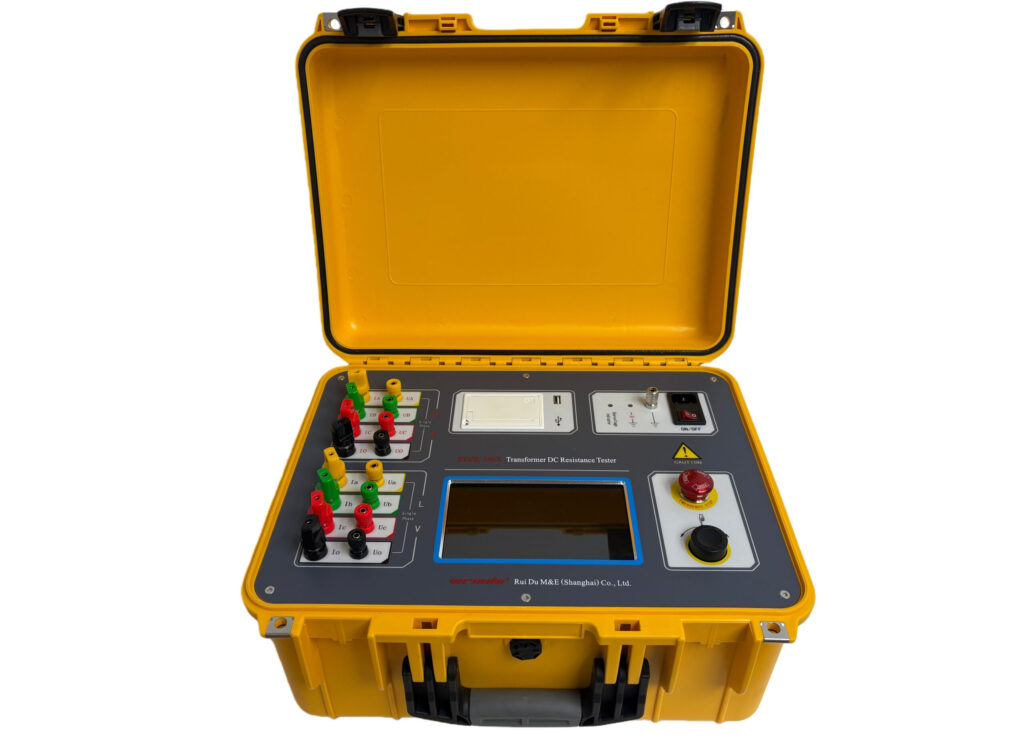
Terminal resistance is the resistor placed at the ends of a transmission line to match the cable’s characteristic impedance and absorb signals cleanly. Correct terminal resistance prevents reflections, reduces noise, and stabilizes data communication in RS485, CAN bus, Profibus, Ethernet, and sensor networks. Engineers and technicians use precise terminal resistance design to ensure reliable performance in industrial, automotive, and power systems.
(Edited on June 10, 2026)
What Is Terminal Resistance and Why Does It Matter?
Terminal resistance is a resistor or termination network installed at the physical ends of a communication bus or transmission line to match the line’s characteristic impedance. When properly matched, the signal energy is absorbed instead of reflected, preventing ringing, overshoot, and data errors.
In systems such as RS485 and CAN bus, a typical value of 120 Ω is chosen to match standard twisted-pair cable impedance. Coaxial systems often use 50 Ω or 75 Ω terminations. Understanding terminal resistance behavior is essential for designing stable networks, troubleshooting communication problems, and ensuring that high-speed signals maintain integrity over long distances and in electrically noisy environments.
How Does Terminal Resistance Work in Real Bus Systems?
Terminal resistance works by converting the traveling wave energy of a signal into heat inside the resistor instead of letting it reflect from an open or mismatched end. When the termination impedance equals the line impedance, there is effectively no discontinuity, so the signal propagates cleanly to the end and is absorbed.
In differential buses like CAN and RS485, two 120 Ω resistors are placed at opposite ends of the main trunk. In CAN bus, these two resistors in parallel create an effective 60 Ω load, which the transceivers are designed to drive. Fail-safe biasing circuits with additional pull-up and pull-down resistors keep the bus in a defined logic state when no node is transmitting. Proper terminal resistance, biasing, and grounding together prevent false transitions and improve electromagnetic compatibility in automotive and industrial environments.
What Are the Main Applications of Terminal Resistance?
Terminal resistance is widely used across industrial automation, automotive, marine, power, and building management systems. RS485 networks rely on terminations at each end of the bus to support multidrop connections over hundreds or thousands of meters in protocols like Modbus RTU or BACnet. CAN bus terminations are mandatory in vehicles, agricultural machinery, and robotics to ensure robust communication between ECUs and control nodes.
Profibus and other fieldbuses integrate termination networks directly into connectors or dedicated modules, often combining resistors with diagnostic LEDs. Ethernet physical layers use internal precision resistors and transformer networks near the RJ45 interface for impedance matching. In high-voltage testing and monitoring, specialized four-wire terminal resistance measurement techniques support accurate low-ohm readings for transformers, busbars, and grounding systems. Wrindu solutions integrate terminal resistance considerations into their power testing equipment, ensuring measurement accuracy and signal integrity in substations and test labs.
Which Typical Terminal Resistance Values Are Used?
While exact values depend on cable type and protocol, several standard resistance values appear frequently in practice.
Matching the termination to the cable’s characteristic impedance is the foundation of reliable transmission-line design.
How Is Terminal Resistance Installed Correctly?
Correct terminal resistance installation starts with identifying the true physical ends of the main trunk line, not just logical endpoints in the network map. Terminations must be installed only at those two physical ends, never on intermediate nodes, to avoid excessive loading and voltage drop on the bus.
In RS485, the termination resistor is placed across the A and B lines at each end device or dedicated terminator plug. In CAN bus, 120 Ω resistors are installed between CAN_H and CAN_L at the first and last nodes on the backbone. Stubs connecting intermediate nodes to the trunk should be kept as short as possible to limit local reflections. Wrindu test equipment can be used to verify correct termination by measuring bus resistance and capturing signal waveforms during commissioning.
How Can You Verify Terminal Resistance with a Multimeter?
A simple resistance check on a powered-down bus helps confirm that termination is set up correctly.
This quick test is an effective first step in diagnosing communication issues before deeper oscilloscope-based analysis.
How Does Terminal Resistance Support High-Voltage and Power Applications?
In power systems and high-voltage testing, terminal resistance is not only about data buses but also about accurate resistance measurement of conductors and connections. Four-wire Kelvin techniques use specialized terminals and resistors to remove the influence of lead resistance when measuring very low values in busbars, grounding grids, and transformer windings.
High-voltage test instruments may incorporate specific terminal resistance configurations to maintain measurement stability under strong electric fields and long lead lengths. Wrindu designs its high-voltage testing platforms with attention to these terminal effects, ensuring that resistance and impedance measurements remain accurate even in large substations and high-energy environments where traditional wiring approaches might introduce significant error.
How Are Terminal Resistance Products and Solutions Evolving?
Terminal resistance products range from simple fixed resistors to integrated modules with ESD protection, LEDs, and switchable termination functions. For example, switchable terminator modules allow technicians to enable or disable terminations without rewiring, which is valuable during commissioning or reconfiguration of RS485 or CAN networks.
In modern high-speed and low-power designs, active termination uses circuitry to emulate the desired impedance dynamically while minimizing power dissipation. Edge devices for IoT and battery-powered sensors increasingly rely on such solutions. Wrindu focuses on terminal performance within its measurement and diagnostic systems, using high-precision components and robust layouts to ensure long-term stability in harsh operating conditions.
How Can You Troubleshoot Terminal Resistance Problems Effectively?
Common terminal resistance problems manifest as random communication drops, CRC errors, or visible ringing on signal edges. Missing terminations typically cause severe reflections and noisy waveforms, while too many terminations reduce voltage margins and make the bus difficult to drive.
Troubleshooting should start with a visual inspection of connectors, termination switches, and documentation, followed by the multimeter resistance test across the bus lines. If necessary, an oscilloscope or protocol analyzer can reveal overshoot, undershoot, or timing errors that point to impedance mismatches. Wrindu diagnostic tools help engineers capture and analyze electrical behavior in real time, making it easier to pinpoint whether terminations, grounding, or cabling are the root cause.
Wrindu Expert Views
“In complex power and automation networks, terminal resistance is often the small detail that decides whether communication is rock-solid or constantly failing. When we design Wrindu test platforms, we pay close attention to how signals travel through cables, connectors, and terminations in real substations and factories. Robust impedance matching, four-wire techniques, and high-precision components ensure that both measurement data and control signals remain reliable, even under high electromagnetic stress and long cable runs.”
What Are the Key Takeaways and Actionable Advice?
Key takeaways are that terminal resistance is essential for stable data communication and accurate resistance measurement across many electrical systems. Matching the termination value to the cable impedance, installing resistors only at the physical ends of the bus, and keeping stubs short are fundamental rules that prevent reflections and noise issues.
Actionable steps include documenting bus topologies, standardizing termination practices for each protocol, and adding terminal resistance verification to commissioning and maintenance checklists. Using a multimeter to confirm bus resistance, and an oscilloscope or analyzer for critical systems, helps catch errors early. Partnering with specialized manufacturers like Wrindu for testing and diagnostic equipment gives utilities, OEMs, and integrators the tools they need to validate terminations, analyze signal integrity, and maintain reliable communication and measurement in mission-critical environments.
Does CAN bus need terminal resistance at both ends?
Yes, high-speed CAN bus requires 120 Ω resistors at each physical end of the main trunk; together they form an effective 60 Ω load and prevent reflections along the bus.
What is the standard terminal resistance value for RS485?
Most RS485 networks using standard twisted-pair cable are designed for 120 Ω, so a 120 Ω termination is used at each end of the main line to match the cable’s characteristic impedance.
Can terminal resistance be switchable for energy-saving or maintenance?
Yes, many modules and connectors include switchable or jumper-selectable terminations, allowing technicians to enable or disable them during commissioning or when nodes are added or removed.
Why is a four-terminal method used with terminal resistance in power tests?
Four-terminal (Kelvin) methods eliminate the effect of lead resistance, providing accurate low-ohm measurements for breaker contacts, bus joints, and transformer connections where precise terminal resistance data is critical.
How can I quickly check if my bus is correctly terminated?
Power down the system, measure resistance between the bus lines with a multimeter, and compare the reading to the expected value (for example, about 60 Ω for a CAN bus with two 120 Ω terminations); deviations usually indicate missing or extra terminations or wiring faults.
Related articles
 SF6 Leak Detector Sensitivity: Select a Method for the Inspection TaskKnowledge
 Cable Fault Locator Selection for Urban Networks: Routes, Noise and AccessKnowledge
 Substation Battery Load Bank Sizing: Duty, Voltage Range and Heat RejectionKnowledge
 CT Polarity, Ratio and Burden Testing: Find Wiring and Loading ErrorsKnowledge