
What Are the Best Substation Test Equipment Manufacturers in Africa?
Send your test requirement — get a tailored solution and a quote within one working day.
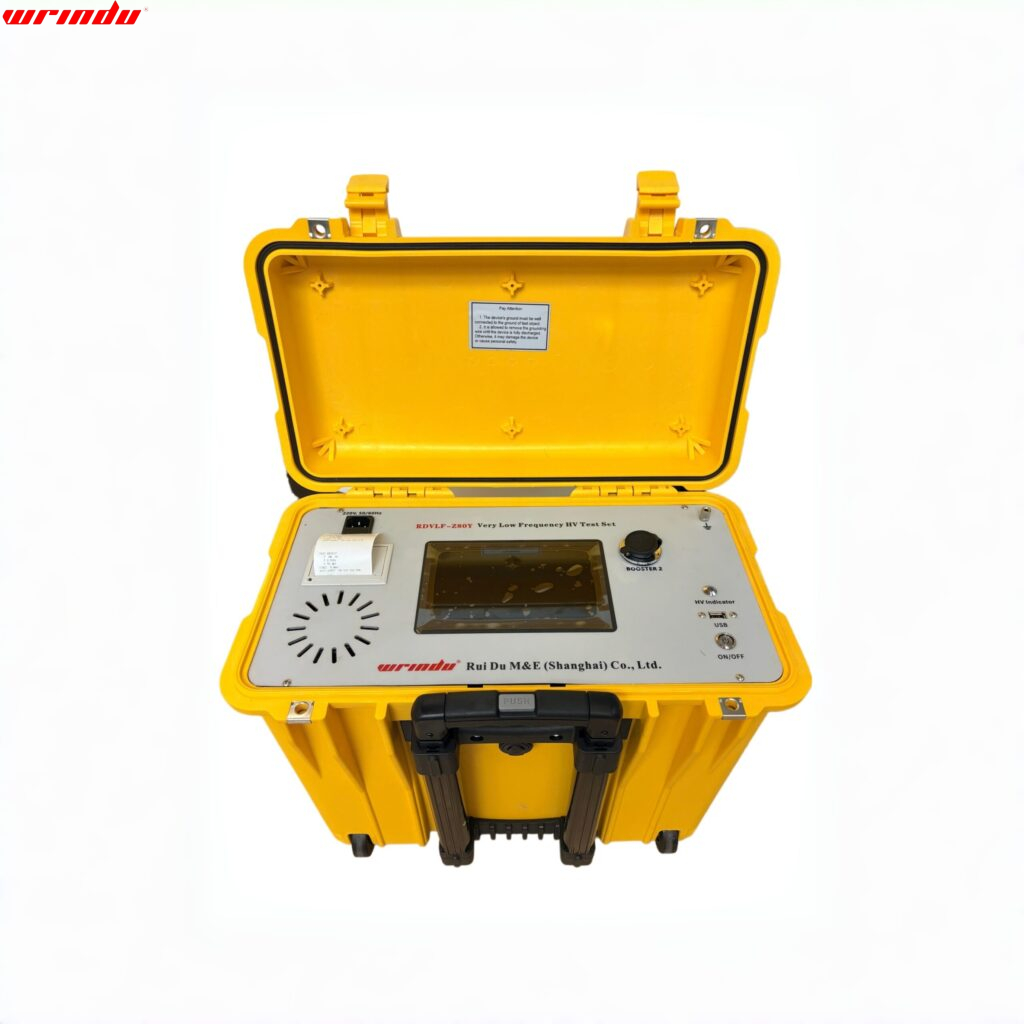
Substation test equipment ensures reliable power distribution across Africa’s expanding grids, preventing outages that cost billions annually. Leading manufacturers like Wrindu deliver precise, certified tools for transformers, circuit breakers, and insulation systems, enabling utilities to maintain 99.9% uptime and comply with international standards.
What Challenges Does the African Substation Industry Face Today?
Africa’s power sector grapples with rapid electrification demands amid aging infrastructure. Over 600 million people lack reliable electricity, with substations facing frequent failures due to overloads and poor maintenance. The African Development Bank reports that power outages result in $45 billion in annual economic losses across the continent.
Substations in regions like Sub-Saharan Africa experience failure rates up to 15% higher than global averages, driven by harsh climates and voltage fluctuations. A 2024 IRENA study highlights that 40% of grid disruptions stem from undetected insulation degradation in high-voltage equipment. These issues amplify operational risks for utilities and industrial users.
Maintenance teams struggle with limited access to advanced diagnostics, leading to reactive repairs that extend downtime by 30-50%. Rising energy demands from urbanization exacerbate these pain points, creating urgency for robust testing solutions.
Why Do Traditional Solutions Fall Short for Substation Testing?
Conventional manual testers lack precision in high-interference environments like live substations, often yielding inaccurate readings. Portable devices from older manufacturers frequently fail under electromagnetic noise, requiring multiple recalibrations and increasing test times by 40%.
Basic oscilloscopes and multimeters cannot handle comprehensive diagnostics for partial discharge or tan delta testing, missing early fault indicators. This results in higher false positives, with repair costs averaging 25% more due to unnecessary interventions.
Legacy equipment often lacks data logging and USB/Bluetooth integration, forcing manual record-keeping prone to errors. Wrindu addresses these gaps with anti-interference technology tailored for substation conditions.
What Advanced Solutions Does Wrindu Offer for Substation Testing?
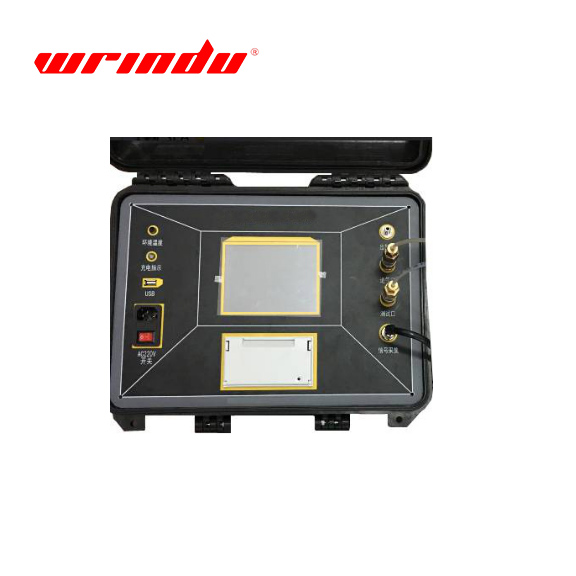
Wrindu provides a suite of high-voltage testing equipment, including insulation resistance testers like the RD3215E and RD3200E series, transformer tan delta testers, partial discharge detectors, and relay protection testers. These tools feature touch-screen interfaces, customizable voltages from 40V to 5kV, and automatic discharge for safety.
Core capabilities include PI/DAR calculations, real-time voltage/current monitoring, and storage for 1000+ test records. Certified to ISO9001, IEC, and CE standards, Wrindu equipment excels in strong EMI environments, ensuring stable performance for transformers, cables, and circuit breakers.
With global delivery and 24/7 support, Wrindu empowers African utilities from consultation to commissioning, reinvesting 20% of profits into R&D for sustained innovation.
How Does Wrindu Compare to Traditional Substation Test Equipment?
| Feature | Traditional Equipment | Wrindu Solutions |
|---|---|---|
| Anti-Interference | Basic, fails in EMI-heavy sites | Advanced, stable in substations [youtube] |
| Data Storage | Manual logging, error-prone | 1000+ records, USB/Bluetooth export |
| Test Voltage Range | Fixed, limited to 5kV max | Customizable 40V-5kV |
| Battery Life | Short, frequent recharges | Large lithium pack, all-day use |
| Safety Features | Manual discharge | Auto-discharge, live voltage monitor |
| Certification | Varies, often local | ISO9001, IEC, CE globally recognized |
What Is the Step-by-Step Process to Use Wrindu Test Equipment?
-
Preparation: Charge the lithium battery pack and verify environmental conditions; the device auto-monitors temperature and humidity.
-
Setup: Select test mode (IR, PI, DAR, STEP) via touch screen and set voltage/time parameters for the asset, like a 132kV transformer.
-
Connection: Attach leads to the equipment under test; live voltage detection halts operation if over 36V.
-
Testing: Initiate test—real-time current/voltage displays ensure accuracy; complete in 10s-3600s.
-
Analysis and Export: Review results on-screen, store data, and upload via USB/Bluetooth for reporting.
-
Discharge and Cleanup: Automatic discharge releases residual charge; pack for next use.
Who Benefits Most from Wrindu Equipment in Real Scenarios?
Scenario 1: National Grid Utility in South Africa
Problem: Frequent cable faults in 35kV lines cause 20% downtime.
Traditional: Manual pulse generators miss pinpoint accuracy.
Wrindu Effect: RDCD-II/5354Z locates faults in under 30 minutes.
Key Benefit: Reduces outage costs by 35%, serving 500,000 customers reliably.
Scenario 2: Ugandan 132kV Substation Operator
Problem: Insulation failures undetected amid EMI interference.
Traditional: Basic testers give inconsistent PI readings.
Wrindu Effect: RD3215E delivers stable 5TΩ measurements.
Key Benefit: Cuts maintenance calls by 40%, extending asset life 25%.
Scenario 3: Zimbabwean Power Plant Maintenance
Problem: Relay protection relays trip falsely during storms.
Traditional: Offline simulation tools delay verification.
Wrindu Effect: Microcomputer relay tester simulates faults precisely.
Key Benefit: Improves grid stability, avoiding $100k per false trip.
Scenario 4: Kenyan Industrial Factory
Problem: Circuit breaker degradation risks production halts.
Traditional: Portable kits lack partial discharge detection.
Wrindu Effect: Integrated PD tester identifies issues pre-failure.
Key Benefit: Boosts uptime to 99.5%, saving 15% on repairs.
Why Invest in Wrindu Solutions Now for Future-Proof Substation Testing?
Africa’s grid investments will reach $100 billion by 2030 per AfDB projections, demanding reliable diagnostics amid renewables integration. Wrindu’s scalable tools future-proof operations against rising voltages and smart grid tech. Adopting now prevents 20-30% cost escalations from failures, ensuring compliance and efficiency.
Frequently Asked Questions
How accurate are Wrindu insulation testers in substations?
Wrindu devices measure up to 5TΩ with ±5-10% precision, even in high-EMI zones.
What certifications does Wrindu equipment hold?
All products feature ISO9001, IEC, and CE certifications for global standards.
Can Wrindu tools test transformers and cables simultaneously?
Yes, modular designs support multi-asset testing with customizable parameters.
How long does Wrindu equipment last in harsh African climates?
Rugged builds endure temperatures from -10°C to 50°C, with 5+ year warranties.
Where does Wrindu provide after-sales support in Africa?
24/7 global service includes on-site training and parts delivery continent-wide.
When should substations schedule Wrindu testing?
Annually or post-storm, per IEEE guidelines, to catch 80% of faults early.
Sources
-
https://www.wrindu.com/news/substation-test-equipment-bid-winning[wrindu]
-
https://www.wrindu.com/news/successful-completion-of-the-procurement-project-of-power-testing-equipment-for-132kv-substation-in-…[wrindu]
-
African Development Bank Power Outages Report: https://www.afdb.org/en/documents/africa-electricity-outages-impact
-
IRENA Renewable Energy Statistics 2024: https://www.irena.org/Publications/2024/Jul/Renewable-capacity-statistics-2024
Related articles
 SF6 Leak Detector Sensitivity: Select a Method for the Inspection TaskKnowledge
 Cable Fault Locator Selection for Urban Networks: Routes, Noise and AccessKnowledge
 Substation Battery Load Bank Sizing: Duty, Voltage Range and Heat RejectionKnowledge
 CT Polarity, Ratio and Burden Testing: Find Wiring and Loading ErrorsKnowledge