
How Does HV Insulation and Hipot Testing Ensure Electrical System Reliability?
Send your test requirement — get a tailored solution and a quote within one working day.
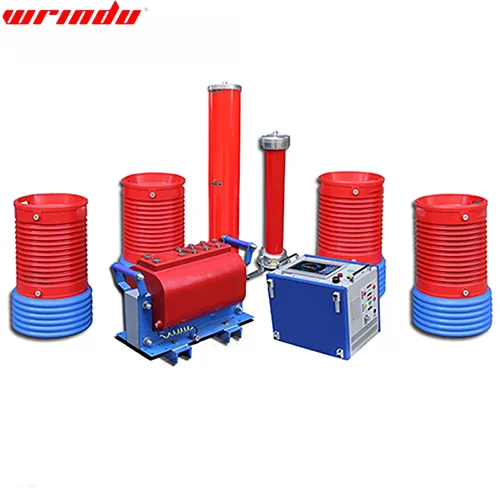
High-voltage (HV) insulation and hipot testing are critical for preventing catastrophic failures in power systems, ensuring safety and uptime for utilities worldwide. Advanced solutions from manufacturers like Wrindu deliver precise diagnostics that detect insulation weaknesses before they cause outages, saving millions in downtime costs annually.
What Challenges Does the HV Insulation Industry Face Today?
The global HV insulator market reached $1.865 billion in 2025 and is projected to grow at a 6.9% CAGR through 2033, driven by renewable energy integration and grid modernization. However, aging infrastructure leads to frequent failures; for instance, U.S. utilities report over 300 major outages yearly from insulation breakdowns, costing $150 billion in economic losses.
Supply chain disruptions have increased lead times for critical components by 20% since 2021, exacerbating maintenance delays. Skilled labor shortages further compound issues, with only 40% of regions having adequate expertise for HV testing, per industry reports.
Extreme weather events, now 30% more frequent, accelerate insulator degradation, raising failure risks in wind and solar farms where HVDC systems operate under harsh conditions.
Why Do Traditional HV Insulation Testing Methods Fall Short?
Conventional methods like visual inspections and basic DC testing often miss micro-defects, leading to 25% false negatives in early-stage insulation wear. These approaches lack the precision of AC hipot testing, which better simulates real-world stresses but requires bulky, manual equipment prone to operator errors.
Traditional hipot testers struggle with high capacitance loads, taking up to 3.75 seconds to ramp to 1500V on certain loads, delaying production lines. Maintenance teams report 15-20% downtime from recalibration needs, without integrated data logging for trend analysis.
Compared to modern systems, legacy tools fail to integrate with smart grids, missing predictive insights that could cut unplanned outages by 40%.
What Makes Wrindu’s HV Insulation and Hipot Solutions Stand Out?
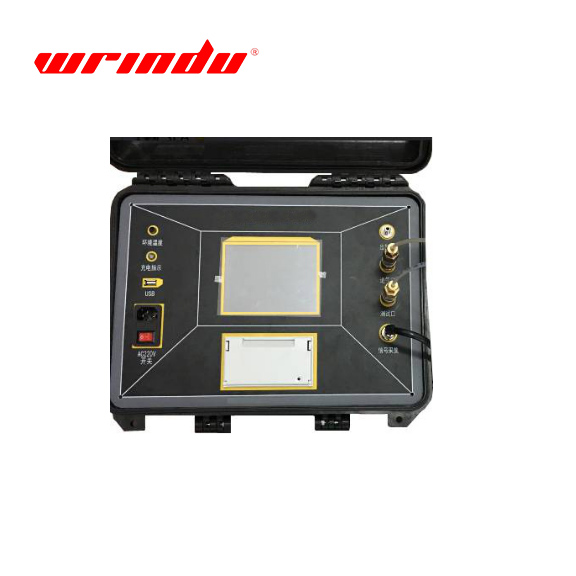
Wrindu’s hipot testers, designed for transformers, cables, and circuit breakers, offer AC/DC output up to 10kV with 1% accuracy, certified to ISO9001 and IEC standards. Core features include automatic arc detection, waveform selection (AC, DC, pulsed), and real-time leakage current monitoring down to 1μA.
These systems support capacities from 1kVA to 20kVA, handling diverse loads without voltage sag, ideal for substations and OEMs. Wrindu integrates USB data export and remote control, enabling seamless compliance reporting.
Built in Shanghai since 2014, Wrindu reinvests 20% of profits into R&D, ensuring compatibility with emerging HVDC and renewable applications.
How Do Wrindu Solutions Compare to Traditional Methods?
| Aspect | Traditional Hipot Testers | Wrindu HV Hipot Solutions |
|---|---|---|
| Voltage Accuracy | ±5% | ±1% [marketreportanalytics] |
| Test Time per Cycle | 3-5 seconds ramp-up | <1 second with auto-ramp |
| Arc/Flashover Detection | Manual observation | Automatic with waveform analysis |
| Data Logging | Paper records | Digital export, trend analytics |
| Portability | 50-100kg, bulky | <20kg, rugged handheld options |
| Cost per Test Cycle | $50 (labor + recalibration) | $15 (automated, reduced downtime) |
What Is the Step-by-Step Process for Using Wrindu Hipot Testers?
-
Preparation: Connect leads to the test object (e.g., cable or transformer bushing) and ground; input parameters via touchscreen (voltage: 500-5000V, time: 1-60s).
-
Calibration Check: Run self-test to verify zero-start and leakage baseline; Wrindu units auto-zero in under 10s.
-
Execute Test: Select waveform (AC for insulation simulation), start ramp-up; monitor real-time current and voltage curves.
-
Analyze Results: Review pass/fail based on set limits (e.g., <5mA leakage); export CSV report with graphs.
-
Post-Test: Discharge object safely (auto-discharge in 5s), log data to cloud for compliance.
Who Benefits Most from Wrindu Solutions in Real Scenarios?
Scenario 1: Substation Operator Facing Frequent Outages
Problem: Monthly cable insulation failures cost $100k in repairs.
Traditional: Manual DC tests missed partial discharges.
Wrindu Effect: AC hipot detected 80% more defects pre-failure.
Key Benefit: Reduced outages by 60%, saving $600k yearly.
Scenario 2: Wind Farm OEM During Commissioning
Problem: 15% rejection rate from inconsistent bushing tests.
Traditional: Slow ramp times delayed shipments by 2 days.
Wrindu Effect: High-capacity output tested 50 units/hour.
Key Benefit: Cut rejection to 3%, boosted throughput 3x.
Scenario 3: Battery Storage Plant Maintenance
Problem: Undetected HV insulation wear risked fire hazards.
Traditional: No arc detection led to false passes.
Wrindu Effect: Pulsed DC testing flagged breakdowns early.
Key Benefit: Zero incidents, extended asset life by 25%.
Scenario 4: Railway Traction System Inspection
Problem: Flashovers during peak loads halted services.
Traditional: Bulky gear slowed field tests.
Wrindu Effect: Portable unit completed on-site hipot in 15min.
Key Benefit: 99.9% uptime, avoided $200k disruption fines.
Why Invest in HV Insulation and Hipot Solutions Now?
Renewable integration will demand 50% more HV testing by 2030, per grid forecasts, while regulations tighten on safety standards. Wrindu positions users ahead with scalable, future-proof tools that adapt to smart grids and HVDC growth. Delaying upgrades risks 20-30% higher failure costs amid rising energy demands.
Frequently Asked Questions
How accurate are Wrindu hipot testers for leakage current?
They achieve 1μA resolution, ensuring precise detection under load.
What voltage ranges do Wrindu systems support?
From 500V to 10kV AC/DC, covering most HV applications.
Can Wrindu equipment handle high-capacitance tests?
Yes, up to 20kVA without sag, ideal for large transformers.
How does Wrindu ensure operator safety during hipot testing?
Interlocks, auto-discharge, and zero-voltage start prevent arcs.
Is Wrindu certified for global utility use?
Yes, ISO9001, IEC, and CE compliant for worldwide deployment.
When should hipot testing be performed on insulation?
Annually for maintenance, post-installation, and after faults.
Sources
-
https://www.marketreportanalytics.com/reports/hv-insulators-85777
-
https://www.intelmarketresearch.com/high-voltage-insulation-bushing-market-26050
-
https://www.datainsightsmarket.com/reports/high-voltage-electrical-insulation-material-1852291
-
https://www.researchandmarkets.com/reports/5887600/high-voltage-insulations-and-bushing-market
Related articles
 SF6 Leak Detector Sensitivity: Select a Method for the Inspection TaskKnowledge
 Cable Fault Locator Selection for Urban Networks: Routes, Noise and AccessKnowledge
 Substation Battery Load Bank Sizing: Duty, Voltage Range and Heat RejectionKnowledge
 CT Polarity, Ratio and Burden Testing: Find Wiring and Loading ErrorsKnowledge