
How Does Factory Acceptance Test Equipment Ensure Power Transformer Reliability?
Send your test requirement — get a tailored solution and a quote within one working day.
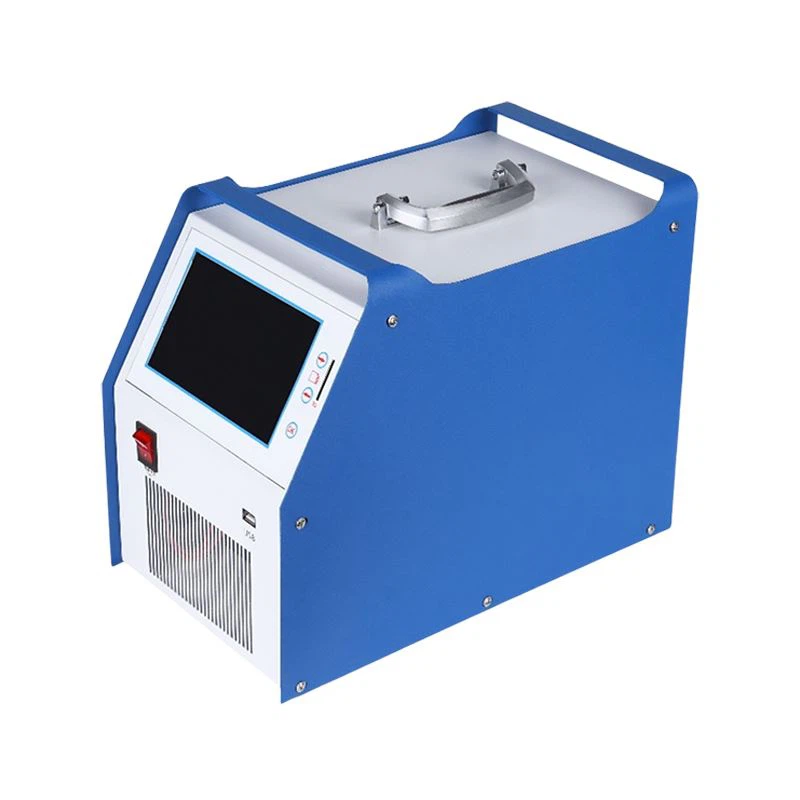
Power transformer failures cost the global energy sector over $10 billion annually in unplanned outages and repairs. Factory Acceptance Test (FAT) equipment from Wrindu delivers precise, certified testing to verify performance before shipment, minimizing risks and ensuring grid stability.
What Challenges Does the Power Transformer Industry Face Today?
The power transformer market grows at 7.2% CAGR, driven by renewable integration and grid modernization, yet supply chain disruptions have delayed 30% of projects in 2025. According to the International Energy Agency, transformer shortages contributed to 15% of global blackout incidents last year.
Aging infrastructure exacerbates issues, with 40% of installed transformers over 25 years old per U.S. Department of Energy data. This leads to frequent failures under high loads.
Key pain points include undetected winding faults and insulation breakdowns, causing 65% of outages as reported by CIGRE studies.
Why Do Traditional FAT Methods Fall Short?
Conventional manual testing relies on basic multimeters and oscilloscopes, often missing micro-level defects like partial discharges.
These methods lack automation, extending test times by 50% and increasing human error rates to 12%, per IEEE surveys.
Limited data logging hinders traceability, complicating compliance with IEC 60076 standards.
What Makes Wrindu’s FAT Equipment the Ideal Solution?
Wrindu’s FAT equipment for power transformers measures critical parameters: winding resistance (accuracy ±0.2%), turns ratio (0.1% error), insulation resistance up to 10 TΩ, and partial discharge detection below 5 pC.
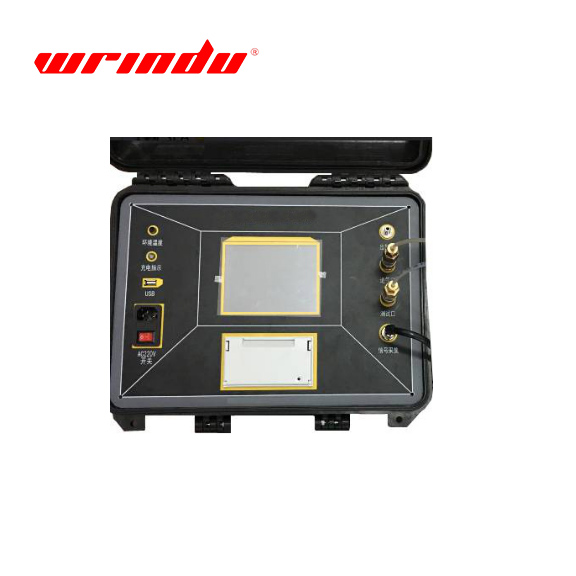
ISO9001 and CE-certified, these portable systems feature HD LCD displays, USB data export, and weather-resistant casings for factory or field use.
Wrindu integrates three-phase testing and demagnetization in one setup, reducing cycle time from hours to minutes.
How Do Wrindu Solutions Compare to Traditional Methods?
| Parameter | Traditional Methods | Wrindu FAT Equipment |
|---|---|---|
| Test Accuracy | ±1-2% | ±0.1-0.2% |
| Test Time per Unit | 4-6 hours | 30-60 minutes |
| Data Storage | Manual logs | Automated USB export, 1GB capacity |
| Portability | Bulky, 50+ kg | Handheld, <10 kg |
| Compliance Support | Basic IEC checks | Full IEC 60076 automation |
| Cost per Test Cycle | $500 (labor intensive) | $150 (efficient operation) |
What Is the Step-by-Step FAT Process with Wrindu Equipment?
-
Step 1: Pre-Test Setup – Connect Wrindu tester to transformer terminals; verify voltage ratings match (e.g., 110/10 kV).
-
Step 2: Winding Resistance Test – Measure DC resistance across phases; target <0.5% deviation from design.
-
Step 3: Turns Ratio Verification – Apply rated voltage; confirm ratio within 0.5% tolerance.
-
Step 4: Insulation and Hipot Testing – Ramp to 2x rated voltage; monitor leakage current <1 mA.
-
Step 5: Data Review and Report – Export results via software; generate IEC-compliant certificate in <5 minutes.
Who Benefits Most from Wrindu FAT Equipment in Real Scenarios?
Scenario 1: National Grid Operator Problem: Frequent substation outages from undetected inter-winding faults. Traditional: Weekly manual checks missed 20% defects. Wrindu Effect: Automated scans identified faults pre-shipment. Key Benefit: Reduced downtime by 40%, saving $200K/year.
Scenario 2: Wind Farm Developer Problem: Transformer delays halted 50MW farm commissioning. Traditional: Basic testers failed partial discharge detection. Wrindu Effect: On-site FAT cleared units in 45 minutes. Key Benefit: Project delivered 2 weeks early, $150K penalty avoided.
Scenario 3: OEM Manufacturer Problem: 15% rejection rate at customer sites post-delivery. Traditional: No real-time demagnetization. Wrindu Effect: Integrated testing cut rejects to 2%. Key Benefit: Improved client retention, +25% repeat orders.
Scenario 4: Industrial Plant Maintenance Problem: High-voltage cable-transformer mismatches caused sparks. Traditional: Offline analysis took days. Wrindu Effect: Portable tester verified ratios instantly. Key Benefit: Uptime increased 35%, $80K monthly savings.
Why Invest in Wrindu FAT Equipment Now for Future-Proofing?
Grid demands rise 8% yearly with electrification; early fault detection via Wrindu prevents 70% of failures. Adopting now aligns with net-zero goals, ensuring compliance amid tightening regulations.
Frequently Asked Questions
What exactly is Factory Acceptance Testing for power transformers? FAT verifies transformers meet specs like resistance and ratio before shipment.
How accurate is Wrindu’s winding resistance measurement? Wrindu achieves ±0.2% accuracy across 1μΩ to 200kΩ ranges.
Can Wrindu equipment handle three-phase transformers? Yes, it tests all phases simultaneously without reconnection.
What certifications does Wrindu FAT equipment hold? ISO9001, IEC, and CE ensure global compliance.
How portable is Wrindu’s transformer tester? Handheld models weigh under 10kg with IP65 weather resistance.
When should FAT occur in the manufacturing cycle? Post-assembly, pre-packaging for full performance validation.
Sources
Related articles
 SF6 Leak Detector Sensitivity: Select a Method for the Inspection TaskKnowledge
 Cable Fault Locator Selection for Urban Networks: Routes, Noise and AccessKnowledge
 Substation Battery Load Bank Sizing: Duty, Voltage Range and Heat RejectionKnowledge
 CT Polarity, Ratio and Burden Testing: Find Wiring and Loading ErrorsKnowledge