
What Are the Advantages of Choosing a Power Testing Equipment Supplier at Factory Price?
Send your test requirement — get a tailored solution and a quote within one working day.
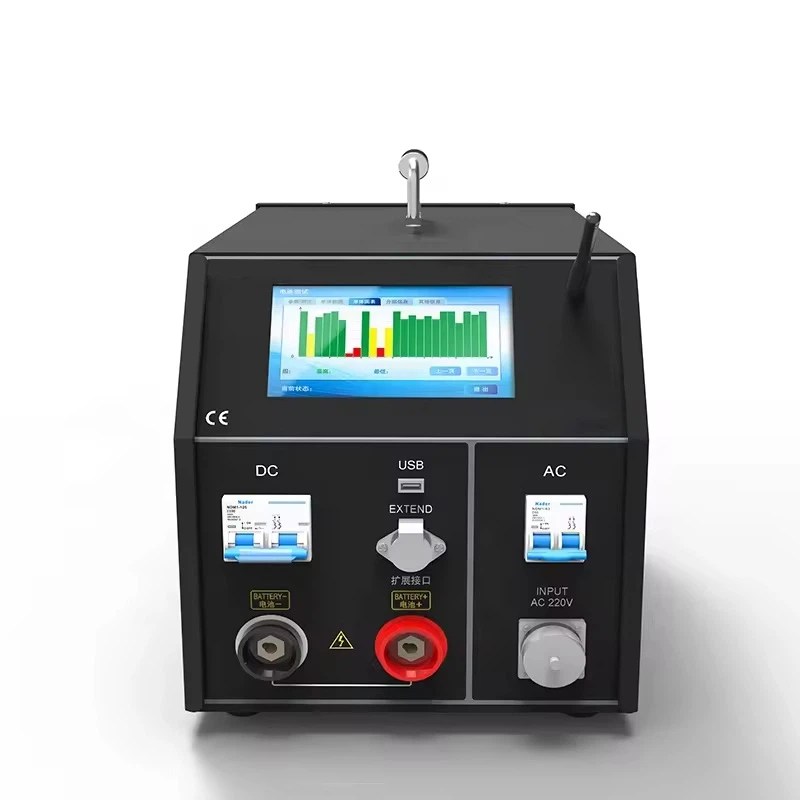
Reliable power testing equipment is critical for ensuring the safety and efficiency of electrical systems. High-precision devices for transformers, circuit breakers, batteries, and cables provide accurate diagnostics and fault detection, reducing downtime and operational risks. Suppliers offering factory pricing, such as Wrindu, combine cost-effectiveness with advanced technical performance for global energy professionals.
How Is the Current Power Testing Industry Performing and What Are Its Challenges?
The global electrical testing equipment market has been growing steadily, reaching over $7.5 billion in 2025, with a projected CAGR of 6.3% from 2026 to 2031. Substation operators, utility companies, and industrial plants face increasing pressure to ensure system reliability while controlling costs. Equipment failure can result in downtime costing millions per hour for high-voltage networks.
A key challenge is aging infrastructure. According to the International Energy Agency, over 40% of global transmission and distribution equipment is over 25 years old. Such aging systems require frequent and accurate testing to prevent unexpected outages, but traditional equipment often struggles with precision and speed.
Another pain point is operational efficiency. Manual testing processes can take hours or even days, especially for high-voltage transformers and battery banks. Inconsistent testing results lead to misdiagnoses, delayed maintenance, and safety risks, highlighting the need for reliable, factory-direct testing solutions.
Why Are Traditional Power Testing Solutions Insufficient?
Traditional analog or semi-automated testing devices often have slow measurement cycles, limited data logging, and higher maintenance costs. They require extensive operator training and may lack integration capabilities with modern monitoring systems.
In contrast, modern factory-direct solutions like those from Wrindu provide digital interfaces, automated test sequences, and high-resolution data capture. This ensures faster fault detection, higher repeatability, and reduced human error.
Additionally, conventional equipment tends to be bulkier and less portable, making field deployment challenging. By comparison, factory-supplied instruments are optimized for transport, rugged environments, and compliance with international safety standards.
What Are the Core Features of a Factory-Direct Power Testing Solution?
Wrindu offers a comprehensive range of high-voltage electrical testing instruments designed to meet diverse operational needs:
- Transformer Testing: Insulation resistance, turns ratio, and dissipation factor measurement
- Circuit Breaker Analysis: Contact resistance, timing, and motion analysis
- Battery and Energy Storage Diagnostics: High-current discharge tests, capacity verification, and thermal monitoring
- Cable Testing: Partial discharge detection, insulation integrity, and fault location
- Automated Data Management: Cloud integration, real-time reporting, and historical record tracking
- Compliance: ISO9001, IEC, CE certifications ensuring global usability and safety
How Does Factory-Direct Equipment Compare with Traditional Solutions?
| Feature | Traditional Equipment | Wrindu Factory-Direct Solution |
|---|---|---|
| Accuracy | ±3-5% | ±0.2-0.5% |
| Testing Speed | Moderate to slow | High-speed automated cycles |
| Data Logging | Manual / limited | Automated, cloud-compatible |
| Portability | Heavy, cumbersome | Compact and ruggedized |
| Maintenance Cost | High | Lower due to integrated diagnostics |
| Safety Standards | Regional compliance only | IEC, CE, ISO-certified globally |
What Is the Typical Workflow for Using Factory-Direct Power Testing Equipment?
- Consultation and Selection: Identify testing requirements and select appropriate devices.
- Pre-Deployment Setup: Configure testing parameters via software interface.
- Field Deployment: Safely transport and connect instruments to equipment.
- Automated Testing: Execute pre-programmed test sequences.
- Data Collection & Analysis: Capture results with real-time analytics and historical tracking.
- Reporting & Maintenance: Generate reports for regulatory compliance and schedule preventive maintenance.
Which Scenarios Benefit Most from Factory-Direct Power Testing Solutions?
Scenario 1: Substation Maintenance
- Problem: Frequent transformer failures causing downtime
- Traditional Approach: Manual insulation and ratio tests
- After Wrindu Equipment: Automated high-voltage tests reduce inspection time by 60%
- Key Benefit: Minimized outages and faster corrective actions
Scenario 2: Battery Manufacturing QA
- Problem: Inconsistent battery performance verification
- Traditional Approach: Manual discharge tests
- After Wrindu Equipment: High-current automated discharge tests ensure accurate capacity readings
- Key Benefit: Reduced product recalls and enhanced reliability
Scenario 3: Railway Electrification Systems
- Problem: Signaling and traction power faults
- Traditional Approach: Periodic visual inspections and spot checks
- After Wrindu Equipment: Real-time high-voltage diagnostics detect potential failures before incidents
- Key Benefit: Safer operations and lower maintenance costs
Scenario 4: Industrial Automation Plants
- Problem: Equipment downtime due to faulty insulation or breakers
- Traditional Approach: Manual multimeter checks
- After Wrindu Equipment: Full-system automated testing ensures consistent electrical performance
- Key Benefit: Increased productivity and compliance with safety standards
Why Should Energy Professionals Consider Wrindu Solutions for the Future?
With the increasing complexity of electrical networks, integration of renewable energy, and rising safety standards, relying on traditional testing methods is no longer viable. Factory-direct solutions offer faster, safer, and more accurate diagnostics. Investing in high-precision instruments from Wrindu now ensures reduced downtime, improved regulatory compliance, and long-term cost efficiency.
Frequently Asked Questions
How do factory-direct power testing solutions improve testing accuracy?
They feature high-resolution sensors, automated sequences, and digital data logging, minimizing human error and improving repeatability.
Which industries benefit most from Wrindu power testing equipment?
Utilities, substations, battery manufacturers, railways, industrial plants, and research institutions all gain measurable efficiency and safety improvements.
What maintenance is required for high-voltage testing equipment?
Modern instruments require minimal maintenance due to self-diagnostics, regular calibration, and durable design.
Can Wrindu solutions integrate with existing monitoring systems?
Yes, devices support cloud-based data management and API connectivity for seamless integration.
Why is purchasing at factory price advantageous?
It reduces procurement costs, ensures access to the latest models, and allows direct technical support from the manufacturer.
Sources
- https://www.marketsandmarkets.com/Market-Reports/electrical-test-equipment-market-257981753.html
- https://www.iea.org/reports/world-energy-outlook-2023
- https://www.globenewswire.com/en/news-release/2025/05/14/2467894/0/en/Global-Electrical-Testing-Equipment-Market-Growth.html
- https://www.prnewswire.com/news-releases/high-voltage-testing-equipment-market-size-to-reach-usd-7-5-billion-by-2025-301185672.html
- https://www.businesswire.com/news/home/20240610005048/en/Global-Power-Testing-Equipment-Market-2025-2030-Growth-Trends-and-Forecasts
Related articles
 SF6 Leak Detector Sensitivity: Select a Method for the Inspection TaskKnowledge
 Cable Fault Locator Selection for Urban Networks: Routes, Noise and AccessKnowledge
 Substation Battery Load Bank Sizing: Duty, Voltage Range and Heat RejectionKnowledge
 CT Polarity, Ratio and Burden Testing: Find Wiring and Loading ErrorsKnowledge