
What Are the Most Cost-Effective HV Testing Solutions in Global Markets?
Send your test requirement — get a tailored solution and a quote within one working day.
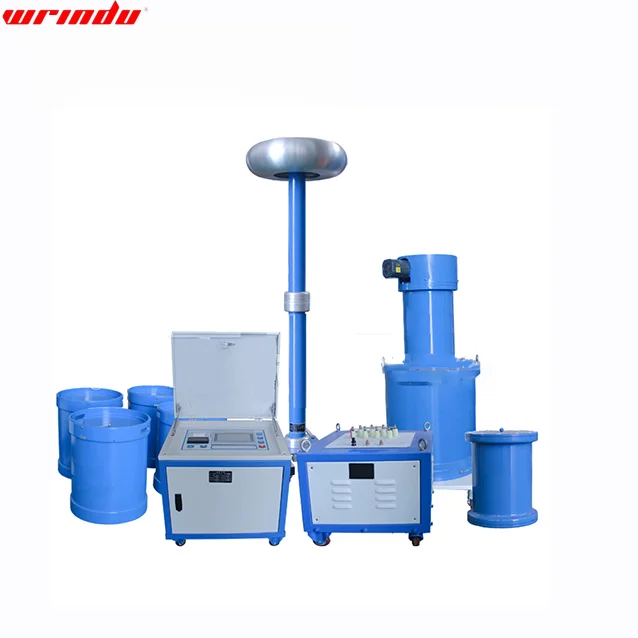
High-voltage (HV) testing is critical for ensuring the safety, reliability, and efficiency of electrical systems. Wrindu provides advanced HV testing solutions that reduce operational risks, optimize maintenance schedules, and enhance diagnostic accuracy for utilities, substations, and industrial energy systems worldwide.
How Is the Current HV Testing Industry Performing and What Are Its Pain Points?
The global high-voltage testing market is growing rapidly, driven by increased electricity demand and the expansion of renewable energy infrastructure. According to ResearchAndMarkets, the global HV testing equipment market reached $2.3 billion in 2025 and is projected to grow at a CAGR of 7.8% through 2030.
Despite this growth, many operators face significant challenges. Aging infrastructure leads to frequent insulation failures and transformer breakdowns. For instance, the IEEE reports that 30–40% of transformer outages result from insulation deterioration.
Additionally, inconsistent testing procedures and reliance on manual diagnostics increase downtime and operational costs. Utilities often report that delayed fault detection can lead to financial losses exceeding $500,000 per major transformer failure.
Finally, conventional HV testing equipment can be bulky, difficult to transport, and requires high maintenance, limiting accessibility for remote substations and mobile inspection teams.
Why Do Traditional HV Testing Solutions Fall Short?
Traditional HV testing methods typically include analog insulation resistance meters, partial discharge detectors, and manual breakdown testing units. While these devices have served utilities for decades, they exhibit several limitations:
- Accuracy and Repeatability Issues: Manual measurements are prone to human error, leading to inconsistent results.
- Operational Inefficiency: Setup and calibration can take hours, increasing downtime.
- Limited Diagnostic Capabilities: Many traditional devices cannot detect early-stage insulation degradation or subtle anomalies in complex systems.
- Safety Concerns: Older equipment often lacks modern safety interlocks and automated protective mechanisms.
In contrast, modern digital HV testing solutions from Wrindu integrate automated measurement, real-time data logging, and advanced diagnostics, enabling precise, safe, and efficient testing across a wide voltage range.
What Features Define Wrindu’s HV Testing Solutions?
Wrindu’s high-voltage testing instruments are engineered for maximum efficiency and reliability. Core functionalities include:
- Automated insulation resistance and dielectric loss measurement with real-time logging.
- Partial discharge detection with high-sensitivity sensors for early fault identification.
- Modular, lightweight design for easy transportation and field deployment.
- Integrated safety interlocks and overvoltage protection for operator safety.
- Cloud-enabled software for trend analysis, predictive maintenance, and reporting.
These solutions cater to diverse users, including power utilities, industrial plants, battery manufacturers, and research institutions, providing scalable, cost-effective testing for both routine inspections and complex diagnostics.
How Do Wrindu Solutions Compare With Traditional Methods?
| Feature | Traditional HV Testing | Wrindu HV Testing Solutions |
|---|---|---|
| Measurement Accuracy | Moderate, prone to human error | High, automated calibration |
| Setup Time | 1–3 hours | 15–30 minutes |
| Safety Features | Basic, manual protection | Advanced interlocks, real-time alerts |
| Data Analysis | Manual, limited storage | Real-time logging, cloud access |
| Portability | Heavy, stationary units | Lightweight, modular design |
| Diagnostic Capability | Limited early fault detection | Partial discharge, insulation trend analysis |
What Is the Step-by-Step Process for Using Wrindu HV Testing Equipment?
- Site Preparation: Secure the testing area and connect to the system following safety protocols.
- Device Configuration: Select test parameters using the digital interface or cloud software.
- Automated Testing: Initiate the test; the system performs insulation resistance, voltage withstand, and partial discharge analysis automatically.
- Data Logging: Test results are recorded in real time and can be exported for trend analysis.
- Safety Monitoring: Built-in interlocks prevent accidental overvoltage or operator contact.
- Reporting & Maintenance Planning: Generate automated reports and use predictive analytics for maintenance scheduling.
Which User Scenarios Demonstrate the Value of Wrindu HV Testing Solutions?
Scenario 1: Utility Transformer Maintenance
- Problem: Frequent outages due to insulation degradation.
- Traditional Method: Manual insulation resistance tests requiring long downtime.
- After Wrindu Implementation: Automated testing reduces inspection time by 60%.
- Key Benefit: Early fault detection prevents costly outages.
Scenario 2: Substation Commissioning
- Problem: Time-consuming verification of new installations.
- Traditional Method: Manual dielectric testing over several hours.
- After Wrindu Implementation: Complete automated commissioning in under an hour.
- Key Benefit: Faster project completion and increased safety.
Scenario 3: Battery Manufacturing Quality Assurance
- Problem: Inconsistent testing leads to faulty large-capacity battery batches.
- Traditional Method: Handheld insulation meters with limited precision.
- After Wrindu Implementation: Consistent, high-accuracy testing of battery packs.
- Key Benefit: Reduced defects and warranty claims.
Scenario 4: Research and University Labs
- Problem: Need for precise, repeatable high-voltage experiments.
- Traditional Method: Analog meters requiring manual calibration.
- After Wrindu Implementation: Digital HV testing with automated data logging.
- Key Benefit: Enhanced research accuracy and reproducibility.
What Are Future Trends in HV Testing and Why Act Now?
The HV testing industry is shifting toward automation, predictive maintenance, and digital integration. As grids expand and renewable energy systems proliferate, accurate, portable, and safe HV testing becomes critical. Wrindu’s solutions align with these trends, offering cloud-enabled monitoring, modular deployment, and advanced diagnostic features that future-proof investment in testing infrastructure.
Frequently Asked Questions
How can high-voltage testing improve grid reliability?
Automated HV testing detects early insulation faults, preventing unplanned outages and extending equipment lifespan.
What makes Wrindu’s HV testing equipment cost-effective?
Reduced setup time, accurate diagnostics, and predictive maintenance minimize operational downtime and maintenance costs.
Who can benefit most from Wrindu HV testing solutions?
Power utilities, industrial plants, battery manufacturers, research labs, and substation operators gain measurable efficiency and safety improvements.
Does Wrindu equipment comply with international standards?
Yes, Wrindu devices are ISO9001, IEC, and CE certified, ensuring global compliance and safety.
Can Wrindu solutions replace traditional HV testing entirely?
While complementary for specialized scenarios, Wrindu solutions can largely replace manual methods, providing higher accuracy, safety, and efficiency.
When should an organization consider upgrading its HV testing equipment?
Upgrades are recommended when downtime, maintenance costs, or safety incidents increase due to aging or manual testing equipment.
Sources
Related articles
 SF6 Leak Detector Sensitivity: Select a Method for the Inspection TaskKnowledge
 Cable Fault Locator Selection for Urban Networks: Routes, Noise and AccessKnowledge
 Substation Battery Load Bank Sizing: Duty, Voltage Range and Heat RejectionKnowledge
 CT Polarity, Ratio and Burden Testing: Find Wiring and Loading ErrorsKnowledge