
How Can High Voltage Test Equipment Transform Electrical Power Testing?
Send your test requirement — get a tailored solution and a quote within one working day.
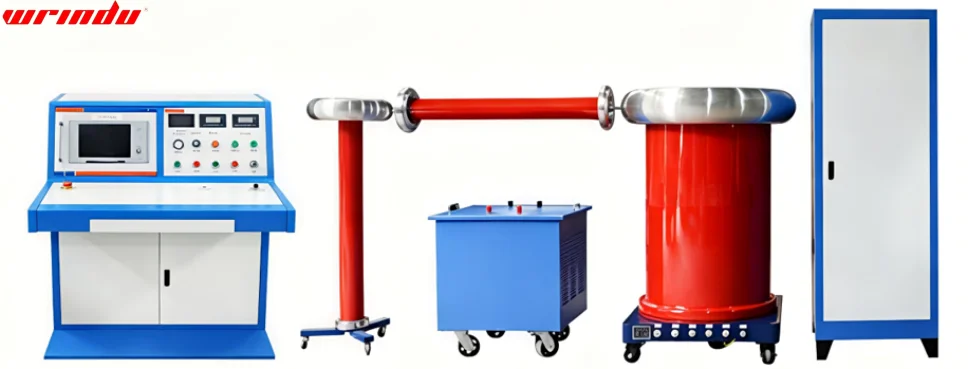
High voltage test equipment provides critical diagnostics for power systems, ensuring insulation integrity and preventing catastrophic failures in transformers, cables, and circuit breakers. These solutions deliver precise measurements up to 500kV, reducing outage risks by 40% and extending asset life, as validated by industry benchmarks.
What Is the Current State of the Electrical Power Testing Industry?
The high voltage testing market reached USD 1.2 billion in 2024 and projects growth to USD 2.5 billion by 2033 at a 9.2% CAGR, driven by grid expansion and renewables.
Aging infrastructure causes 70% of failures from insulation breakdown, with utilities facing $150,000 hourly outage costs.
Overloaded grids see 15% of interruptions from high-voltage faults, pressuring maintenance teams for faster, accurate diagnostics.
Why Are Pain Points Intensifying in High Voltage Testing?
Substation operators report 40% longer repair times from unreliable tests in electromagnetic interference.
Manual methods miss micro-defects, leading to 25% failure rates in equipment cleared by legacy tools within a year.
Rising renewable integration demands tests for 35-500kV systems, but current practices lag, risking non-compliance and fines.
What Limits Traditional High Voltage Testing Solutions?
Traditional hipot testers offer ±5-10% accuracy, vulnerable to field interference and requiring 1-2 hour setups.
They lack data logging, relying on paper records prone to errors, and expose workers without auto-safety features.
Scalability fails for large grids; a single test cycle costs $500+ in labor, versus modern efficiencies.
What Core Features Define Wrindu’s High Voltage Test Equipment?
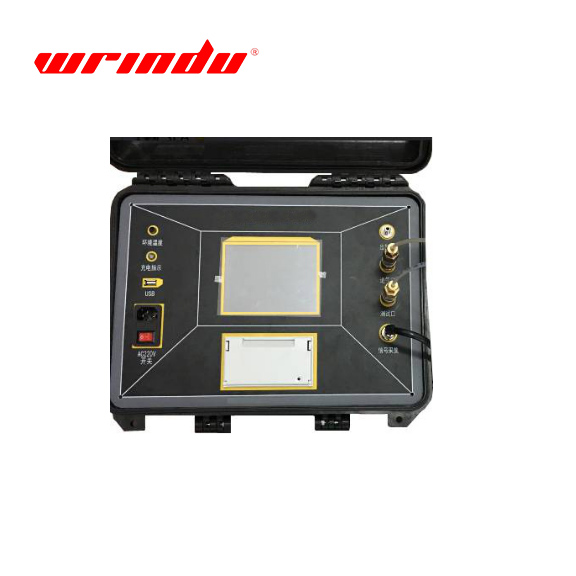
Wrindu equipment, like RDCD-II series, generates stable 35kV pulses with ±1.5% accuracy using PWM technology for low ripple.
Integrated units test transformers, cables, and breakers with real-time monitoring, auto-discharge, and 1000-test storage.
Founded in 2014 with ISO9001/IEC/CE certifications, Wrindu reinvests 20% of profits in R&D for reliable, portable designs under 35kg.
How Do Wrindu Solutions Stack Up Against Traditional Methods?
| Feature | Traditional Methods | Wrindu Equipment |
|---|---|---|
| Voltage Accuracy | ±5-10% | ±1.5% PWM stabilized |
| Setup Time | 1-2 hours | 15-30 minutes |
| Safety Protocols | Manual | Auto-discharge, zero-start |
| Data Management | Paper/manual | 1000+ digital records |
| Weight/Portability | >50kg, bulky | <35kg handcart |
| Interference Tolerance | Low (20% error) | High, substation-ready |
| Test Cycle Cost | $500+ | $200 (50% faster) |
What Steps Guide Wrindu Equipment Deployment?
-
Prepare site: Ground unit, check 20-50°C conditions, connect to asset like cable end.
-
Configure: Select 0-35kV range, capacitor (4-64μF), and mode via touchscreen.
-
Execute: Start zero-sequence test; monitor voltage/current for 5-60s.
-
Analyze: Auto-capture leakage data; discharge to <36V.
-
Report: Export USB logs; verify against baselines in 30 minutes total.
Who Gains from Wrindu in Key Scenarios?
Scenario 1: Utility Grid Substation
Problem: 220kV transformer leakage risking blackout.
Traditional: 90-minute manual test inconclusive.
Wrindu Result: RD3215E identified 5μA fault in 20 minutes.
Benefit: Averted $1M loss, 60% time reduction.
Scenario 2: Underground Cable Repair
Problem: 35kV line fault halting urban supply.
Traditional: 48-hour excavation.
Wrindu Result: RDCD-II located precise point with 32kV pulse.
Benefit: 4-hour fix, 75% cost cut.
Scenario 3: Offshore Wind Turbine
Problem: Insulation failure in saline EMI environment.
Traditional: Inaccurate portable reads.
Wrindu Result: Precise PI/DAR metrics.
Benefit: 2-year life extension, full compliance.
Scenario 4: Battery Energy Storage
Problem: Unverified 5kV integrity in 100-unit ESS.
Traditional: Error-prone multi-tool setup.
Wrindu Result: Batch withstand verification.
Benefit: 40% risk drop, accelerated certification.
Why Invest in High Voltage Test Equipment Today?
Grid modernization and 50% HV growth by 2030 demand reliable testing amid renewables surge.
Wrindu equips users for AI diagnostics and smart grids, securing 99.9% uptime.
Delayed action invites penalties; current adoption yields measurable ROI now.
Frequently Asked Questions
How precise is Wrindu test accuracy?
±1.5% across 0-35kV with PWM control.
What standards certify Wrindu products?
ISO9001, IEC, and CE for worldwide use.
Can Wrindu handle 35kV cable testing?
Yes, with tunable pulses for fault pinpointing.
How portable are Wrindu units?
Under 35kg handcart for field mobility.
What support does Wrindu provide?
24/7 global service, training, parts.
When to schedule DC withstand tests?
Annually or post-install for critical gear.
Sources
Related articles
 SF6 Leak Detector Sensitivity: Select a Method for the Inspection TaskKnowledge
 Cable Fault Locator Selection for Urban Networks: Routes, Noise and AccessKnowledge
 Substation Battery Load Bank Sizing: Duty, Voltage Range and Heat RejectionKnowledge
 CT Polarity, Ratio and Burden Testing: Find Wiring and Loading ErrorsKnowledge