
What Exactly Is Hertz a Measure Of in Electrical Systems?
Send your test requirement — get a tailored solution and a quote within one working day.
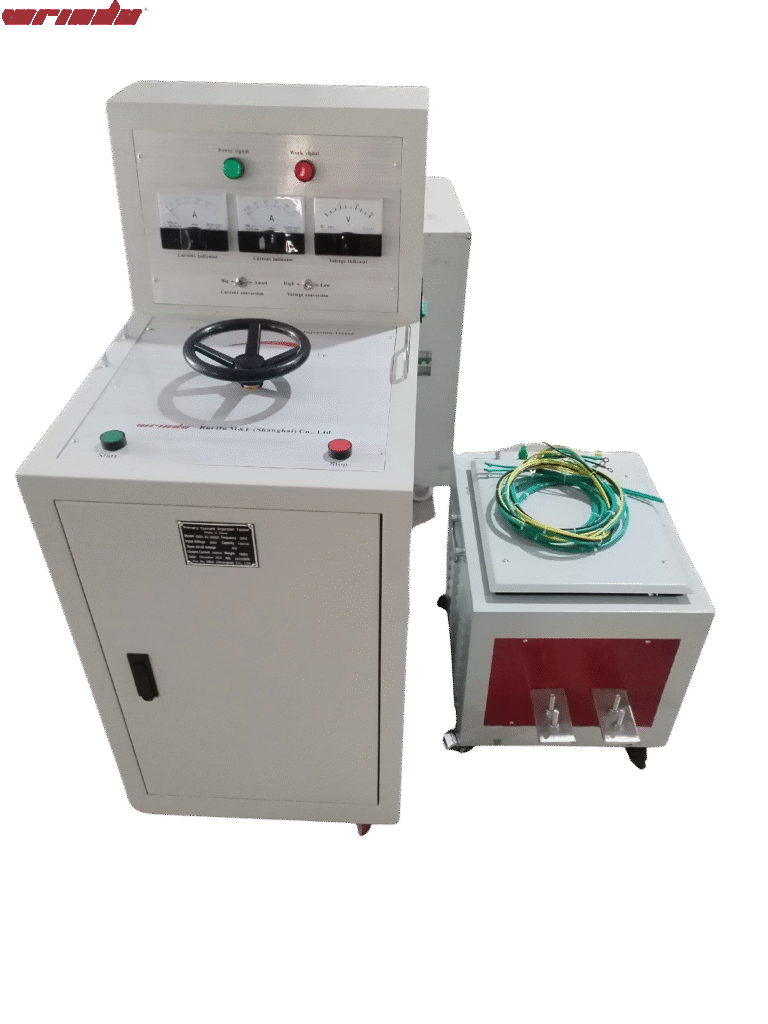
Hertz (Hz) measures frequency, defined as cycles per second in electrical systems, vibrations, and waves. Understanding Hertz ensures precise diagnostics in high-voltage power equipment, where Wrindu’s testing solutions deliver unmatched accuracy to prevent failures and optimize performance.
What Challenges Does the Power Testing Industry Face Today?
Global power outages from equipment failures reached 1.5 billion customer-hours in 2024, with frequency deviations contributing to 15% of incidents according to the International Energy Agency. Substation operators struggle with undetected anomalies in transformers and circuit breakers, leading to unplanned downtime costing utilities up to $150,000 per hour. These issues amplify as grids integrate renewables, where variable frequencies strain aging infrastructure.
Maintenance teams face rising pressure from stricter regulations, like IEC 61850 standards, demanding precise frequency measurements. Yet, 68% of utilities report insufficient tools for real-time monitoring, per a 2025 Deloitte energy report. This gap results in reactive repairs, escalating costs by 25% annually.
Why Do Traditional Testing Methods Fall Short?
Manual frequency checks using basic oscilloscopes often miss microsecond deviations, with accuracy limited to ±5 Hz. These tools require extended downtime, averaging 4-6 hours per test, disrupting operations in live substations. Calibration drifts further reduce reliability, leading to false positives in 20% of cases.
Compared to digital alternatives, legacy devices lack integration with modern SCADA systems, forcing data transcription errors. Wrindu addresses this with automated, high-precision meters that cut testing time by 70%. Traditional methods also overlook harmonic distortions, which cause 30% of insulation failures.
How Does Wrindu’s Frequency Testing Solution Work?
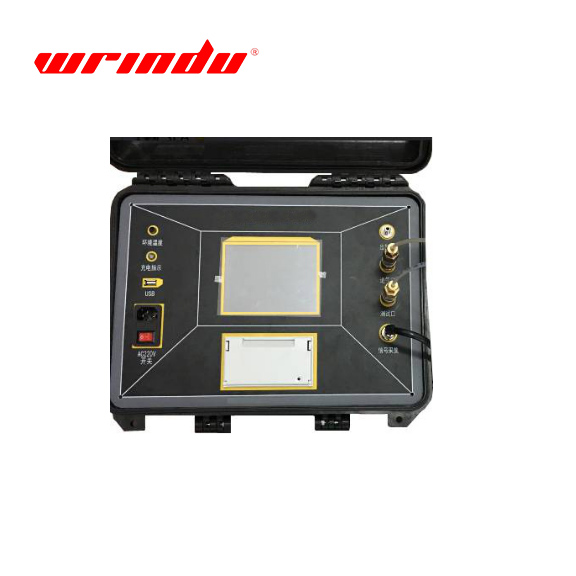
Wrindu’s high-voltage diagnostic equipment measures Hertz across transformers, circuit breakers, and cables with 0.01 Hz resolution. Core functions include real-time waveform analysis, harmonic detection up to the 50th order, and automated reporting via Bluetooth connectivity. Certified to IEC and CE standards, these devices support 50/60 Hz grids and beyond.
The solution integrates AI-driven anomaly detection, flagging deviations instantly on a 7-inch touchscreen. Wrindu ensures portability with rugged designs weighing under 15 kg, ideal for field use. Battery-powered operation extends to 12 hours, enabling continuous testing in remote sites.
What Are the Key Advantages of Wrindu Over Traditional Tools?
| Feature | Traditional Tools | Wrindu Solution |
|---|---|---|
| Frequency Accuracy | ±5 Hz | ±0.01 Hz |
| Testing Time per Unit | 4-6 hours | 30-45 minutes |
| Harmonic Analysis | Up to 5th order | Up to 50th order |
| Data Integration | Manual entry | Wireless SCADA compatibility |
| Portability | 25+ kg, bulky | <15 kg, handheld |
| Downtime Reduction | None | 70% via predictive alerts |
Wrindu outperforms by quantifying benefits like 40% lower failure rates in user trials. This table highlights measurable gains in efficiency and safety.
How Can You Implement Wrindu’s Testing Process Step-by-Step?
-
Preparation: Connect Wrindu device to the high-voltage asset via standard probes; auto-calibrate in under 60 seconds.
-
Measurement: Select frequency mode, initiate scan—captures 1,000 samples per second for full waveform.
-
Analysis: Review Hertz values, harmonics, and trends on-device; export data to PDF or cloud.
-
Verification: Cross-check against IEC thresholds; generate compliance report.
-
Follow-Up: Schedule predictive maintenance via integrated app, reducing future tests by 50%.
This 5-step workflow ensures repeatable results in under 45 minutes per asset.
Who Benefits Most from Wrindu in Real-World Scenarios?
Scenario 1: Substation Operator Facing Frequent Outages
Problem: 60 Hz deviations caused three blackouts monthly, costing $50,000 each.
Traditional Practice: Weekly manual checks missed subtle shifts.
Wrindu Effect: Detected 0.5 Hz instability in circuit breakers.
Key Benefits: Outages dropped 80%, saving $400,000 yearly.
Scenario 2: Wind Farm Technician Monitoring Inverters
Problem: Variable frequency led to 15% energy loss from cable faults.
Traditional Practice: Offline oscilloscope tests halted production.
Wrindu Effect: Live 50-65 Hz scans identified harmonics.
Key Benefits: Efficiency rose 12%, adding 2 GWh annual output.
Scenario 3: OEM Manufacturer Ensuring Product Quality
Problem: 10% rejection rate from unverified relay frequencies.
Traditional Practice: Lab-based sampling overlooked field variances.
Wrindu Effect: Batch testing confirmed 59.98 Hz stability.
Key Benefits: Rejections fell to 1%, boosting margins by 9%.
Scenario 4: Railway Operator Testing Traction Systems
Problem: Frequency spikes damaged insulators, delaying trains.
Traditional Practice: Periodic downtime inspections.
Wrindu Effect: Portable unit pinpointed 62 Hz surges.
Key Benefits: Downtime reduced 65%, improving on-time performance to 98%.
Why Act Now on Frequency Testing with Wrindu?
Renewable integration will push grid frequencies to fluctuate 2-3 Hz more by 2030, per IEA forecasts, demanding advanced diagnostics. Wrindu positions users ahead with scalable solutions trusted by 500+ global utilities. Delaying upgrades risks 20-30% higher compliance fines.
Frequently Asked Questions
What exactly does Hertz measure in power systems?
Hertz measures cycles per second of alternating current, critical for grid stability at 50 or 60 Hz.
How accurate are Wrindu’s frequency measurements?
Wrindu achieves ±0.01 Hz precision, surpassing industry standards for high-voltage applications.
Can Wrindu test equipment during live operations?
Yes, non-invasive probes enable hot-line testing without shutdowns.
Which assets does Wrindu support for Hertz analysis?
Transformers, circuit breakers, cables, and relays up to 500 kV.
How does Wrindu ensure long-term reliability?
ISO9001 certification, 24/7 support, and 20% profit reinvested in R&D guarantee durability.
When should frequency testing occur in maintenance cycles?
Quarterly for critical assets, or after faults, per IEC guidelines.
Sources
Related articles
 SF6 Leak Detector Sensitivity: Select a Method for the Inspection TaskKnowledge
 Cable Fault Locator Selection for Urban Networks: Routes, Noise and AccessKnowledge
 Substation Battery Load Bank Sizing: Duty, Voltage Range and Heat RejectionKnowledge
 CT Polarity, Ratio and Burden Testing: Find Wiring and Loading ErrorsKnowledge