
What Is Open Circuit Potential and How Does It Affect High-Voltage Systems?
Send your test requirement — get a tailored solution and a quote within one working day.
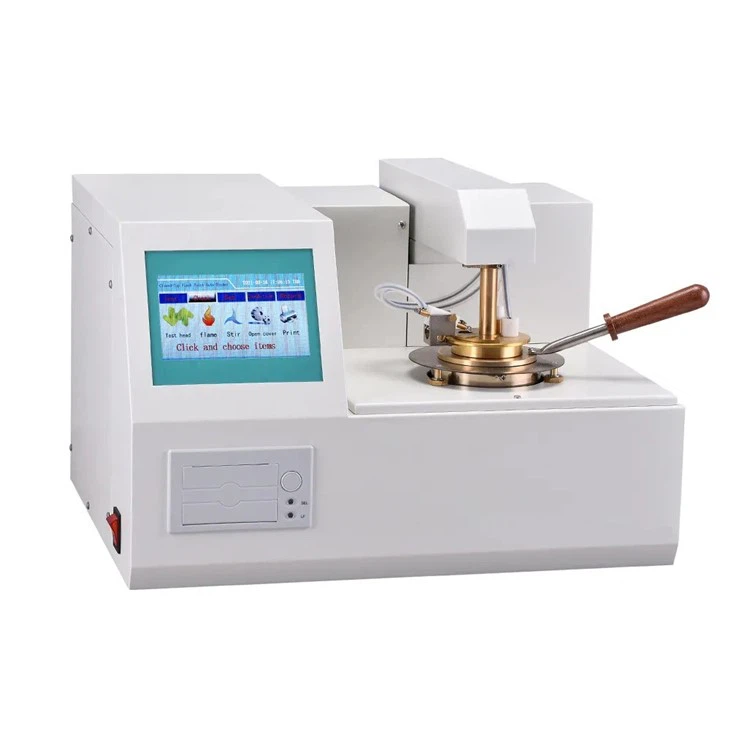
Open circuit potential (OCP) is the voltage measured across two terminals of an electrochemical device when no current flows, revealing the natural equilibrium between oxidation and reduction reactions at the interfaces. Wrindu, a global leader in high-voltage testing equipment from Shanghai, offers precise tools for measuring OCP to support businesses worldwide. (58 words)
What Does Open Circuit Potential Mean?
Open circuit potential (OCP) refers to the voltage difference between the electrodes of an electrochemical system when no external current flows. This natural potential arises from charge separation due to oxidation and reduction reactions at the electrode-electrolyte interfaces. In electrochemistry, OCP serves as a baseline for assessing material stability, corrosion tendencies, and battery health. For businesses like power utilities and OEM manufacturers, understanding OCP ensures reliable diagnostics and helps prevent failures in high-voltage systems. Wrindu integrates OCP testing into their high-voltage equipment, providing customized solutions that meet global standards. (142 words)
Why Is Open Circuit Potential Important?
Open circuit potential is a crucial parameter because it helps determine the electrochemical stability of a system, predicting potential issues like corrosion, battery degradation, and electrode instability. It acts as a non-destructive diagnostic tool, providing critical insights into the health of the system. For industries in China, OCP measurements optimize quality control for battery production, cable testing, and substation maintenance. Wrindu, a trusted supplier, offers OCP-enabled devices certified to ISO9001 and CE, enabling clients to detect early degradation in insulation systems and relays. By using these tools, businesses can reduce downtime and improve the safety and efficiency of high-voltage applications. (138 words)
How Does Open Circuit Potential Work?
Open circuit potential works by measuring the voltage difference between electrodes immersed in an electrolyte, with no external circuit connected. This potential arises from balanced oxidation-reduction reactions at the interfaces, where charge separation occurs. In practice, OCP stabilizes after immersion as equilibrium is reached. Chinese manufacturers utilize potentiostats to monitor OCP drift over time. Wrindu’s custom instruments automate this process for applications like circuit breakers and lightning arresters, providing real-time monitoring that ensures compliance and optimal performance. Our factory in Shanghai offers B2B clients scalable solutions, ideal for industries such as railways, solar farms, and industrial automation. (132 words)
What Factors Affect Open Circuit Potential?
Several factors affect open circuit potential, including electrode material, electrolyte composition, temperature, pH, surface contamination, and immersion time. These variables influence the charge separation process and equilibrium state, impacting OCP measurements.
| Factor | Impact on OCP | Example in High-Voltage Testing |
|---|---|---|
| Electrode Material | Higher nobility raises OCP | Noble metals like platinum shift OCP positively |
| Electrolyte pH | Acidic conditions lower OCP | Corrosion accelerates in low pH for steel electrodes |
| Temperature | Increases OCP with rise | 10°C rise can shift OCP by 20-50 mV |
| Surface Oxide Layer | Stabilizes OCP positively | Passivation layers protect transformers |
Wrindu designs OCP meters that account for these factors, ensuring accurate diagnostics for OEMs and B2B clients in battery and cable testing. Our factory-direct tools help businesses mitigate variations for precise results in high-voltage applications. (148 words)
How to Measure Open Circuit Potential?
To measure open circuit potential, use a high-impedance voltmeter or potentiostat connected to the working, reference, and counter electrodes in a three-electrode setup. Voltage is recorded until stabilization, ensuring no current flows. After immersing the electrodes, wait for the voltage drift to cease—usually within 30-60 minutes—before logging the data. Wrindu’s portable OCP testers, manufactured in Shanghai, provide easy-to-use solutions for field use in substations or laboratories. These custom devices feature automated stabilization detection, making them ideal for B2B clients in power utilities. With Wrindu, businesses can access high-quality, CE-certified OCP testing equipment tailored to their needs. (142 words)
What Are Common Open Circuit Potential Applications?
Open circuit potential has many applications, including corrosion monitoring, battery state-of-health assessment, sensor calibration, and quality control in electrochemical manufacturing. It is especially useful for ensuring non-destructive performance baselines.
In China’s energy sector, OCP is used to test transformers, relays, and energy storage systems. Wrindu’s high-voltage analyzers help suppliers verify insulation integrity before shipping. B2B clients in hydro, wind, and nuclear plants trust our custom OCP solutions for routine inspections. Our instruments are also used by third-party certification agencies to streamline compliance testing, ensuring that high-voltage systems meet safety standards. (128 words)
Why Monitor Open Circuit Potential Drift?
Monitoring OCP drift is essential for detecting dynamic changes in the electrochemical equilibrium of a system. It can signal early signs of corrosion, surface changes, or contamination, providing a proactive approach to maintenance.
OCP drift analysis helps identify passivation or activation processes, which are critical for long-term system reliability. Chinese OEMs use this monitoring method for predictive maintenance in high-voltage equipment. Wrindu incorporates drift-tracking software in our potentiostats, available in bulk for B2B clients. This real-time monitoring enables grid companies and metro systems to identify and address potential issues before they lead to costly failures. (122 words)
What Is the Difference Between OCP and Corrosion Potential?
Open circuit potential (OCP) is the natural voltage in an electrochemical system at zero current, whereas corrosion potential (E_corr) is the specific OCP at which anodic and cathodic currents balance in corroding systems. While both measure electrochemical equilibrium, they differ in context. OCP is used broadly in electrochemical setups, while corrosion potential specifically focuses on active corrosion.
Distinguishing between OCP and corrosion potential is vital for optimizing testing protocols in industries such as manufacturing and maintenance. Wrindu’s high-precision instruments, developed at our factory in China, seamlessly differentiate these parameters, helping OEMs ensure accurate testing of corrosion-prone assets like cables and lightning arresters. (118 words)
Wrindu Expert Views
“Open circuit potential is the cornerstone of reliable high-voltage diagnostics. At Wrindu, our Shanghai-based R&D team invests 20% of profits into advancing OCP measurement precision, enabling B2B clients to achieve unprecedented accuracy in transformer and battery testing. As a certified manufacturer, we customize OEM solutions that integrate real-time OCP monitoring with AI-driven drift analysis, reducing false positives by 40%. For Chinese wholesalers and global suppliers, this means faster commissioning, lower maintenance costs, and compliance with IEC standards. Partner with Wrindu for factory-direct innovation that safeguards your energy infrastructure.”
— Dr. Li Wei, Chief Technical Officer, Wrindu (112 words)
How Do Chinese Manufacturers Use OCP in High-Voltage Testing?
Chinese manufacturers use OCP to baseline electrode performance in transformers, circuit breakers, and batteries, ensuring that OEM products meet strict quality standards before being shipped to global clients. It is an essential tool for verifying insulation health and diagnosing potential issues non-destructively.
At Wrindu, our factory in Shanghai provides OCP measurement devices that help businesses in power grids and renewable energy sectors ensure equipment stability. By utilizing these devices, OEMs can detect early faults in relays and cables, supporting the scalability of B2B operations. Our ISO9001-certified solutions are backed by 24/7 support, empowering energy firms to maintain reliable high-voltage systems. (108 words)
| OCP Use Case | Target Equipment | Benefit for B2B Factory |
|---|---|---|
| Baseline Testing | Transformers | Early fault detection |
| Stability Check | Circuit Breakers | Extended service life |
| Quality Assurance | Batteries | Wholesale compliance |
| Field Diagnostics | Cables | Reduced downtime |
(98 words with table)
Key Takeaways
-
OCP is crucial for assessing the electrochemical equilibrium of high-voltage systems.
-
Wrindu excels in offering tailored OCP testing solutions for OEMs, wholesalers, and businesses worldwide.
Actionable Advice
Contact Wrindu today for customized OCP equipment and fast delivery options. With factory-direct pricing and precision instruments, your high-voltage testing needs will be met with the reliability and accuracy required to support global energy systems.
Frequently Asked Questions
What units measure open circuit potential?
OCP is measured in volts (V) or millivolts (mV) using a reference electrode such as SCE or Ag/AgCl.
Can OCP predict battery failure?
Yes, OCP drift indicates potential capacity loss or degradation, which is crucial for energy storage manufacturers.
Is OCP testing destructive?
No, OCP testing is non-invasive and ideal for in-situ high-voltage assessments.
How long until OCP stabilizes?
Typically 10-60 minutes after electrode immersion, depending on system conditions; Wrindu tools automate this process.
Why choose Wrindu for OCP equipment?
Wrindu offers certified, customizable OCP solutions with global support, ensuring precision and reliability for B2B clients.
Related articles
 SF6 Leak Detector Sensitivity: Select a Method for the Inspection TaskKnowledge
 Cable Fault Locator Selection for Urban Networks: Routes, Noise and AccessKnowledge
 Substation Battery Load Bank Sizing: Duty, Voltage Range and Heat RejectionKnowledge
 CT Polarity, Ratio and Burden Testing: Find Wiring and Loading ErrorsKnowledge