
How to Choose the Best Oil BDV Tester in 2025
Send your test requirement — get a tailored solution and a quote within one working day.
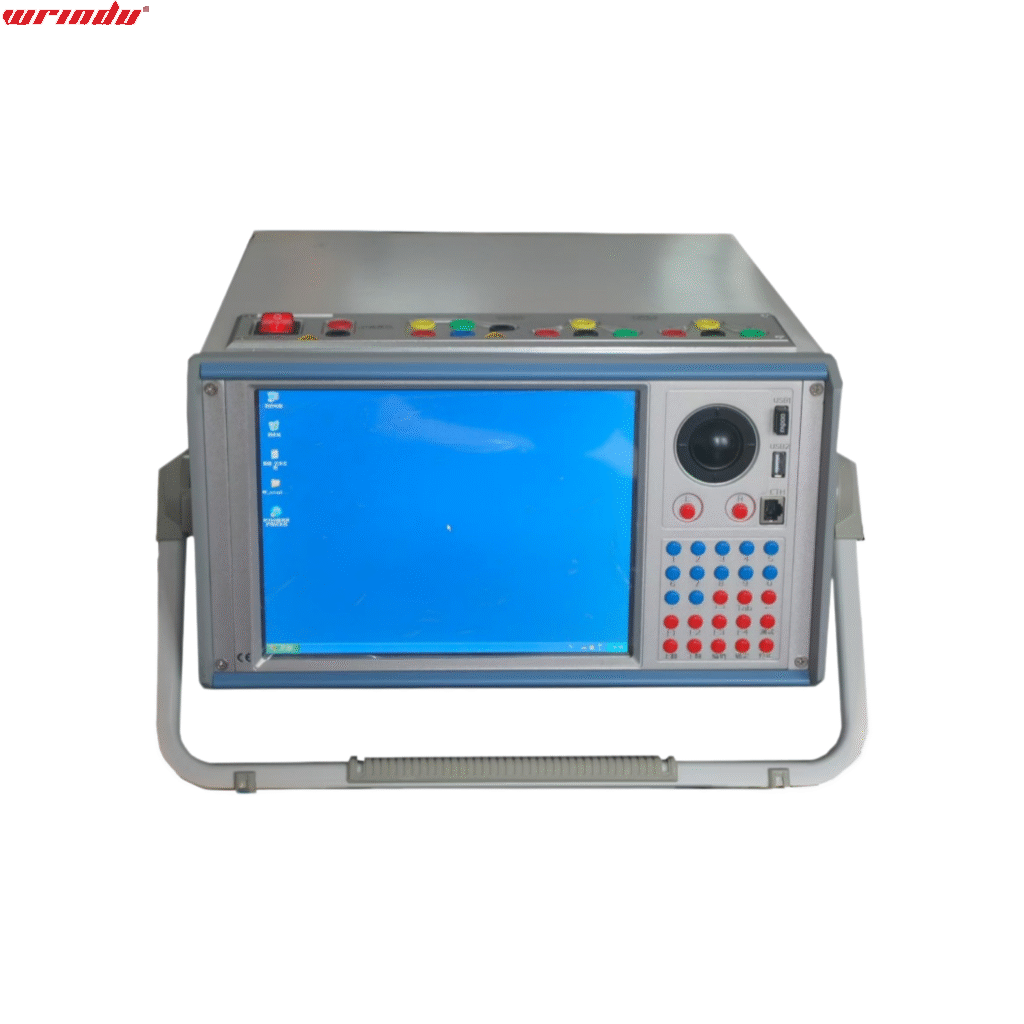
An oil BDV tester measures the dielectric strength of transformer oil, ensuring the health and reliability of power transformers. By detecting moisture, particles, and other contaminants, it prevents catastrophic failures, improves system safety, and supports predictive maintenance. Choosing the right tester, with accurate, repeatable, and standards-compliant performance, is crucial for utilities, industrial plants, and energy professionals worldwide.
What Is the Importance of Dielectric Strength in Transformer Oil?
Dielectric strength indicates an oil’s ability to withstand high voltages without breaking down. High-quality insulating oil ensures operational reliability, prevents short circuits, and dissipates heat. Low BDV values signal contamination or moisture, which can lead to arcs, flashovers, and transformer failures. Maintaining optimal oil quality is essential for system safety, equipment longevity, and minimizing downtime. Wrindu emphasizes that monitoring dielectric strength is a cornerstone of preventive maintenance.
How Does an Oil BDV Tester Work?
An oil BDV tester applies a controlled AC voltage to a precise oil sample until breakdown occurs. The device uses a step-up transformer for linear voltage rise, electrodes to shape the electric field, and automated detection circuits to record the breakdown voltage instantly. Accurate ramp rates, electrode design, and stirring mechanisms ensure repeatable and reliable results. Modern testers integrate standards compliance with full automation, enhancing operational safety and precision.
Which Standards Govern Oil BDV Testing and Why Are They Important?
Standards like IEC 60156, ASTM D877, and ASTM D1816 provide consistent testing protocols, ensuring reliable comparison across labs and locations. They define electrode shapes, gaps, voltage ramp rates, stirring methods, and test repetitions. A quality BDV tester adheres to these guidelines to produce repeatable, internationally recognized results, supporting both regulatory compliance and predictive maintenance programs.
| Parameter | ASTM D877 | ASTM D1816 | IEC 60156 |
|---|---|---|---|
| Electrode Shape | Flat Discs (1-inch) | Spherical (VDE) | Spherical (VDE) |
| Electrode Gap | 2.54 mm | 1–2 mm | 2.5 mm ± 0.05 mm |
| Oil Stirring | Not required | Gentle circulation | Impeller-based stirring |
| Voltage Ramp Rate | 3 kV/s ± 20% | 0.5 kV/s | 2 kV/s ± 0.2 kV/s |
| Typical Outcome | Avg. of 5 breakdowns | Avg. of 5 breakdowns | Avg. of 6 breakdowns |
How Do Contaminants Affect BDV Results?
Water, particles, and dissolved gases are primary contaminants. Even trace moisture drastically lowers dielectric strength, forming emulsions or droplets that initiate electrical arcs. Particulate matter like cellulose fibers can bridge electrodes, triggering premature breakdown. Dissolved gases from partial discharges further compromise insulation. Detecting these threats through BDV testing allows targeted interventions such as oil purification, ensuring system reliability.
What Should You Consider When Selecting a BDV Tester?
Key considerations include:
-
Portability vs. Laboratory Use: Portable testers must combine accuracy with ruggedness and battery power; laboratory models prioritize continuous precision and data analysis.
-
Automation and Memory: Pre-programmed sequences, automated detection, and data storage improve repeatability and reduce human error.
-
Connectivity: USB, Bluetooth, and network integration facilitate predictive maintenance and real-time asset monitoring.
-
Ergonomics: Clear displays, intuitive controls, and well-illuminated test cells enhance usability and operator safety.
Wrindu products focus on precision, connectivity, and standards compliance to meet diverse operational needs.
How Should Oil Samples Be Collected and Prepared?
Proper sampling ensures reliable results. Use clean, inert glass bottles with secure caps. Flush the sampling valve before collection to avoid stagnant oil contamination. Fill the bottle from the bottom slowly, leaving minimal air space. Label accurately with transformer ID, temperature, and time. Maintain a “chain of custody” from sampling to testing. Wrindu stresses that sample integrity is as critical as the tester itself for meaningful analysis.
Why Is Investing in a High-Quality BDV Tester Economically Justified?
The cost of a high-quality BDV tester is minor compared to potential transformer failure expenses. Direct costs include replacement, labor, and decommissioning. Indirect costs involve downtime, regulatory penalties, reputation loss, and safety risks. Preventive testing with a reliable tester, like those from Wrindu, reduces the probability of catastrophic failures and delivers substantial ROI by enabling timely maintenance and risk mitigation.
Can BDV Testing Support Predictive Maintenance and Smart Grid Integration?
Yes. Collecting accurate BDV data over time allows predictive algorithms to forecast transformer health and prevent failures. Modern testers integrate with digital asset management systems, providing real-time updates, trend analysis, and AI-driven insights. These capabilities enable utilities to shift from reactive to condition-based maintenance, improving efficiency, safety, and operational planning.
Wrindu Expert Views
“Transformer oil is the first line of defense against electrical failure. A precise BDV tester is not just an instrument—it’s a diagnostic lifeline. At Wrindu, we design testers that combine automation, standards compliance, and connectivity, empowering engineers to detect hidden contaminants, predict transformer behavior, and prevent costly outages. Our focus is on creating tools that deliver clarity, accuracy, and actionable intelligence for modern power systems.”
Conclusion
Choosing the right oil BDV tester is a critical investment in transformer safety and system reliability. Accurate testing protects assets from catastrophic failure, ensures compliance with international standards, and supports predictive maintenance. Consider portability, automation, connectivity, and sampling protocols. Wrindu’s advanced BDV testers offer precision, reliability, and integration capabilities, making them a trusted solution for energy professionals worldwide.
Frequently Asked Questions
1. How often should transformer oil undergo BDV testing?
Regular testing depends on system criticality, transformer age, and operational conditions. Typically, annual testing is recommended, with more frequent intervals for high-load or aging assets.
2. Can BDV testers detect all types of contaminants?
BDV testers primarily detect moisture, particulate matter, and dissolved gases indirectly. For detailed gas analysis, additional tests like DGA are recommended.
3. Are portable testers as reliable as laboratory models?
High-quality portable testers provide accurate, standards-compliant results while offering mobility. They are designed for field conditions without compromising precision.
4. How does BDV data support predictive maintenance?
Historical BDV readings can be integrated with load, temperature, and gas analysis data. AI algorithms predict likely faults, enabling timely preventive actions.
5. What makes Wrindu BDV testers stand out?
Wrindu testers combine automation, precision, connectivity, and adherence to international standards, delivering reliable, actionable insights for both field and laboratory applications.
Related articles
 SF6 Leak Detector Sensitivity: Select a Method for the Inspection TaskKnowledge
 Cable Fault Locator Selection for Urban Networks: Routes, Noise and AccessKnowledge
 Substation Battery Load Bank Sizing: Duty, Voltage Range and Heat RejectionKnowledge
 CT Polarity, Ratio and Burden Testing: Find Wiring and Loading ErrorsKnowledge