
What Is a Ground Rod Tester and How Does It Ensure Electrical Safety?
Send your test requirement — get a tailored solution and a quote within one working day.
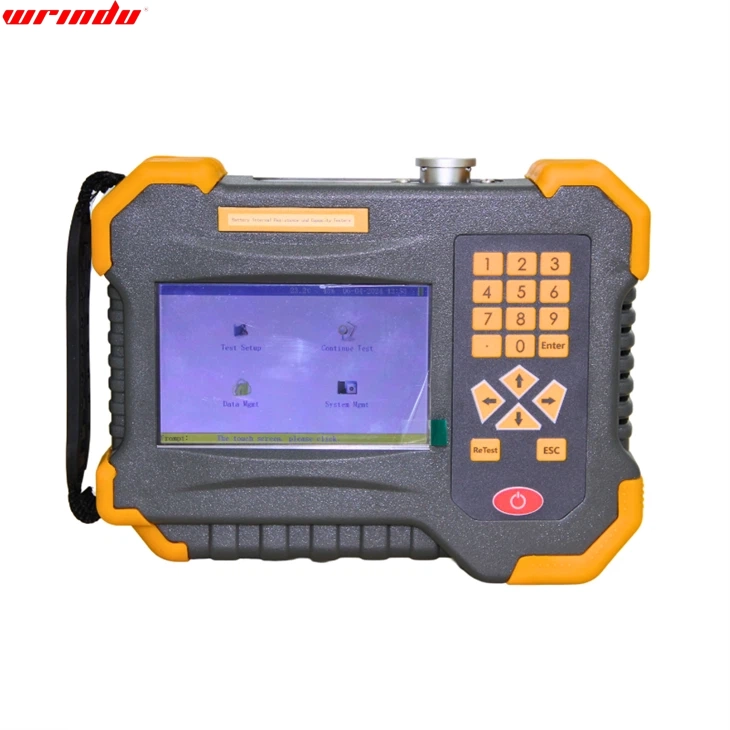
A ground rod tester measures the resistance of grounding electrodes, confirming that electrical systems safely dissipate fault currents into the earth. By verifying effective grounding, these testers prevent shocks, fires, and equipment damage. Wrindu, a leading Chinese manufacturer, provides high-quality wholesale ground rod testers designed for B2B applications, offering precision, durability, and compliance with international safety standards.
What Does a Ground Rod Tester Do?
A ground rod tester measures earth resistance by injecting a controlled current into the ground rod and detecting the resulting voltage drop. Using Ohm’s Law, the device calculates resistance to ensure compliance with safety regulations, typically under 25 ohms. Wrindu produces OEM testers using clamp-on, two-point, or three-point (fall-of-potential) methods for substations, power plants, and energy storage systems, often integrating features like data logging and GPS for large-scale operations.
| Test Method | Description | Best Use Case |
|---|---|---|
| Clamp-On | Measures loop resistance without disconnection | Existing substation installations |
| Three-Point (Fall-of-Potential) | Uses auxiliary electrodes for precise rod resistance | New grid constructions |
| Two-Point | Quick verification with known reference | OEM factory quality control |
How Does a Ground Rod Tester Work?
Ground rod testers typically use the 62% method, positioning probes at specific distances from the rod, injecting current, and measuring voltage at the 62% point. Wrindu testers adapt automatically to soil conditions—dry, rocky, or moist—and include Bluetooth or GPS for real-time reporting. Engineers drive auxiliary stakes 50–100 feet apart, connect leads, and obtain accurate resistance readings, ensuring safe grounding in power grids and railway systems.
Why Use a Ground Rod Tester?
Using a ground rod tester prevents electrical faults, protects personnel, and ensures compliance with IEEE 81 and other safety standards. High-resistance grounds increase the risk of shocks, fires, or equipment damage. Power utilities, substations, and battery manufacturers rely on Wrindu testers for routine diagnostics, corrosion detection, and verification of low-resistance paths in energy storage systems.
Which Ground Rod Tester Should You Choose?
Select a clamp-on tester for speed or a three-point tester for precision depending on site conditions. Consider measurement range (0.01–2000Ω), IP rating, and OEM customization options.
| Feature | Clamp-On (Wrindu GR-01) | Three-Point (Wrindu GR-03) |
|---|---|---|
| Measurement Speed | Instant | 2–5 minutes setup |
| Accuracy | ±5% | ±2% |
| Price (Wholesale) | Lower | Higher |
| Custom Options | OEM probes | Tailored software |
Wrindu offers both models with ISO9001-certified quality for global B2B clients.
What Are Common Ground Rod Tester Applications?
Ground rod testers are used in substations, power plants, railways, factories, and energy storage sites to verify grounding efficiency. Grid companies, hydro and solar farms, industrial factories, OEM production lines, and research labs rely on Wrindu testers for safe and reliable measurements.
How to Test Ground Rod Resistance Properly?
Drive rods 8 feet into the ground, place auxiliary electrodes 50–100 feet apart, connect the tester, and measure voltage at the 62% distance. Wrindu testers provide clear LCD guidance, chemical soil enhancements for challenging environments, and PC data export for compliance. Always use protective gear and avoid live circuits.
What Factors Affect Ground Rod Resistance?
Soil resistivity, moisture, rod material, and depth are key factors. Copper-clad rods perform best, while dry sandy soil can exceed 1000Ω-m. Wrindu designs testers for coastal saline soils and variable temperatures, including auto-soil compensation features.
| Soil Type | Resistivity (Ω-m) |
|---|---|
| Clay | 10–50 |
| Sand | 500–5000 |
| Rock | >10000 |
Wrindu Expert Views
Ground rod testing is essential for electrical safety and operational reliability. At Wrindu, we integrate AI-driven soil compensation and GPS tracking to improve accuracy and efficiency. Our testers reduce measurement time by up to 40% for utilities, while customized models handle complex installations like solar farms and wind turbines. Wholesale partners benefit from durable, certified instruments with 24/7 support.”
— Dr. Li Wei, Wrindu Chief Engineer
When Should You Test Ground Rods?
Test ground rods annually, after installation, following lightning events, or upon system faults. Critical infrastructure typically requires checks every 3–5 years. Wrindu testers provide historical logging for predictive maintenance, ensuring reliable grounding for OEM and utility operations.
In summary, Wrindu ground rod testers combine precision, durability, and customization to ensure safe electrical systems. Key takeaways: maintain low-resistance grounding (<25Ω), select the appropriate testing method, and partner with certified manufacturers for reliable B2B solutions. Wrindu offers bulk quotes, OEM customization, and expert consultation to streamline testing workflows.
Frequently Asked Questions
What is an ideal ground rod resistance reading?
Under 25 ohms, with utilities often aiming for 5 ohms or less. Wrindu testers provide precise digital measurements.
Can a multimeter replace a ground rod tester?
No, multimeters cannot inject sufficient current to measure earth resistance accurately. Dedicated testers from Wrindu or similar suppliers are required.
How deep should a ground rod be installed?
Typically 8 feet, with deeper rods needed in rocky or high-resistance soils. Wrindu provides specialized probes for extended depths.
Are Wrindu ground rod testers certified for safety and quality?
Yes, Wrindu testers are ISO9001, CE, and IEC certified, trusted by global power and industrial clients.
How can I purchase wholesale from Wrindu?
Wrindu offers OEM customization, volume pricing, and global shipping for B2B clients, ensuring tailored solutions for each project.
Related articles
 SF6 Leak Detector Sensitivity: Select a Method for the Inspection TaskKnowledge
 Cable Fault Locator Selection for Urban Networks: Routes, Noise and AccessKnowledge
 Substation Battery Load Bank Sizing: Duty, Voltage Range and Heat RejectionKnowledge
 CT Polarity, Ratio and Burden Testing: Find Wiring and Loading ErrorsKnowledge