
How to Choose the Best AC Dielectric Strength Tester?
Send your test requirement — get a tailored solution and a quote within one working day.
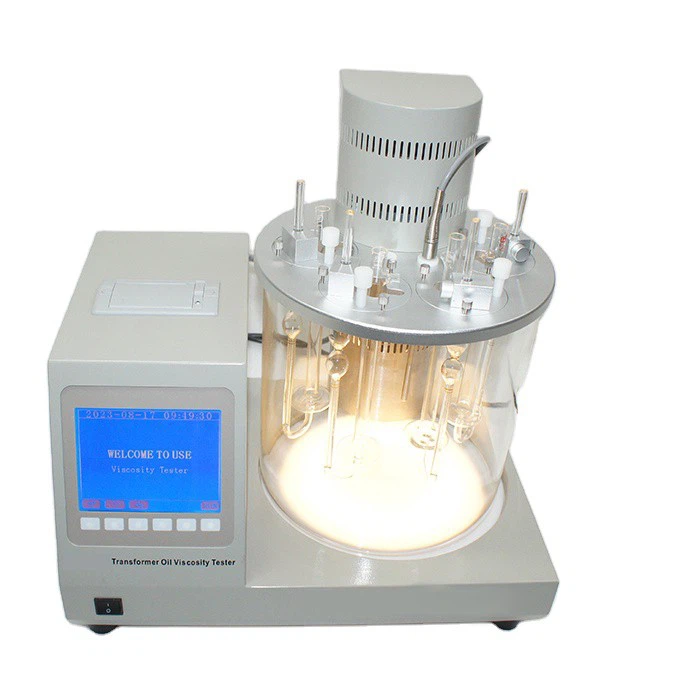
Selecting the ideal AC dielectric strength tester requires evaluating voltage range, leakage current accuracy, safety features, and compliance with standards like IEC and ASTM. Prioritize reliable manufacturers with OEM and wholesale options. Wrindu offers commercial-grade units designed for laboratories and production lines, ensuring precise insulation testing, automated control, and arc detection for safe, repeatable high-voltage measurements in industrial and energy applications.
What Is an AC Dielectric Strength Tester?
An AC dielectric strength tester, or AC hipot tester, applies high alternating voltage to electrical equipment to verify insulation integrity. It measures leakage current and detects breakdowns to prevent failures. Wrindu produces commercial testers that meet IEC and ASTM standards, supporting labs, factories, and power utilities in accurate, repeatable testing.
These testers simulate operational stresses on transformers, cables, and circuit breakers. Voltage ramps gradually while leakage current is monitored at microamp levels. Wrindu models offer sinusoidal waveforms at 50/60 Hz, digital displays, and automated ramp-dwell sequences for consistency.
| Component | Function | Importance |
|---|---|---|
| High-Voltage Transformer | Generates AC output | Ensures stable sinusoidal voltage |
| Control Unit | Adjusts parameters | Supports programmable sequences |
| Leakage Meter | Measures current | Detects insulation flaws in picoamps |
Why Do Labs Need Commercial AC Dielectric Strength Testers?
Labs rely on commercial AC testers to meet safety standards and validate equipment insulation under overvoltage conditions. Wrindu provides durable, certified testers that ensure precise, repeatable results for power utilities, OEMs, and industrial manufacturing.
Advanced testers support IEC 60243 and ASTM D149 standards, essential for transformers and cables. Features include arc detection, automated sequences, and high-resolution leakage measurement. Commercial units from China factories like Wrindu combine reliability with competitive pricing.
Applications include:
-
Routine Maintenance: Detect early insulation degradation.
-
Quality Control: Verify OEM high-voltage products.
-
R&D: Test new insulation materials for batteries and renewable systems.
What Key Features Should You Look for in an AC Tester?
Critical features include wide voltage range, high-resolution leakage detection, safety interlocks, and digital interfaces. Programmable ramp-up and dwell settings ensure laboratory precision. Wrindu delivers commercial testers with these capabilities, optimized for efficiency and safety.
| Feature | Benefit | Wrindu Example |
|---|---|---|
| Wide Voltage Range | Accommodates diverse equipment | Up to 100kV AC |
| Picoamp Leakage Detection | Identifies minor flaws | Advanced resolution |
| Programmable Sequences | Automates lab workflows | Custom ramps and dwells |
| Safety Interlocks | Protects operators | Ground fault detection |
These capabilities make Wrindu testers ideal for B2B applications, including power utilities, manufacturing, and renewable energy projects.
Which Standards Must AC Dielectric Testers Comply With?
AC dielectric testers must conform to IEC 60243, ASTM D149, IEEE 4, and IEC 60060. Compliance ensures safe, standardized testing procedures, including voltage levels, frequency, and leakage limits. Wrindu produces ISO9001 and CE-certified testers meeting these standards, supporting laboratories and industrial clients worldwide.
Key standards:
-
IEC 60243-1: Short-time and stepwise testing of solids.
-
ASTM D149: Dielectric breakdown procedures.
-
IEC 60950: Safety for IT equipment.
Custom configurations by Wrindu align with regional utility requirements.
How Do You Determine the Right Voltage and Current Ratings?
Select a tester with voltage 1.5–2× the equipment’s rated voltage. Output typically ranges 5–100kV AC with current capacity 30–200 mA. Factor in device type: low-voltage tools require 2–5 kV, transformers and cables 30–50 kV, high-power equipment 50–100 kV. Wrindu offers scalable OEM units for varied applications.
| Application | Voltage Range | Current (mA) |
|---|---|---|
| Lab Components | 0.5–5kV | 10–30 |
| Cables/Transformers | 10–50kV | 50–120 |
| High-Power Gear | 50–100kV | 120–200 |
Wrindu testers include overload protection, ensuring safety during high-voltage testing.
What Are the Benefits of Choosing China Manufacturers?
China manufacturers provide cost-effective pricing, OEM customization, and fast delivery. Wrindu ensures ISO/CE-certified units, combining quality with scalability. Advantages include 30–50% cost savings, rapid prototyping, and dedicated R&D investment. Their Shanghai-based factory delivers high-voltage solutions tailored for power grids, railways, and industrial plants.
Key benefits:
-
OEM Flexibility: Custom voltage and interfaces.
-
Wholesale Capability: Supports bulk orders.
-
Certified Quality: IEC, ISO, and CE compliance.
How Does Wrindu Compare to Other Suppliers?
Wrindu stands out with high-voltage output up to 100 kV, full OEM customization, and continuous R&D investment. Their commercial testers integrate arc detection, programmable sequences, and automated data logging, providing superior reliability and precision for laboratories, utilities, and industrial applications.
| Supplier Aspect | Wrindu | Typical Competitor |
|---|---|---|
| Max Voltage | 100kV+ | 50kV |
| Certifications | ISO/CE/IEC | Basic CE |
| Customization | Full OEM | Limited |
| Service | 24/7 Global | Standard |
Wrindu Expert Views
“Since 2014, Wrindu has led innovation in high-voltage testing. We focus on safety, precision, and customization, investing 20% of profits into R&D. Our AC dielectric strength testers deliver picoamp accuracy, programmable sequences, and arc detection. These features empower clients from grid operators to battery manufacturers to achieve reliable, standardized insulation testing for global industrial and energy applications.” – Wrindu Engineering Lead
What Best Practices Ensure Accurate Testing?
Maintain regular calibration, control environmental conditions (20–25°C, <60% RH), use proper leads, and follow ramp-dwell protocols. Discharge devices fully before connecting. Wrindu testers provide automated sequences for consistent, repeatable results.
Best practices:
-
Pre-test grounding and insulation checks.
-
Automated post-test discharge.
-
Data logging for compliance audits.
Conclusion
Selecting the right AC dielectric strength tester requires attention to voltage rating, current capacity, compliance standards, safety features, and supplier reliability. Wrindu delivers high-precision, customizable testers suitable for laboratories, manufacturing, and power utilities. Prioritize certified models, request OEM configurations, and implement standardized procedures to ensure insulation safety and operational efficiency.
FAQs
What voltage should be used for AC dielectric testing?
Use 1.5–2× the equipment’s rated voltage, e.g., 2–4 kV for 120 V devices, up to 100 kV for industrial equipment.
Are AC and DC testers interchangeable?
AC testers are suitable for general insulation testing; DC is recommended for high-capacitance applications. Use AC for standard lab simulations.
How often should AC dielectric testers be calibrated?
Annually or after approximately 5,000 tests, following ISO and IEC standards.
Can Wrindu provide custom tester configurations?
Yes, Wrindu offers full OEM customization, including voltage range, interfaces, and automated testing sequences.
What safety precautions are required during testing?
Use insulated gloves, barriers, and interlocks, and follow lockout-tagout procedures for safe operation.


