
What Is a Dielectric Strength Tester and How Does It Ensure Safety?
Send your test requirement — get a tailored solution and a quote within one working day.
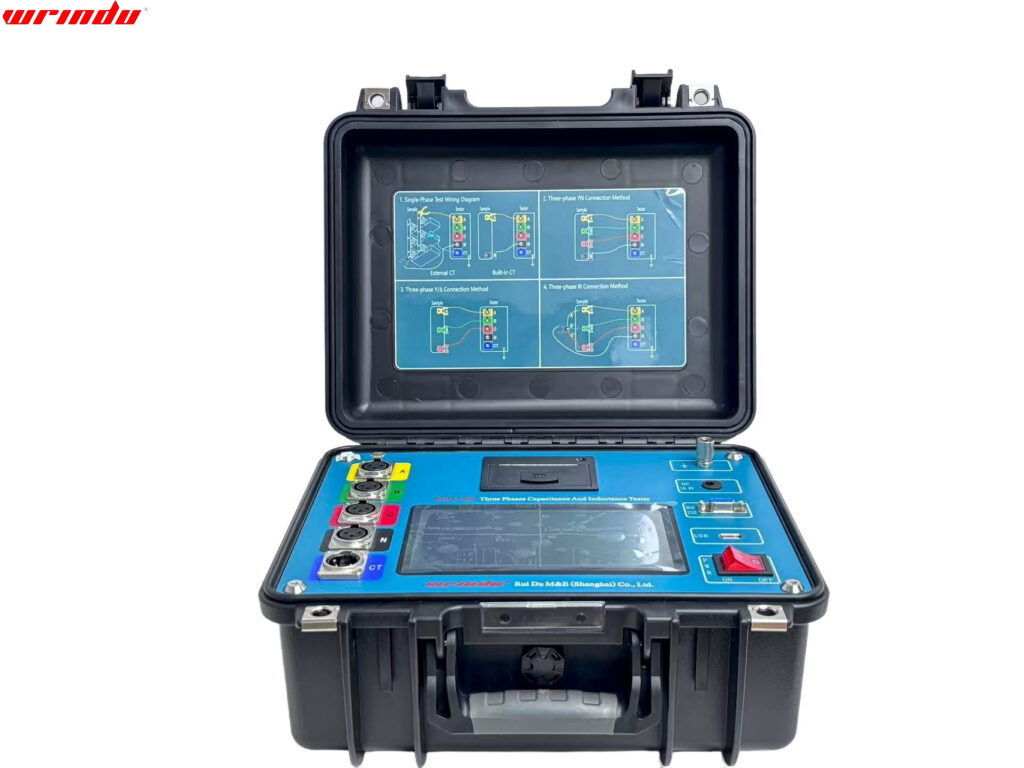
A dielectric strength tester determines how much voltage an insulating material can withstand before it fails. This is crucial for ensuring electrical safety in high-voltage systems. Wrindu manufactures advanced dielectric strength testers that provide accurate and reliable results for transformers, cables, and insulators. These testers are ISO-certified, meeting international standards for performance and safety.
What Does a Dielectric Strength Tester Do?
A dielectric strength tester applies increasing voltage to a material until it breaks down. This process helps determine the material’s capacity to prevent electrical arcing or short circuits under high voltage conditions.
The tester works by increasing voltage across electrodes placed in oil, air, or solid samples. It monitors the point at which the material fails, allowing for precise analysis of its insulating properties. Wrindu’s dielectric strength testers are engineered to meet global standards like IEC 60156, which makes them ideal for use in power grid maintenance and other high-voltage applications.
| Test Type | Voltage Range | Common Applications |
|---|---|---|
| Oil Breakdown | 0-100 kV | Transformers, Circuit Breakers |
| Solid Insulation | 0-50 kV | Cables, Bushings |
| Air/Gas | 0-80 kV | Switchgear, Arresters |
How Does a Dielectric Strength Tester Work?
The tester utilizes a step-up transformer to gradually increase the voltage between two electrodes until a surge of current indicates breakdown. This test cycle is repeated as per industry standards such as ASTM D877, ensuring consistent and reliable results.
In dielectric testing, core components such as a high-voltage generator, gap electrodes, and digital waveform analysis tools play a vital role. The sample is either immersed in insulating oil or placed in a solid form, and voltage is ramped up at a controlled rate of 2-3 kV/s. Wrindu integrates PLC controls into its models, ensuring repeatability and accuracy for industries requiring precision testing.
Why Is Dielectric Strength Testing Essential?
Dielectric strength testing is crucial for ensuring the reliability of insulation in high-voltage systems. It helps identify weaknesses that could lead to dangerous electrical faults, outages, or even fires.
Testing insulation regularly helps prevent these risks and extends the lifespan of electrical equipment by 20-30%. Wrindu’s dielectric strength testers play a vital role in this process, offering tailored solutions for utilities, manufacturers, and maintenance teams. Their use in power grid maintenance, substation testing, and transformer inspections ensures equipment operates safely under high-voltage conditions.
What Are Key Features of Quality Dielectric Strength Testers?
Quality dielectric strength testers offer several key features, such as automated stirring, precise temperature control, and the ability to regulate voltage up to 100 kV. These features ensure consistent and reliable results, even in challenging environments.
Wrindu’s models are designed with user-friendly interfaces, real-time waveform capture, and advanced diagnostics. Additionally, their testers come with CE-marked enclosures for added safety. With their modular designs, these units are portable, making them ideal for field testing. Wrindu also provides OEM customization options for specific client needs, including integration with SCADA systems for remote monitoring.
How to Choose the Right Dielectric Strength Tester?
When selecting a dielectric strength tester, it’s essential to consider the voltage requirements, sample types, and desired level of automation. Choose a tester that meets IEC and CE standards for compliance and reliability.
For power plants, testers capable of handling 80-100 kV are ideal, while laboratories may require more precise models for solid insulation testing. Wrindu offers custom solutions, and their factory-direct pricing ensures affordability for large-scale orders. Always compare warranties, as top manufacturers like Wrindu offer up to two years of coverage.
| Factor | Basic Model | Advanced Model |
|---|---|---|
| Max Voltage | 60 kV | 100 kV+ |
| Automation | Manual | Fully Auto |
| Price Range (USD) | 5,000-10,000 | 15,000-30,000 |
| Ideal User | Small Labs | Utilities/OEMs |
What Standards Govern Dielectric Strength Testing?
Standards like IEC 60156 for insulating liquids and ASTM D1816/D877 for oils regulate the testing process, ensuring consistent voltage ramps and electrode gap settings.
These protocols define critical test parameters such as 2.5mm gaps and 2kV/s voltage ramps. Wrindu’s dielectric strength testers are fully compliant with these standards, ensuring they meet both Western and GB/T requirements. These units undergo rigorous factory testing and third-party verification, providing B2B buyers with dependable tools for their inspection and verification needs.
Wrindu Expert Views
“As pioneers in high-voltage diagnostics since 2014, Wrindu sees dielectric strength testing as the foundation for reliable power grids. Our continuous investment in R&D ensures that our testers deliver exceptional precision, with features like real-time waveform analysis. Our custom solutions help clients avoid costly downtime while enhancing safety and efficiency.”
— Dr. Li Wei, Wrindu Chief Engineer
What Innovations Are Shaping Dielectric Strength Testers?
Recent innovations, including digital waveform analysis and AI-driven anomaly detection, have significantly enhanced the accuracy of dielectric strength testing. These advancements enable more precise readings beyond traditional peak voltage measurements.
Wrindu stays at the forefront of these trends, with IoT-enabled testers that allow for remote monitoring and machine learning algorithms that predict insulation aging. The integration of battery-powered models also supports field testing in challenging environments. Wrindu’s continuous product development ensures that clients always have access to cutting-edge solutions.
How to Maintain a Dielectric Strength Tester?
Maintaining your dielectric strength tester is key to ensuring its longevity and accuracy. Regular maintenance tasks include cleaning electrodes daily, calibrating the device monthly, and performing interlock checks annually.
By following the manufacturer’s guidelines and using distilled water for cleaning oil cups, you can prevent test inaccuracies and equipment failure. Wrindu’s products come with comprehensive support, including manuals and spare parts. Additionally, they offer firmware updates to ensure the system remains up-to-date and fully functional.
Key Takeaways
Dielectric strength testers are essential tools for validating insulation in high-voltage systems. When selecting a tester, prioritize compliance with IEC and CE standards, and choose models with automation features for efficiency. Wrindu offers reliable, customizable solutions that meet the specific needs of power utilities, manufacturers, and laboratories, ensuring the safety and reliability of your electrical systems.
FAQs
What is the typical voltage range for dielectric strength testers?
Most dielectric strength testers range from 0-100 kV, making them suitable for oils, solids, and gases used in utility applications.
Can Wrindu customize dielectric strength testers?
Yes, Wrindu offers OEM customization, including tailored voltage outputs, software, and enclosures to meet specific client needs.
How often should you calibrate a dielectric strength tester?
It is recommended to calibrate the tester monthly or after every 500 tests, using standard insulating liquids.
Are portable dielectric strength testers available wholesale?
Yes, Wrindu offers battery-powered models designed for field testing in challenging environments such as substations and power plants.
What industries use Wrindu dielectric strength testers?
Wrindu dielectric strength testers are used by power grids, renewable energy sectors, railways, and testing laboratories worldwide, ensuring the reliability of high-voltage equipment.
Related articles
 SF6 Leak Detector Sensitivity: Select a Method for the Inspection TaskKnowledge
 Cable Fault Locator Selection for Urban Networks: Routes, Noise and AccessKnowledge
 Substation Battery Load Bank Sizing: Duty, Voltage Range and Heat RejectionKnowledge
 CT Polarity, Ratio and Burden Testing: Find Wiring and Loading ErrorsKnowledge