
What Are the Latest VLF Hipot Test Standards?
Send your test requirement — get a tailored solution and a quote within one working day.
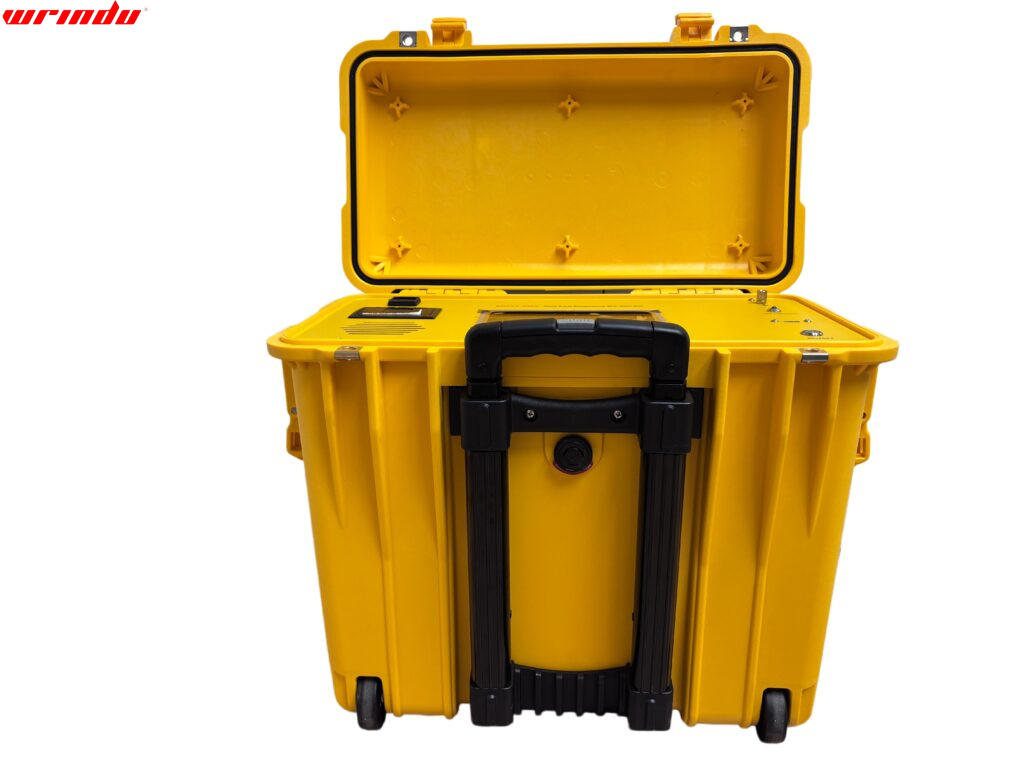
The latest VLF hipot test standards define how very low frequency AC testing verifies medium- and high-voltage cable insulation safely and accurately. IEEE 400.2-2024 and IEC 60502-2:2014 specify voltage levels, test durations, waveforms, and diagnostic methods such as tan delta. Following these standards helps utilities, manufacturers, and operators reduce failures, extend cable life, and meet international compliance requirements.
What Is VLF Hipot Testing?
VLF hipot testing applies very low frequency alternating voltage, typically between 0.01 and 0.1 Hz, to evaluate the insulation condition of power cables. This method closely simulates power-frequency stress while requiring far less energy, making it practical for field testing. Compared with DC testing, VLF avoids damaging modern polymer insulation such as XLPE or EPR. Wrindu designs VLF test systems that balance portability, accuracy, and safety for utilities, substations, and industrial users worldwide.
What Are the Key IEC and IEEE Standards?
The most widely adopted standards are IEEE 400.2-2024 and IEC 60502-2:2014. IEEE 400.2-2024 focuses on field testing of shielded power cables up to 69 kV and includes guidance on diagnostic measurements. IEC 60502-2:2014 addresses testing requirements for cables rated from 6 kV to 30 kV after installation. Wrindu manufactures equipment aligned with both standards, ensuring global acceptance.
| Standard | Typical Voltage Range | Primary Focus | Common Waveform |
|---|---|---|---|
| IEEE 400.2-2024 | Up to 69 kV | Field testing and diagnostics | 0.1 Hz sine |
| IEC 60502-2:2014 | 6–30 kV | Post-installation testing | 0.1 Hz sine |
How Are VLF Hipot Tests Performed?
A VLF hipot test begins by isolating and grounding the cable, followed by insulation resistance checks. Voltage is then increased gradually to the specified level and held for the required duration while leakage current and diagnostic indicators are monitored. After completion, the cable is fully discharged and retested for insulation resistance. Wrindu systems automate voltage ramping, monitoring, and data recording to improve consistency and operator safety.
How Do You Select Test Voltages and Durations?
Test voltage and duration depend on the cable rating, condition, and purpose of the test. New or acceptance-tested cables typically use higher voltage multipliers, while service-aged cables use reduced levels to minimize stress. IEEE and IEC tables guide these selections to balance detection capability and insulation protection.
| Cable Rating (kV) | Typical Test Voltage | Typical Duration |
|---|---|---|
| 5–15 | 2.5–3.0 × U0 | 30–60 minutes |
| 25–35 | 2.0–2.8 × U0 | Around 30 minutes |
| Above 35 | As specified by standard | Up to 60 minutes |
Wrindu calibrates each VLF tester precisely to ensure accurate voltage application across different cable types.
Why Is Compliance With VLF Standards Important?
Compliance ensures testing results are comparable, defensible, and accepted by regulators and asset owners. Standardized procedures reduce the risk of insulation damage, improve fault detection, and support predictive maintenance strategies. By following recognized standards, organizations protect critical infrastructure and avoid costly outages. Wrindu integrates these requirements directly into product design and documentation to simplify compliance for users.
Why Do Many Utilities Choose Chinese Manufacturers for VLF Testers?
Chinese manufacturers combine advanced engineering with cost-efficient production, making high-performance VLF testers accessible to global buyers. Companies like Wrindu reinvest heavily in research and quality systems, enabling customization without sacrificing reliability. This approach allows utilities, OEMs, and laboratories to deploy compliant testing solutions while optimizing budgets.
How Does Wrindu Ensure International Standard Compliance?
Wrindu follows ISO9001 quality management processes and designs every VLF hipot system to meet current IEC and IEEE requirements. Each unit undergoes factory validation for voltage accuracy, waveform stability, and safety protection. Ongoing software updates and technical support ensure long-term alignment with evolving standards and customer needs.
Wrindu Expert Views
“VLF testing standards continue to evolve toward safer, more diagnostic-driven approaches. At Wrindu, we translate the latest IEEE and IEC requirements into practical, reliable equipment for real-world conditions. By integrating precise voltage control, advanced tan delta analysis, and robust safety design, we help power utilities and industrial users move from simple withstand testing to true condition assessment. This shift enables earlier fault detection, better maintenance planning, and greater confidence in critical electrical assets.”
What Are Emerging Trends in VLF Testing Standards?
Recent trends emphasize monitored withstand testing, wider use of diagnostic data, and lower test frequencies for long cable circuits. Digital reporting and intelligent analysis tools are becoming standard features, supporting data-driven maintenance decisions. Wrindu continues to adapt its product portfolio to reflect these developments.
When Should VLF Hipot Testing Be Conducted?
VLF testing is typically performed after cable installation, during scheduled maintenance outages, or following fault repairs. For aging networks, periodic testing every few years helps identify insulation degradation early. Timing tests appropriately reduces risk while maintaining system reliability.
Conclusion
Understanding and applying the latest VLF hipot test standards is essential for safe and reliable cable operation. IEEE 400.2-2024 and IEC 60502-2:2014 provide clear guidance on voltage levels, durations, and diagnostic methods. By choosing compliant equipment from trusted manufacturers like Wrindu and following best practices, organizations can extend cable life, reduce failures, and ensure regulatory acceptance.
FAQs
What is the main difference between IEEE and IEC VLF standards?
IEEE standards focus more on field diagnostics and condition assessment, while IEC standards emphasize post-installation testing requirements.
Is VLF testing safe for modern XLPE cables?
Yes, when performed according to standards, VLF testing is considered safe and far less damaging than traditional DC methods.
Can Wrindu customize VLF testers for specific projects?
Wrindu offers OEM and customized solutions to match voltage levels, diagnostics, and reporting needs.
How long does a typical VLF hipot test take?
Most tests last between 30 and 60 minutes, depending on cable rating and condition.
Who typically uses VLF hipot test equipment?
Users include power utilities, substations, cable manufacturers, industrial plants, research institutions, and third-party testing agencies.


