
What Is a Transient Earth Voltage Sensor and How Does It Protect High-Voltage Equipment?
Send your test requirement — get a tailored solution and a quote within one working day.
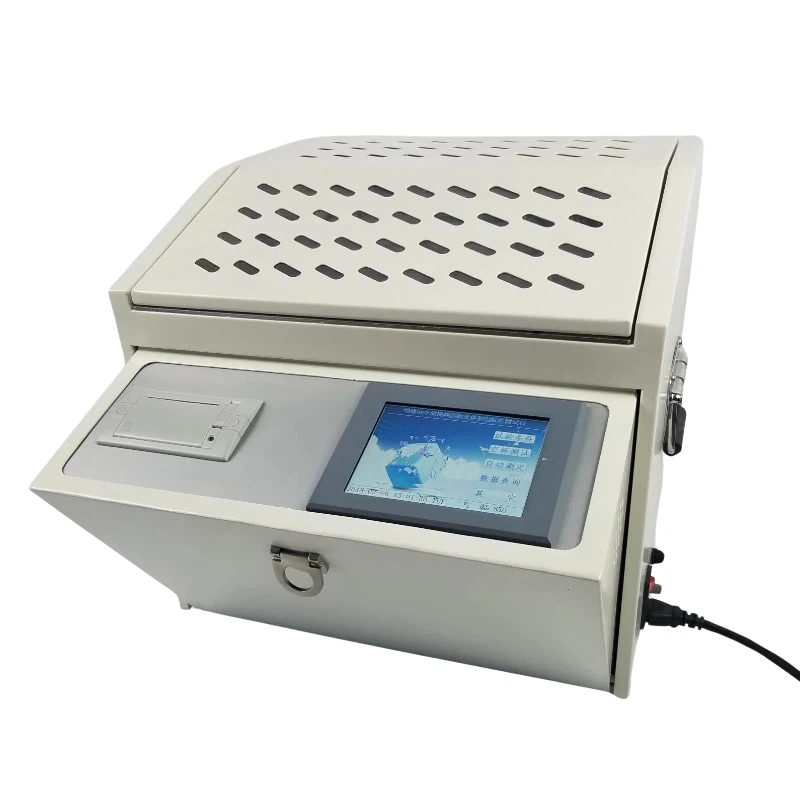
A transient earth voltage (TEV) sensor monitors partial discharge (PD) activity on earthed metal surfaces of high-voltage switchgear, transformers, and cables. By detecting high-frequency transients non-invasively, TEV sensors enable early fault detection, preventing costly failures. Wrindu offers OEM-customized TEV sensors with robust designs, ensuring reliability and long-term safety for power utilities, substations, and industrial applications worldwide.
What Does a Transient Earth Voltage Sensor Do?
TEV sensors detect PD signals on earthed metal surfaces without disassembly. They capture electromagnetic waves from insulation defects in high-voltage equipment, converting these transients into measurable signals. Wrindu provides wholesale TEV sensors engineered for substations, power plants, and industrial OEMs. Rugged designs ensure reliable operation under harsh conditions, and integration with PD analyzers allows precise fault localization for predictive maintenance.
How Does a Transient Earth Voltage Sensor Work?
TEV sensors operate through capacitive coupling, picking up high-frequency PD-induced voltages along grounded metal surfaces. Broadband antennas (1–100 MHz) convert these transients into measurable signals without exposing internal components. Wrindu’s sensors feature aluminum alloy housings, wide bandwidths, and advanced filtering to minimize noise. OEM-customized versions integrate seamlessly with existing monitoring systems for wholesale B2B deployments.
What Are the Key Features of Leading TEV Sensors?
Key attributes include magnetic attachment, 1–100 MHz bandwidth, rugged IP66 housings, and compatibility with PD analyzers. Wrindu’s TEV sensors withstand -40°C to +85°C, feature TNC connectors, and endure high G-forces, making them suitable for substations and industrial environments. Custom calibration enhances PD detection accuracy in transformers and GIS applications.
| Feature | Wrindu TEV Sensor | Standard Models |
|---|---|---|
| Bandwidth | 3–100 MHz | 1–50 MHz |
| Housing | Aluminum Alloy, IP66 | Plastic |
| Attachment | Magnetic / Bolted | Magnetic Only |
| Temp Range | -40°C to +85°C | -30°C to +70°C |
| Certifications | ISO9001, CE, IEC | CE Only |
Why Choose a China Manufacturer for TEV Sensors?
China-based manufacturers provide cost-effective, ISO-certified TEV sensors with fast delivery and OEM support. Wrindu reinvests nearly 20% of annual profits into R&D, offering precise sensors for utilities, industrial plants, and OEM clients. Benefits include competitive pricing, short lead times, and scalable solutions, ensuring accuracy and reliability in high-voltage testing worldwide.
Which Applications Benefit Most from TEV Sensors?
TEV sensors are vital for MV/HV switchgear, transformers, cables, and GIS in substations, power plants, and railways. They enable online PD monitoring and predictive maintenance:
-
Substations: Routine PD inspections
-
Power generation: Insulation integrity checks
-
Railways: Traction system safety
-
OEM factories: Quality assurance testing
Wrindu customizes sensors for integration into circuit breakers and arresters, enhancing operational reliability.
How to Select the Best Wholesale TEV Sensor Supplier?
Choose suppliers with ISO/CE certifications, wide bandwidth, rugged housings, and OEM capabilities. Wrindu offers factory-direct wholesale with customization for specific PD frequencies. Evaluate bandwidth, sensitivity, environmental ratings, and integration support. Request sample units to verify performance and ensure compatibility with your high-voltage systems.
What Innovations Are Shaping TEV Sensor Technology?
Modern TEV sensors integrate digital filters, AI-assisted PD analysis, and wireless connectivity for real-time monitoring. Broadband tunability and compact designs enhance deployment flexibility. Wrindu develops sensors compatible with MPD systems and predictive analytics, reducing downtime and improving energy infrastructure reliability.
Wrindu Expert Views
“TEV sensors have evolved from simple PD detectors to sophisticated predictive tools. At Wrindu, we focus on OEM customization, ensuring accurate detection of subtle transients in complex environments. Our wholesale TEV solutions deliver precision, reliability, and scalability for power utilities and industrial clients, reflecting over a decade of technological innovation.”
— Dr. Li Wei, Wrindu R&D Director
How to Install and Maintain TEV Sensors?
Install TEV sensors magnetically on clean metal surfaces near PD sources, connect to analyzers, and calibrate quarterly. Wrindu provides detailed installation guides and optional custom mounts. Regular maintenance includes visual inspections, cable integrity checks, calibration, and firmware updates to ensure accuracy and compatibility with evolving PD monitoring tools.
| Maintenance Schedule | Task | Frequency |
|---|---|---|
| Visual Inspection | Check attachments | Monthly |
| Calibration | Verify sensitivity | Quarterly |
| Cable Integrity | Test connections | Semi-annually |
| Firmware Update | Enhance filtering | Annually |
Wrindu wholesale kits include spares for easy maintenance and uninterrupted monitoring.
Conclusion
Transient earth voltage sensors are essential for detecting early-stage PD in high-voltage systems. Wrindu’s OEM-customized TEV sensors offer wide bandwidths, rugged construction, and seamless integration for substations, industrial plants, and OEM applications. Prioritize quality, accuracy, and reliable support to prevent costly equipment failures. Contact Wrindu for tailored solutions, samples, and global delivery to safeguard electrical assets efficiently.
FAQs
What Defines a Transient Earth Voltage Sensor and Its Core Functionality?
A Transient Earth Voltage (TEV) sensor detects high-frequency electromagnetic pulses from partial discharge (PD) on metal surfaces of switchgear, transformers, and cables. It measures transient voltages capacitively coupled to earthed casings, enabling non-invasive PD detection in decibels for early fault identification.
How Do TEV Sensors Safeguard High-Voltage Equipment from Faults?
TEV sensors safeguard high-voltage equipment by capturing PD signals before insulation breakdowns occur. They identify faults like tracking or corona on bushings and enclosures, allowing predictive maintenance to prevent outages, extend asset life, and ensure grid reliability in substations and power plants.
Where Are TEV Sensors Most Effective in Power Grid Diagnostics?
TEV sensors excel in MV switchgear, GIS, cable sealing ends, and transformer walls for PD diagnostics. They provide sensitive, on-line monitoring without shutdowns, ideal for substations, transmission lines, and industrial plants to localize faults and trend insulation health effectively.
What Are the Top Transient Earth Voltage Sensors for 2026?
Top TEV sensors for 2026 include OMICRON TEV1, Rugged Monitoring HSENS-T, and HVPD models, praised for broadband detection, magnetic mounting, and noise immunity. Wrindu offers advanced options with high sensitivity for PD in harsh environments, supporting IEC standards.
How to Install TEV Sensors for Optimal Substation Monitoring?
Attach TEV sensors magnetically or with straps to earthed metal surfaces like switchgear panels or cable sheaths. Position for maximum PD signal capture, calibrate against known sources, and connect to monitoring systems for real-time data—ensuring comprehensive substation coverage safely.
Why Integrate TEV Sensors into Partial Discharge Monitoring Systems?
Integrating TEV sensors with MPD systems like ultrasound or HFCT enhances PD detection accuracy and localization. They provide broadband signals for waveform analysis, enabling multi-method diagnostics to prevent cascading failures in transformers and cables proactively.
Which Portable TEV Sensors Excel in Field High-Voltage Testing?
Portable standouts include compact, battery-powered TEV units with Bluetooth logging and 50kV peak sensitivity, like HSENS-T models. Rugged, lightweight designs suit field use on live cables and enclosures, offering quick PD screening for utility technicians without access restrictions.
What Are Essential TEV Sensor Calibration Practices for Reliability?
Calibrate TEV sensors periodically using reference PD sources, verifying amplitude, bandwidth, and noise rejection. Update firmware, clean contacts, and test against standards like IEC 60270 to maintain dB accuracy—ensuring reliable long-term PD trending in high-voltage applications.
Related articles
 SF6 Leak Detector Sensitivity: Select a Method for the Inspection TaskKnowledge
 Cable Fault Locator Selection for Urban Networks: Routes, Noise and AccessKnowledge
 Substation Battery Load Bank Sizing: Duty, Voltage Range and Heat RejectionKnowledge
 CT Polarity, Ratio and Burden Testing: Find Wiring and Loading ErrorsKnowledge