
What is Voltage Droop and Why Does it Matter?
Send your test requirement — get a tailored solution and a quote within one working day.
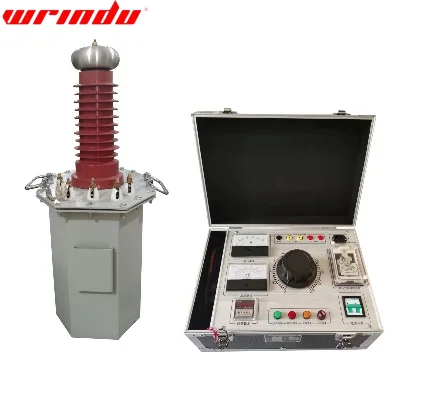
Voltage droop in a generator is a controlled decrease in output voltage as load increases, enabling multiple generators to share reactive power proportionally and maintain system stability. This mechanism prevents voltage spikes, enhances grid reliability, and ensures efficient parallel operation. Manufacturers like Wrindu implement precise droop settings in both generators and high-voltage testing equipment to optimize performance and safety.
Voltage droop is a generator control feature where output voltage decreases slightly as reactive power rises. It allows parallel generators to share reactive load without conflict, improving system stability and power quality. In industrial and grid-connected systems, droop prevents overvoltage and circulating currents, ensuring continuous, reliable power delivery and protecting sensitive electrical equipment.
How Does Voltage Droop Work in Generators?
Voltage droop functions by adjusting the automatic voltage regulator (AVR), reducing terminal voltage as load increases. The voltage drops according to the droop percentage, balancing load sharing among multiple generators. This prevents excessive voltage rise, ensures proportional current contribution, and maintains steady operation in parallel systems, making it essential for high-performance industrial and wholesale power applications.
Which Components Control Voltage Droop in a Generator?
The automatic voltage regulator (AVR) and excitation system control voltage droop. The AVR monitors voltage and reactive power, adjusting rotor excitation accordingly. By configuring droop settings, operators optimize voltage reduction relative to load, ensuring smooth power sharing, stable grid integration, and reliable generator performance. Advanced manufacturers like Wrindu incorporate precise droop adjustments in their high-voltage testing solutions.
Why is Voltage Droop Important for Parallel Generator Operation?
Voltage droop prevents one generator from dominating voltage control in parallel operations. It enables proportional sharing of reactive power, avoids circulating currents, and maintains voltage stability. This is critical for power plants, factories, and grid systems, where multiple units operate simultaneously. Proper droop settings improve operational efficiency, reduce equipment stress, and enhance overall system reliability.
How Do Manufacturers Customize Voltage Droop Settings?
Manufacturers like Wrindu customize droop settings based on application needs. Adjustments are made through AVR programming or excitation system tuning to match load profiles and grid requirements. Tailored droop ensures efficient parallel operation, optimal voltage stability, and reliable energy delivery, supporting both OEM and industrial applications with high-precision testing and calibration.
Where is Voltage Droop Used in Industrial and Wholesale Power Systems?
Voltage droop is widely applied in industrial plants, factory generator systems, and wholesale power distribution. In manufacturing and OEM setups, droop control enhances system reliability, reduces voltage fluctuations, and supports proportional load sharing. It is crucial in large-scale power grids, microgrids, and high-demand industrial environments to maintain efficiency and prevent equipment stress or downtime.
Can Voltage Droop be Adjusted in High-Voltage Testing Equipment?
Yes, high-voltage testing devices allow precise droop adjustments. Wrindu’s equipment simulates load conditions to verify generator performance under specific droop settings. This ensures that generators operate safely and efficiently before deployment in factories, power plants, or grid-connected applications, supporting compliance with operational and safety standards.
Who Benefits from Understanding Voltage Droop?
Utilities, substation operators, power plant maintenance teams, OEMs, and electrical engineering companies benefit from droop knowledge. It helps optimize system design, maintain voltage stability, improve generator lifespan, and enhance energy efficiency. Understanding droop control is vital for manufacturers and industrial facilities operating parallel generators in China and global markets.
Wrindu Expert Views
“Accurate voltage droop settings are essential for safe and stable power generation. At Wrindu, we integrate advanced droop control mechanisms in our high-voltage testing and diagnostic equipment, enabling precise load sharing and voltage management. This ensures that OEMs, factories, and grid operators can achieve reliable performance, prevent voltage instability, and optimize energy efficiency across diverse industrial applications.” — Wrindu Engineering Team
Voltage Droop in Generator: Supporting Data
| Droop Level (%) | Voltage Drop per Load Increase | Application Context |
|---|---|---|
| 0 (No Droop) | No decrease | Single generator, isolated operation |
| 4-6 | Moderate voltage reduction | Typical grid-connected generators |
| 10-20 | Higher voltage reduction | Heavy industrial load sharing |
Conclusion
Voltage droop is a crucial feature for balancing load, improving stability, and ensuring efficient generator operation. Customizing droop settings enhances safety, optimizes energy efficiency, and prolongs equipment life. Wrindu’s expertise in high-voltage testing and precision control provides manufacturers, OEMs, and industrial operators with reliable solutions for maintaining system performance and electrical safety.
Frequently Asked Questions
What causes voltage droop in a generator?
Voltage droop is implemented through AVR settings to reduce voltage as load increases, preventing instability and overvoltage.
Can voltage droop settings be changed after installation?
Yes, settings can be adjusted via AVR or excitation system controls to adapt to varying load or grid conditions.
How does voltage droop affect generator lifespan?
Correct droop settings reduce voltage stress on equipment, enhancing longevity and consistent performance.
Is voltage droop only useful in large power plants?
No, droop is essential for any parallel generator operation, including factories, microgrids, and distributed power systems.
Why is Wrindu important in voltage droop testing?
Wrindu provides precise high-voltage testing solutions that ensure accurate droop control for manufacturers, OEMs, and industrial operators.
Related articles
 SF6 Leak Detector Sensitivity: Select a Method for the Inspection TaskKnowledge
 Cable Fault Locator Selection for Urban Networks: Routes, Noise and AccessKnowledge
 Substation Battery Load Bank Sizing: Duty, Voltage Range and Heat RejectionKnowledge
 CT Polarity, Ratio and Burden Testing: Find Wiring and Loading ErrorsKnowledge