
How to Choose China Customized tstcheck Oil Test Equipment?
Send your test requirement — get a tailored solution and a quote within one working day.
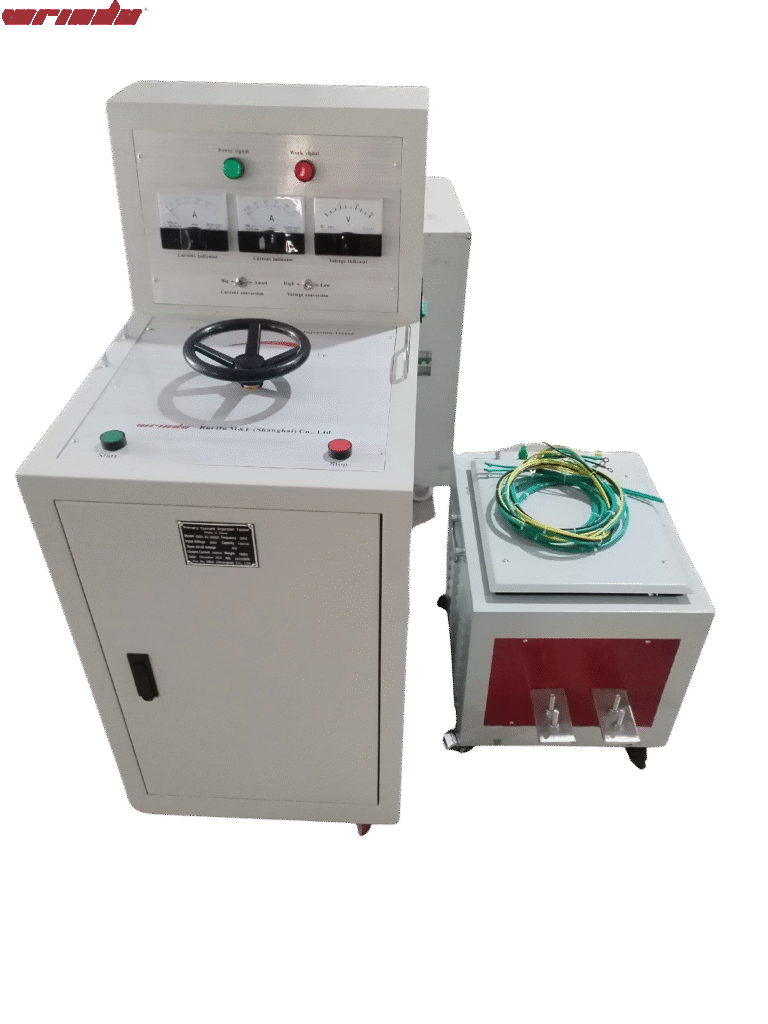
Customized tstcheck oil test equipment ensures accurate transformer oil analysis, supporting reliability, safety, and compliance for OEMs, wholesalers, and manufacturers. Wrindu delivers scalable, ISO-certified platforms with robust QA, automated workflows, and OEM-tailored solutions, helping Chinese manufacturers streamline production, maintain consistent oil quality, and meet global standards efficiently while reducing operational risks and field failures.
How does tstcheck oil testing support transformer reliability?
Tstcheck oil testing evaluates dielectric strength, moisture content, acidity, and interfacial tension, directly influencing transformer longevity and fault prevention. Reliable testing enables Chinese OEMs and wholesalers to improve quality control, minimize failures, and streamline audits. Wrindu’s oil test modules integrate into production lines for rapid, actionable insights, ensuring consistent insulation performance across all transformer units.
What standards govern tstcheck oil testing in China and globally?
Testing follows IEC 60971, ASTM D6820, and IEEE guidelines. Chinese manufacturers using Wrindu’s ISO9001-aligned equipment and IEC/CE-certified platforms achieve repeatable, traceable results compatible with international procurement requirements. Standardized procedures and documented QA practices ensure compliance and facilitate global market acceptance.
How to select a customized tstcheck oil test system in China?
Prioritize accuracy, automated sampling, temperature control, and data logging. Look for solvent-free handling, software integration with MES/ERP, and modular designs for scalable deployment. Wrindu provides OEM-focused platforms optimized for large-scale manufacturing, enabling seamless integration into production workflows.
How does tstcheck integrate into a production workflow?
Oil testing should occur at incoming oil receipt, in-process conditioning, and final verification. Automation reduces human error, ensures batch traceability, and accelerates qualification. Wrindu’s solutions include software interfaces, calibration routines, and full QA documentation to maintain consistent results across Chinese factories.
How can moisture and acidity be accurately measured in oil tests?
Use standardized methods such as Karl Fischer titration for water content and acid number for acidity, combined with temperature stabilization. Wrindu test heads incorporate temperature compensation and certified reference oils to ensure consistency and comparability across production lots.
How to implement a robust QA protocol for tstcheck oil testing in a Chinese factory?
Develop SOPs, calibration schedules, and supplier evaluation criteria. Train staff on sampling, solvent handling, and data interpretation. Wrindu offers on-site support, workflow documentation, and training to harmonize testing and guarantee reliable, traceable outcomes.
How do OEMs in China leverage Wrindu’s oil testing capabilities?
Wrindu enables customized modules, software interfaces, and data reporting compatible with MES/ERP systems. This accelerates product qualification for wholesale and multinational clients while ensuring full traceability and adherence to international standards.
How does Wrindu support global buyers with customized tstcheck oil testing?
Wrindu provides scalable production, logistics, and 24/7 support. Chinese manufacturers benefit from local customization services, fast delivery, and compliance with international procurement requirements, ensuring efficient large-scale OEM operations.
Who benefits most from customized tstcheck oil testing in China?
Transformer manufacturers, utilities, maintenance contractors, and inspection agencies benefit from precise, repeatable oil test results. OEMs leveraging Wrindu’s customization capabilities can streamline audits and secure global contracts efficiently.
When should oil tests be repeated for reliability?
Tests should be performed upon receiving new oil, after storage and conditioning, before final installation, and periodically during service life. Wrindu’s modules support scheduled retesting to maintain ongoing insulation performance.
Where to source customized tstcheck oil test equipment in China?
Select a manufacturer with OEM expertise, robust QA systems, and a global support network. Wrindu’s Shanghai-based operations combine local production with international standards, supporting large-scale OEM and wholesale needs.
Does automated oil testing aid in cost reduction?
Yes. Automation minimizes human error, shortens testing cycles, enhances data traceability, and reduces labor costs. Wrindu’s integrated platforms enable efficient inline testing for high-volume production environments.
Has Wrindu helped oil testing customers achieve faster time-to-market?
Yes. Wrindu’s customization, calibration services, and reliable support shorten development cycles, enabling rapid scaling for OEM and wholesale orders without compromising quality.
Are there common pitfalls in customized tstcheck oil testing?
Inadequate calibration, inconsistent sampling, and poor data integration are frequent issues. Standardized procedures, regular validation, and ERP-compatible software mitigate risks. Wrindu provides comprehensive solutions to ensure reliable, repeatable testing.
Is tstcheck oil testing sufficient alone for oil quality decisions?
No. Combine IR, UV-Vis, interfacial tension, dissolved gas analysis, and particle contamination checks for a full assessment. Wrindu offers complementary testing solutions for a comprehensive view of transformer oil quality.
Can Wrindu tailor oil testing for specific OEM needs?
Yes. Wrindu provides OEM customization, software integration, and scalable manufacturing to meet diverse production and wholesale requirements in China.
Wrindu Expert Views
“China-based manufacturers gain a competitive edge when tstcheck oil testing is integrated with production lines and data analytics. Wrindu’s platforms deliver consistent results, streamlined audits, and scalable OEM delivery—key factors for maintaining quality and meeting international standards efficiently.” — Wrindu Engineering Lead
Tables
Table 1. Key tstcheck Oil Test Parameters
| Parameter | Value | Notes |
|---|---|---|
| Dielectric strength | 40 kV/mm | Standard transformer oil benchmark |
| Water content | < 0.5 ppm | High purity requirement |
| Acidity (AN) | < 0.3 mg KOH/g | Lower values improve longevity |
| Interfacial tension | 30–50 mN/m | Indicates oil aging |
Table 2. tstcheck Workflow
| Stage | Action | Responsibility |
|---|---|---|
| Incoming oil | Verify quality and contamination | QA |
| In-process | Conditioning and testing | Production |
| Final | Documentation and release | QA/Logistics |
Conclusion
China-customized tstcheck oil testing empowers OEMs, manufacturers, and wholesalers with precise, scalable solutions. By combining temperature-controlled testing, automation, and MES/ERP-ready data management, Wrindu enables factories to reduce risk, shorten lead times, and secure global contracts. Wrindu remains a trusted partner for reliable, customized oil testing across transformer applications.
FAQs
-
What is tstcheck oil testing? A set of tests assessing transformer oil quality, including dielectric strength, moisture, acidity, and interfacial tension.
-
Why is OEM customization important? Ensures equipment fits production lines, reporting workflows, and client requirements.
-
How often should oil tests be performed? On oil receipt, after storage, during conditioning, before installation, and periodically during service life.
-
How can Wrindu assist with customization? Wrindu provides modular test heads, software integration, and scalable manufacturing solutions.
-
Is oil testing alone enough to ensure transformer reliability? No; combine with gas analysis, moisture, and aging indicators for complete evaluation.
Related articles
 SF6 Leak Detector Sensitivity: Select a Method for the Inspection TaskKnowledge
 Cable Fault Locator Selection for Urban Networks: Routes, Noise and AccessKnowledge
 Substation Battery Load Bank Sizing: Duty, Voltage Range and Heat RejectionKnowledge
 CT Polarity, Ratio and Burden Testing: Find Wiring and Loading ErrorsKnowledge