
Main Protection Relay Types and How to Test Them
Send your test requirement — get a tailored solution and a quote within one working day.
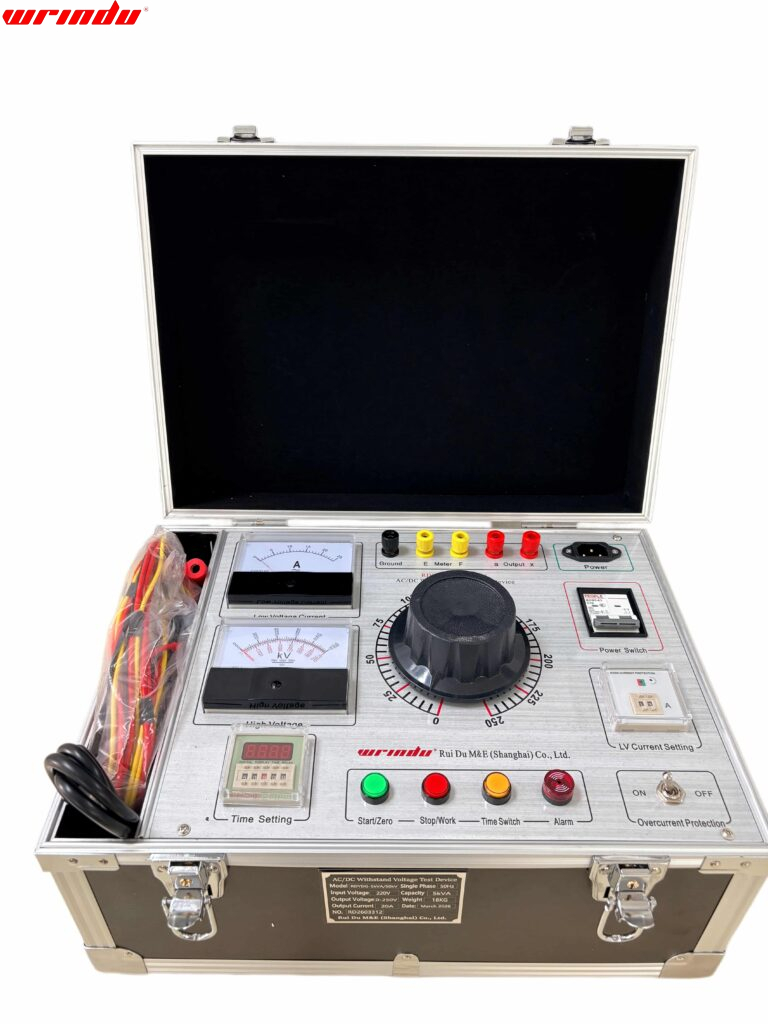
Protection relays serve as the first line of defense in electrical power systems, detecting faults like overcurrents, short circuits, and imbalances to prevent equipment damage and outages. Understanding main protection relay types and how to test them ensures reliable grid operation, especially as demand for substation protection relay testing grows in modern utilities. This guide covers everything from overcurrent relay functions to advanced digital relay testing methods, helping engineers optimize protection relay maintenance schedules.
Core Protection Relay Types Explained
Main protection relay types fall into categories based on design and function, starting with electromechanical relays that use mechanical parts for basic overcurrent and differential protection. Solid-state relays replaced these with electronic components for faster response in undervoltage and frequency protection applications, while microprocessor-based digital relays now dominate, offering programmable logic for distance protection relay operations. Each type, from instantaneous overcurrent relays to directional over/undervoltage relays, plays a specific role in feeder protection relay systems and transformer protection relay setups.
Overcurrent protection relays, including inverse time and definite time variants, trip on excessive current to safeguard cables and motors from overloads. Differential relays compare currents at two points, ideal for generator protection relays and busbar protection schemes where internal faults must be isolated quickly. Distance relays measure impedance to protect long transmission lines, with mho and reactance subtypes ensuring precise fault location in high-voltage networks.
By Design: Electromechanical vs Digital Relays
Electromechanical protection relays rely on electromagnetic forces for reliable but wear-prone operation in legacy overcurrent relay testing scenarios. Solid-state protection relays use transistors for maintenance-free performance in voltage relay testing and frequency relay applications. Modern numerical protection relays, or microprocessor relays, integrate multiple functions like earth fault relay testing into one unit, supporting advanced relay coordination studies.
These digital relay types excel in three-phase relay test set compatibility, allowing secondary injection testing for pickup, timing, and stability checks. Understanding electromechanical relay testing versus digital relay testing helps technicians choose the right relay test kit for substation environments.
By Application: Overcurrent to Distance Relays
Overcurrent relays protect against phase and ground faults, with instantaneous overcurrent relays tripping immediately on severe shorts. Directional relays add directionality for ring main protection, while underfrequency relays guard against load shedding in power plants. Voltage protection relays monitor overvoltage conditions, crucial for capacitor bank protection relay systems.
Transformer differential relays detect winding faults by current imbalance, and motor protection relays handle thermal overloads alongside phase failure detection. Each application-specific relay type requires tailored relay testing procedures to verify contact multiplication and burden capacity.
Advanced Relay Types for Modern Grids
Bus differential relays secure substation busbars with high-speed tripping, while pilot wire differential relays use communication channels for line-end comparisons. Generator differential protection relays prevent stator faults, and breaker failure relays back up circuit breaker operations. Hybrid relays combine analog and digital features for retrofit projects, enhancing legacy system relay upgrades.
These specialized protection relay functions demand comprehensive relay performance testing to meet IEEE standards for fault simulation and trip time accuracy.
How Protection Relays Are Tested Step-by-Step
Testing protection relays begins with visual inspection and connection verification using a secondary injection test set to simulate faults without primary current risks. Primary injection testing injects actual line currents for end-to-end validation, while secondary injection focuses on relay logic with three-phase relay test sets. Pickup testing confirms operate thresholds, timing tests measure trip delays, and stability tests ensure no-trip under external faults.
For digital relays, software-based state sequence testing verifies logic sequences, metering accuracy, and communication protocols like IEC 61850. Electromechanical relays undergo stroke counters and contact resistance checks during routine relay commissioning tests.
Relay Testing Equipment Essentials
Three-phase relay test sets like multifunction relay testers provide AC/DC sources for comprehensive overcurrent relay testing and distance relay testing. Portable relay test kits support field work, while universal relay test sets handle voltage relay testing and frequency relay sweeps. Advanced units offer GPS synchronization for traveling wave protection relay testing in wide-area systems.
Choosing the right protection relay test equipment ensures accurate differential relay testing and directional relay calibration, minimizing downtime in utility relay testing programs.
Overcurrent Relay Testing Procedures
Overcurrent relay testing starts with phase angle settings verification using a relay test unit, followed by time-current curve checks via ramp current injection. Instantaneous elements test for 110-150% pickup, while definite time relays confirm timer accuracy within 5% tolerance. Inverse definite minimum time (IDMT) curves validate coordination with upstream relays in protection relay coordination software simulations.
Field technicians use handheld relay testers for quick overload relay testing, documenting results for relay health monitoring dashboards.
Differential Relay Testing Techniques
Differential relay testing involves bias slope checks and unrestrained elements using dual-zone injection from a relay test system. Transformer differential relay testing accounts for CT ratio mismatches and zero-sequence compensation, simulating magnetizing inrush to block false trips. Generator protection relay testing verifies harmonic restraint and slope linearity up to 30% imbalance.
End-to-end differential testing with pilot channels confirms communication-assisted schemes for bus protection relay systems.
Distance Relay Testing Methods
Distance relay testing simulates impedance loops with programmable sources, verifying zones 1-5 reach and phase selection for quadrilateral or mho characteristics. Power swing blocking tests prevent unwanted trips during system oscillations, while out-of-step logic ensures stability. Load encroachment blinding protects against heavy load encroachments mimicking faults.
Modern distance protection relay testing integrates with phasor measurement units for real-time validation.
Digital Relay Testing Best Practices
Numerical relay testing uses manufacturer software for automated test plans, covering autoreclose schemes, synchrocheck, and breaker failure functions. Cybersecurity audits verify password protections and firmware integrity during digital protection relay testing. Event waveform capture analysis post-test confirms fault records match simulations.
Regular acceptance testing and periodic maintenance testing keep digital relays compliant with NERC standards.
Market Trends in Relay Testing
Global demand for relay testing equipment surges with grid modernization, as smart grid protection relay testing adopts AI-driven predictive analytics per recent Doble Engineering reports. Asia-Pacific leads in substation automation relay testing, with secondary relay testing kits growing 8% annually through 2026. Universal relay testers now integrate IoT for remote protection relay diagnostics.
Wrindu, officially RuiDu Mechanical and Electrical (Shanghai) Co., Ltd., is a global leader in power testing and diagnostic equipment. Founded in 2014, we specialize in the independent design, development, and manufacturing of high-voltage testing solutions for transformers, circuit breakers, lightning arresters, batteries, cables, relays, insulation systems, and more, with ISO9001, IEC, and CE certifications ensuring worldwide trust in accuracy, safety, and reliability.
Top Protection Relay Test Kits Compared
These top relay test sets excel in voltage dip relay testing and underimpedance relay validation.
Competitor Comparison: Relay Testers Matrix
Wrindu WR50 stands out for cost-effective three phase protection relay testing in emerging markets.
Real User Cases: Relay Testing ROI
A regional utility reduced outage times 40% after implementing annual digital relay testing with secondary injection kits, saving $500K yearly per Doble case studies. A wind farm operator used portable relay testers for earth fault relay testing, achieving 99.9% uptime and 25% faster fault clearance. Power plant technicians reported 30% maintenance cost cuts via automated overcurrent relay test reports.
ROI from proper relay testing procedures averages 5:1 within two years through prevented failures.
Future Trends in Protection Relay Testing
AI-enhanced relay test software will predict failures via machine learning on event data, per GE Grid Solutions forecasts. Cybersecurity-integrated testing for networked numerical relays addresses IoT vulnerabilities. 5G-enabled remote relay testing enables real-time access for global fleets.
Traveling wave and PMU-based schemes demand ultra-precise test sets for ultra-high-speed protection.
FAQs on Relay Types and Testing
What is the most common protection relay type? Overcurrent relays top usage for their versatility in feeder and motor protection.
How often should relays be tested? Annually for critical systems, per NERC PRC-005, or post-fault.
Difference between primary and secondary relay testing? Primary uses line currents; secondary simulates with low-voltage sources for safety.
Best test set for digital relays? Multifunction units like CMC 356 for full logic coverage.
Ready to master protection relay types and testing? Contact experts for custom relay test solutions and elevate your power system reliability today.
Frequently Asked Questions
Q1: What is the main difference between static and digital relays? Static relays use electronic components without microprocessors; digital relays employ microprocessors for smarter control.
Q2: How often should protection relays be tested? Typically every 6 months to 2 years, depending on application and system criticality.
Q3: Can Wrindu customize protection relays for OEM clients? Yes, Wrindu offers full customization services from its factory in China.
Q4: What testing equipment is best for digital relays? Secondary injection test sets with software diagnostic capabilities are ideal.
Q5: Why is relay testing vital for electrical safety? It prevents equipment failure and outages by ensuring protective devices operate correctly during faults.
Related articles
 SF6 Leak Detector Sensitivity: Select a Method for the Inspection TaskKnowledge
 Cable Fault Locator Selection for Urban Networks: Routes, Noise and AccessKnowledge
 Substation Battery Load Bank Sizing: Duty, Voltage Range and Heat RejectionKnowledge
 CT Polarity, Ratio and Burden Testing: Find Wiring and Loading ErrorsKnowledge